
Pest Control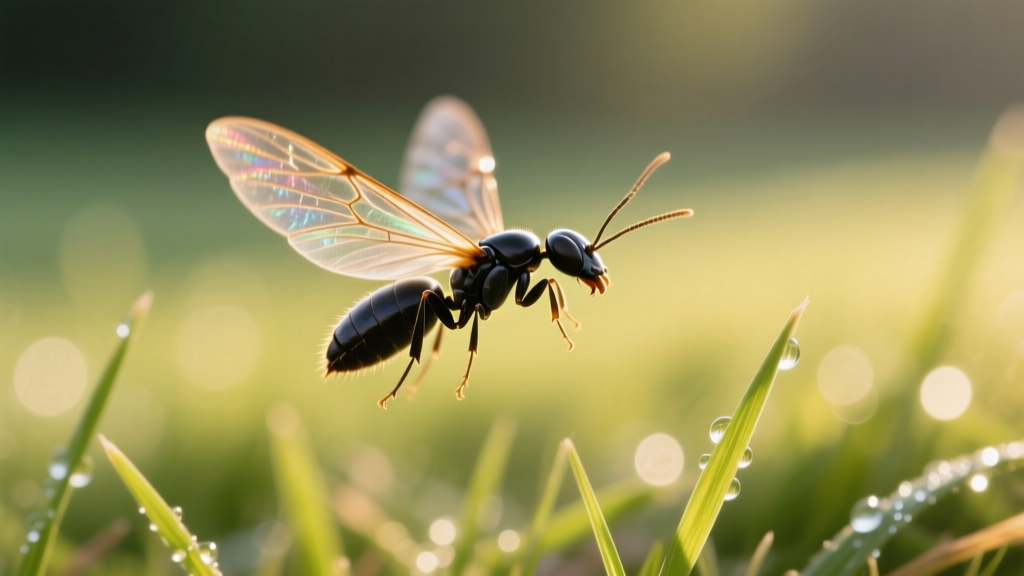
Found a Picture of Termites With Wings? Swarmer ID & Yard Defense
Decoding the Photo: Swarmer vs. Flying Ant
When you capture a picture of termites with wings on your smartphone, you are likely looking at an alate—a reproductive swarmer. Distinguishing these from carpenter ants is the most critical first step in yard defense. Misidentification leads to wasted treatments and unchecked structural damage. According to the University of Florida IFAS, Eastern Subterranean termite swarmers (Reticulitermes flavipes) typically emerge in early spring, while Formosan swarmers appear in late May or June.
Visual Identification Matrix:
| Anatomical Feature | Termite Swarmer | Carpenter Ant |
|---|---|---|
| Antennae | Straight, beaded | Elbowed (bent) |
| Wings | Four wings, equal length | Four wings, front longer than back |
| Waist | Thick, uniform body | Pinched, narrow waist |
| Color | Dark brown to black | Black, red, or multi-colored |
What Swarmers Signal About Your Yard's Vulnerability
Seeing a picture of termites with wings in your yard is not a sign of a new invasion; it is proof of a mature, established colony. Subterranean termite colonies typically require three to five years to reach the population threshold (often exceeding 100,000 individuals) necessary to produce alates. If you spot them near your foundation, the foraging workers are already consuming cellulose in your yard or home.
The Environmental Protection Agency (EPA) emphasizes that termites cause billions in property damage annually, much of which is excluded from standard homeowner insurance policies. Proactive yard defense requires targeting the foraging tubes and satellite colonies before they compromise structural timber.
Immediate Yard Defense Protocols
Once you have confirmed the insects in your picture of termites with wings are indeed alates, implement a dual-action defense strategy combining chemical barriers and moisture management.
Phase 1: Perimeter Trenching with Non-Repellent Termiticides
Non-repellent termiticides, such as Fipronil (commonly sold as Termidor SC), are the industry standard for subterranean defense. Unlike older repellent chemicals that termites simply route around, non-repellents are undetectable. Foragers pass through the treated soil, pick up the active ingredient, and transfer it to the colony via trophallaxis (food sharing).
- Trench Dimensions: Dig a continuous trench 6 inches deep and 6 inches wide directly against the foundation wall.
- Dilution Rate: Mix 0.8 fluid ounces of Termidor SC (9.1% Fipronil) per gallon of water to achieve a 0.06% active ingredient concentration.
- Application Volume: Apply exactly 4 gallons of the diluted solution per 10 linear feet of trench.
- Cost Expectation: A 20 oz bottle of Termidor SC costs approximately $85 to $95 in 2026 and treats roughly 60 linear feet of foundation.
Warning: Never apply liquid termiticides to soil that is frozen, saturated with water, or within 5 feet of a private well. Always check local municipal codes regarding groundwater protection before trenching.
Phase 2: Strategic Bait Station Deployment
For properties with extensive landscaping, hardscaping, or environmental constraints that prevent trenching, termite bait systems offer a highly effective alternative. Systems like Trelona ATBS or Sentricon utilize a chitin synthesis inhibitor (such as Novaluron or Hexaflumuron) that prevents termites from molting, eventually collapsing the colony.
- Spacing: Install bait stations every 10 feet around the perimeter of the structure.
- Placement: Position stations 2 to 4 feet away from the foundation to intercept foraging tubes before they reach the concrete.
- Monitoring: Inspect stations every 30 to 90 days. Replace the cellulose monitoring base with the active bait matrix only when live termite feeding is confirmed.
- Pricing: Expect to pay $15 to $25 per station for DIY setups, plus $150 to $200 annually for replacement bait matrices and monitoring wood.
Mulch and Moisture Management: Starving the Colony
Chemical treatments will fail if your yard provides an ideal, high-moisture environment that encourages satellite colonies to form above the treated soil line. Termites require high humidity to prevent desiccation.
The 6-Mil Vapor Barrier Rule
If your home has a crawlspace, the soil beneath it must be covered with a continuous 6-mil polyethylene vapor barrier. Overlap seams by at least 12 inches and seal them with specialized crawl space tape. This reduces soil moisture evaporation, making the environment hostile to subterranean foragers.
Landscaping Clearances
Mulch is a primary vector for yard-based termite infestations. While mulch itself is not a preferred food source, it retains the moisture termites need to build shelter tubes.
Pro-Tip for Yard Defense: Maintain a strict 12-inch bare soil or gravel buffer between your foundation and any organic mulch. If you must use mulch near the house, limit the depth to 2 inches and opt for termite-resistant varieties like cedar heartwood or cypress heartwood, though these lose their repellent properties as they age and decompose.
Frequently Asked Questions
Do the swarmers in my picture actually eat wood?
No. The alates (swarmers) you see in your picture of termites with wings do not possess the mandibles required to chew wood, nor do they have the gut protozoa necessary to digest cellulose. Their sole biological function is to mate and establish new colonies. However, their presence indicates that the hidden worker caste is actively consuming wood nearby.
Will outdoor bug zappers help control the swarm?
Bug zappers are entirely ineffective for termite defense. Swarmers are poor fliers and are primarily attracted to light to orient themselves during their brief nuptial flight, but they do not fly high or far enough to be consistently caught in standard UV zappers. Relying on zappers will leave the parent colony completely untouched.
How long do swarmers live outside the colony?
Once they leave the protection of the colony and shed their wings, termite swarmers are highly vulnerable to desiccation and predators. In typical outdoor conditions, they will die within a few hours if they fail to find a suitable mate and a moist soil crevice to start a new colony.

