
Pest Control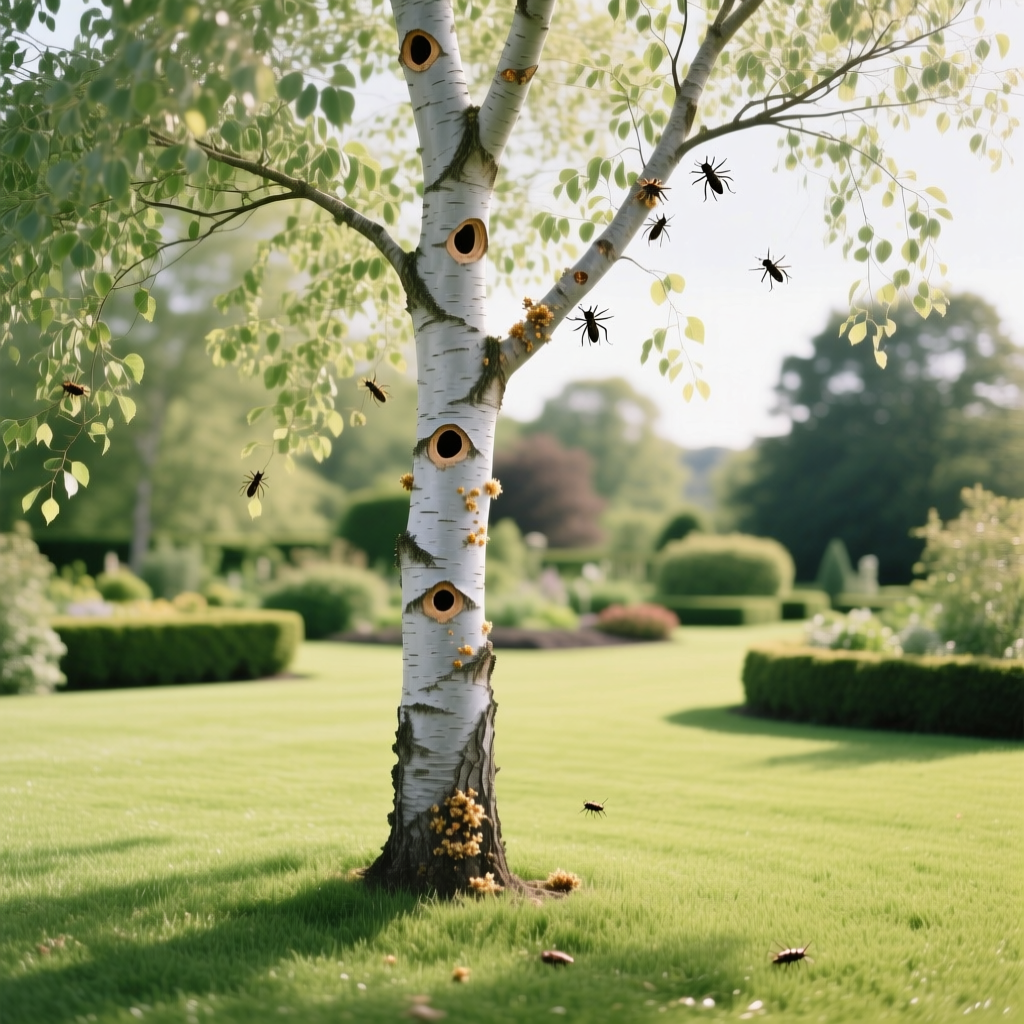
Identifying & Treating Bronze Birch Borer Infestations in Ornamental Trees
Anna KowalskiPublished
Ornamental birch trees add elegance and natural beauty to any landscape, with their striking white bark and delicate foliage creating a picturesque scene throughout the seasons. However, these beloved trees face a persistent and potentially devastating threat: the bronze birch borer (Agrilus anxius). This small, metallic beetle is responsible for killing thousands of birch trees across North America, and early detection is absolutely critical to saving an infested tree.
The bronze birch borer is a wood-boring beetle native to North America that specifically targets birch species. While it has coexisted with native birch populations for centuries, it has become especially destructive to ornamental and landscape birch trees, particularly those under environmental stress. European white birch, Himalayan birch, and other non-native ornamental varieties are especially vulnerable, though no birch species is completely immune.
Understanding how to identify the signs of a bronze birch borer infestation, implement preventive measures, and apply appropriate treatments can mean the difference between saving a cherished tree and losing it entirely. This comprehensive guide walks you through everything you need to know about protecting your ornamental birch trees from this destructive pest. For more general information on maintaining healthy landscapes, check out our lawn care guides to ensure your entire yard thrives.
How to Identify a Bronze Birch Borer Infestation
Catching a bronze birch borer infestation in its early stages dramatically improves your chances of saving the tree. Unfortunately, the most obvious symptoms often appear only after the tree has suffered significant internal damage. Here is what you need to look for during your regular tree inspections.
The Adult Beetle
The adult bronze birch borer is a slender, somewhat flattened beetle measuring approximately one-quarter to one-half inch in length. Its body is a dark olive-bronze to nearly black color with a distinctive metallic sheen that catches the light. The beetle has a blunt, rounded head and a tapered abdomen. Adults typically emerge from infested trees between late May and early July, depending on your climate zone. You may spot them feeding on the leaves of birch trees, though the leaf damage they cause is minimal and rarely a concern on its own.
D-Shaped Exit Holes
One of the most diagnostic signs of a bronze birch borer infestation is the presence of D-shaped exit holes in the bark of the tree. These holes are roughly one-eighth inch wide and have a characteristic flat side, giving them a shape resembling the letter D. These holes are created when adult beetles chew their way out of the tree after completing their development beneath the bark. Finding these exit holes is a strong confirmation that borers have been active within the tree.
Crown Dieback and Yellowing Foliage
The earliest visible symptom of infestation typically appears in the upper canopy of the tree. You will notice leaves turning yellow, then brown, and eventually falling off prematurely. This dieback starts at the top of the tree and gradually progresses downward over one to three years. The reason for this pattern is that the larval tunnels disrupt the flow of water and nutrients through the tree's vascular system, and the uppermost branches are the first to suffer from this restricted flow.
If you notice unexplained yellowing or thinning in the crown of your birch tree, particularly while the lower portions of the tree still appear healthy, bronze birch borer activity should be suspected immediately. Compare this with symptoms of other common tree pests to ensure accurate identification.
Ridged Bark and Larval Galleries
As larvae tunnel beneath the bark, they create winding, zigzag galleries packed with frass (sawdust-like excrement). These tunnels damage the cambium layer, which is responsible for transporting nutrients throughout the tree. Over time, the bark above these galleries may develop a rough, ridged appearance or raised welts. If you carefully peel back a section of loose bark on a suspected tree, you will reveal the characteristic S-shaped or zigzag tunnels and possibly the cream-colored, flat-headed larvae themselves.
Epicormic Sprouting
Stressed birch trees infested with bronze birch borers often produce clusters of new shoots along the trunk and lower branches. This response, known as epicormic sprouting, is the tree's attempt to compensate for the loss of canopy above. While this new growth might initially seem like a positive sign, it actually indicates significant internal damage and should be treated as a serious warning sign.
Preventing Bronze Birch Borer Infestations
Prevention is always the most effective and least expensive strategy when dealing with bronze birch borers. A healthy, vigorously growing birch tree has natural defenses that make it far less attractive and susceptible to attack. The following preventive measures should be part of your regular seasonal landscape maintenance routine.
Choose Resistant Birch Species
If you are planting new birch trees in your landscape, selecting a resistant species is the single most impactful preventive decision you can make. River birch (Betula nigra) and its cultivars, such as 'Heritage' and 'Dura-Heat,' exhibit strong resistance to bronze birch borer. Yellow birch (Betula alleghaniensis) and sweet birch (Betula lenta) also show moderate resistance. Avoid planting European white birch (Betula pendula), Himalayan birch (Betula utilis), and other highly susceptible species, especially in areas where bronze birch borers are known to be active.
Maintain Optimal Tree Health
Bronze birch borers overwhelmingly target trees that are already under stress. Drought stress is the single most significant factor that predisposes birch trees to borer attack. Implement the following practices to keep your birch trees vigorous and resilient:
- Deep watering: Provide supplemental irrigation during dry periods, delivering water slowly and deeply to the root zone. Birches have shallow root systems and are particularly sensitive to drought. Aim for at least one inch of water per week during the growing season.
- Mulching: Apply a two- to four-inch layer of organic mulch around the base of the tree, extending out to the drip line if possible. Keep mulch a few inches away from the trunk itself. Mulch conserves soil moisture, moderates soil temperature, and reduces competition from grass roots.
- Proper fertilization: Conduct a soil test to determine nutrient deficiencies and fertilize accordingly. Avoid excessive nitrogen fertilization, which can promote rapid, succulent growth that is actually more attractive to borers. Visit our fertilization guide for detailed soil nutrition strategies.
- Avoid soil compaction: Do not park vehicles or pile heavy materials over the root zone. Compacted soil restricts oxygen and water availability to the roots, weakening the tree significantly.
Protect Bark from Mechanical Damage
Wounds to the trunk and major branches create entry points for borers and other pests. Be careful when using string trimmers, mowers, and other equipment near birch trees. Avoid pruning during the flight period of adult beetles (late spring through mid-summer), as fresh pruning wounds can attract egg-laying females. If pruning is necessary, perform it during the dormant season and make clean cuts that heal quickly.
Remove and Destroy Infested Material
If you have birch trees or branches that are heavily infested and beyond treatment, remove them promptly to eliminate them as a source of emerging beetles. Chip, burn, or deeply bury infested wood before the next emergence period. Simply cutting down an infested tree and leaving the wood on-site does nothing to reduce the local borer population; the larvae will continue developing and emerge as adults from the cut logs.
Treating Bronze Birch Borer Infestations: DIY and Chemical Solutions
If you have identified a bronze birch borer infestation in its early stages, several treatment options are available. The effectiveness of any treatment depends heavily on the extent of existing damage. As a general rule, if less than half of the canopy shows dieback symptoms, the tree is a viable candidate for treatment. Trees with more than fifty percent crown dieback are typically too far gone to save, and removal may be the most practical option.
Systemic Insecticides
Systemic insecticides are the cornerstone of bronze birch borer treatment. These products are absorbed by the tree and transported through its vascular system, where they kill larvae feeding beneath the bark and deter adult feeding. The most effective active ingredients include:
- Imidacloprid: Available in soil drench formulations that are applied to the base of the tree. The roots absorb the chemical and carry it upward through the tree. This is the most accessible option for homeowners and is available at most garden centers. Apply in early spring before adult emergence for best results. Soil drench applications require adequate soil moisture to be effective, so water the area thoroughly before and after application.
- Dinotefuran: Available as a soil drench or bark spray, dinotefuran moves through the tree more quickly than imidacloprid, making it a good choice if the infestation is discovered later in the season. Bark spray applications are particularly useful for larger trees where soil drench uptake may be slow.
- Emamectin benzoate: This product is injected directly into the trunk of the tree through small drilled holes. It provides rapid distribution throughout the canopy and offers excellent control. However, trunk injection is best performed by trained professionals, as improper technique can cause additional damage to the tree.
When applying any systemic insecticide, timing is critical. Applications should be made in early spring, ideally when soil temperatures reach approximately fifty degrees Fahrenheit and before adult beetles begin emerging. This allows the tree sufficient time to absorb and distribute the chemical before larvae begin feeding. For guidance on integrating pest treatments with your broader pest control strategy, explore our complete pest management resources.
Contact Sprays for Adult Beetles
Contact insecticide sprays applied to the trunk and major branches can kill adult beetles as they land on the tree to feed and lay eggs. Products containing permethrin, bifenthrin, or carbaryl can be effective when applied to the bark surface during the adult flight period. However, this approach has significant limitations:
- Sprays must be timed precisely to coincide with adult emergence and may require multiple applications at two- to three-week intervals.
- They do not affect larvae already tunneling beneath the bark.
- Thorough coverage of the entire trunk and major branches is essential but difficult to achieve on tall trees.
- Contact sprays can harm beneficial insects, including pollinators, if applied when trees are flowering.
For these reasons, contact sprays are generally recommended as a supplemental measure rather than a standalone treatment.
Cultural and Mechanical Controls
In addition to chemical treatments, certain cultural practices can support recovery and reduce borer pressure on your trees:
- Remove heavily infested branches: Prune out branches that show advanced dieback to reduce the overall borer population and redirect the tree's energy to healthier parts of the canopy. Dispose of pruned material properly.
- Reduce competing vegetation: Remove grass and weeds from around the base of the tree to reduce competition for water and nutrients. A mulched bed extending several feet from the trunk is ideal.
- Avoid moving firewood: Do not transport infested birch firewood to new locations, as this can spread borers to previously uninfested areas. Source firewood locally and burn it before the spring emergence period.
Proper watering is especially important during treatment. A tree that is receiving adequate moisture will be better able to compartmentalize damage and produce the new tissue needed to recover. Our irrigation guides offer helpful strategies for efficient landscape watering.
When to Call a Professional Arborist
While some aspects of bronze birch borer management can be handled by knowledgeable homeowners, there are several situations where professional intervention is strongly recommended.
Large or Valuable Trees
Mature birch trees that are prominently featured in your landscape represent significant value, both aesthetically and financially. Professional arborists have access to trunk injection equipment and commercial-grade products that provide superior control compared to over-the-counter options. The investment in professional treatment is often well justified for high-value specimen trees.
Advanced Infestations
If you are uncertain about the extent of the infestation or the viability of the tree, a certified arborist can provide an expert assessment. They can evaluate the percentage of crown dieback, check for structural weaknesses caused by larval tunneling, and determine whether treatment is likely to succeed. Attempting to treat a tree that is too far gone wastes time and money while the dead tree becomes a safety hazard.
Multiple Infested Trees
When several birch trees on your property show signs of infestation, coordinating a comprehensive management plan becomes complex. A professional can develop a treatment schedule that addresses all affected trees efficiently and can monitor the progress of treatments over subsequent seasons. They can also advise on whether removing certain trees will protect the remaining healthy ones by reducing the local borer population.
Safe Removal of Dead Trees
Birch trees killed by bronze birch borers become brittle and hazardous as the wood dries and decays. Removing large dead trees, especially those near structures, power lines, or high-traffic areas, is dangerous work that should be left to insured professionals with the proper equipment. Additionally, a professional service will ensure that the infested wood is disposed of properly to prevent further spread of the pest.
When hiring an arborist, look for certification from a recognized organization such as the International Society of Arboriculture (ISA). Request references, verify insurance coverage, and obtain written estimates before committing to any work. A reputable professional will be transparent about treatment options, expected outcomes, and costs.
Frequently Asked Questions About Bronze Birch Borer
How long does it take for a bronze birch borer to kill a tree?
The timeline varies depending on the size and health of the tree, as well as the intensity of the infestation. In many cases, the first visible symptoms—yellowing and dieback in the upper canopy—appear one to two years after the initial attack. Without treatment, a moderately infested tree may die within two to four years after symptoms first appear. Heavily stressed trees in poor growing conditions can decline much more rapidly, sometimes succumbing within a single season. This is why annual inspections of your birch trees are so important, and why maintaining overall tree and shrub health is a fundamental defense.
Can a tree recover after being treated for bronze birch borer?
Yes, trees can recover if treatment is applied early enough. Trees with less than half of their canopy affected by dieback have a reasonable chance of recovery with proper systemic insecticide treatment and improved cultural care. The tree will not regenerate dead branches, but it can produce new growth from surviving buds and gradually rebuild its canopy over several seasons. Recovery is a multi-year process that requires ongoing vigilance, consistent watering, and potentially annual insecticide applications until the tree has fully regained its vigor. Patience and persistence are essential.
Do bronze birch borers attack trees other than birch?
The bronze birch borer is highly host-specific and feeds almost exclusively on birch species (Betula). It does not attack other genera of trees such as maple, oak, or pine. However, all birch species are potential hosts, with some being far more susceptible than others. European white birch, gray birch, and Himalayan birch are among the most vulnerable, while river birch and sweet birch show meaningful resistance. If you have a mixed landscape with various tree species, your non-birch trees are not at risk from this particular pest, though they may face threats from other borers. Learn more about protecting different tree species in our pest control section.
Is it worth treating a birch tree for bronze birch borer, or should I just remove it?
This decision depends on several factors: the current health of the tree, its size and location, its value to your landscape, and the cost of treatment versus replacement. As a general guideline, if less than thirty to forty percent of the canopy shows dieback and the tree is otherwise in a good location, treatment is usually worthwhile. The cost of professional systemic treatment for a single tree is typically far less than the cost of removing a large tree and replacing it with a mature specimen. However, if the tree is more than fifty percent dead, structurally compromised, or in a location where it could cause damage if it falls, removal and replacement with a resistant species is the more practical choice.
How can I prevent bronze birch borers from spreading to my other birch trees?
Preventing the spread of bronze birch borers to nearby birch trees requires a multi-pronged approach. First, treat all healthy birch trees on your property with preventive systemic insecticides on an annual basis, ideally applied in early spring. Second, promptly remove and properly dispose of any heavily infested trees or branches to eliminate them as breeding sites. Third, keep all birch trees as healthy as possible through proper watering, mulching, and avoidance of mechanical damage. Fourth, avoid pruning birch trees during the adult flight period from late spring through mid-summer. Finally, monitor your trees regularly throughout the growing season for early signs of dieback or other symptoms. Implementing these strategies consistently across your entire property gives your birch trees the best possible protection. For more tips on maintaining a healthy, pest-resistant landscape, explore our lawn maintenance resources.
Protecting your ornamental birch trees from bronze birch borer requires awareness, diligence, and timely action. By learning to recognize the early warning signs, maintaining optimal tree health, and applying appropriate treatments when needed, you can preserve these beautiful trees for years to come. Whether you choose to manage the problem yourself or enlist the help of a professional arborist, the key is to act decisively at the first sign of trouble. Your birch trees are a valuable part of your landscape, and with the right care, they can continue to grace your property with their timeless beauty.

