Pest Control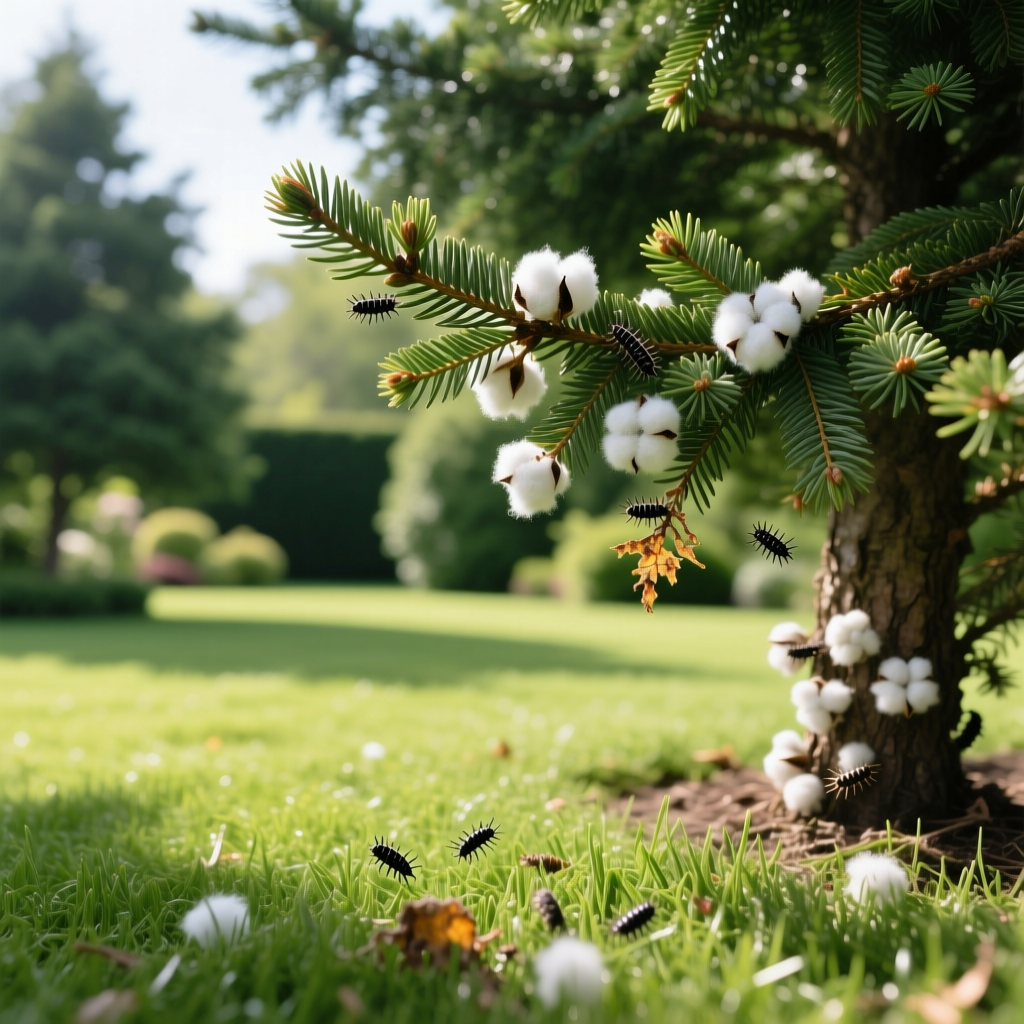
Identifying & Treating Hemlock Woolly Adelgid on Evergreens
Emily WatsonPublished
Hemlock trees are a cornerstone of many North American landscapes, providing dense, year-round shade, elegant drooping branches, and critical habitat for local wildlife. However, these majestic evergreens face a severe threat from a tiny, invasive insect known as the hemlock woolly adelgid (HWA). If left unchecked, this sap-sucking pest can devastate entire stands of hemlocks, turning lush, green canopies into barren, gray skeletons within just a few years.
Protecting your evergreens requires vigilance, early detection, and a solid understanding of both cultural and chemical control methods. In this comprehensive guide, we will explore the biology of the hemlock woolly adelgid, how to spot an infestation before it becomes fatal, and the most effective treatment strategies to save your trees. Whether you are managing a single specimen tree in your front yard or a dense windbreak, our pest control guides and expert advice will help you preserve your landscape for years to come.
Understanding the Hemlock Woolly Adelgid
The hemlock woolly adelgid (Adelges tsugae) is a tiny, sap-sucking insect closely related to aphids and scale insects. Originally native to Asia, where natural predators keep its population in check, the pest was accidentally introduced to North America several decades ago. Since its arrival, it has spread rapidly through forests and residential landscapes, particularly devastating the Eastern hemlock (Tsuga canadensis) and the Carolina hemlock (Tsuga caroliniana).
Unlike many other garden pests that merely cause cosmetic damage, the HWA is lethal. The insects feed at the base of the hemlock needles, inserting their piercing mouthparts into the tree's vascular system. As they feed, they inject toxic saliva that disrupts the tree's ability to transport water and nutrients. This effectively starves the tree, leading to severe needle drop, stunted growth, and eventually, total mortality.
The life cycle of the adelgid is unique and dictates how and when you should treat your trees. In North America, the pest reproduces asexually and completes two distinct generations per year. The first generation, known as the sistens generation, hatches in early summer, goes dormant through the hot months, and resumes feeding in the fall, overwintering on the twigs. The second generation, the progrediens generation, develops in the spring. Understanding this dual life cycle is crucial for timing your interventions and maximizing the effectiveness of your treatments.
Signs and Symptoms: How to Identify an Infestation
Early detection is the single most important factor in saving a hemlock tree from the woolly adelgid. Because the insects themselves are incredibly small—barely visible to the naked eye—you must look for the distinct structures they build and the physical decline of the tree.
The Signature White Ovisacs
The most obvious and definitive sign of an HWA infestation is the presence of small, white, cottony or woolly masses on the undersides of the twigs, specifically at the base of the needles. These white tufts are not the insects themselves, but rather the waxy ovisacs (egg cases) that the adult adelgids secrete to protect their eggs and nymphs from predators and harsh weather. If you part the needles and look closely at the woody twigs underneath, these white specks will resemble a dusting of snow or tiny cotton swabs. They are most prominent from late fall through early spring.
Canopy Decline and Needle Drop
As the adelgids feed and drain the tree's resources, the canopy will begin to show signs of severe stress. The earliest symptom is often a loss of vibrancy; the rich, dark green needles will fade to a dull, grayish-green or yellowish hue (chlorosis). As the infestation progresses, the tree will prematurely shed its older needles, leaving the branches looking sparse and thin. Over time, the dieback moves from the lower branches upward and from the inside of the canopy outward. A severely infested tree will take on a distinct gray, dead appearance, often dropping all its needles within two to four years of the initial attack.
Distinguishing HWA from Other Evergreen Pests
Homeowners sometimes confuse HWA with other common evergreen pests, such as spider mites, mealybugs, or scale insects. Spider mites cause stippling on the needles and produce fine, silken webbing, but they do not create the distinct, localized white cottony masses at the needle base. Mealybugs and scale insects may produce waxy secretions, but they typically reside on the needles themselves or larger branches, rather than clustering tightly at the twig-needle junction. Proper identification ensures you select the correct treatment method, as remedies for spider mites or bagworms will not effectively control an adelgid population.
Preventative Measures to Protect Your Evergreens
While you cannot completely control the spread of wind-blown adelgid crawlers, you can make your trees less susceptible to severe damage by maintaining their overall health. A stressed tree is far more vulnerable to pest attacks and less capable of recovering from treatment.
Optimal Watering and Mulching
Hemlocks have shallow root systems and are highly sensitive to drought stress. During periods of low rainfall, deep, infrequent watering is essential to keep the tree vigorous. Apply a two-to-three-inch layer of organic mulch around the base of the tree, extending out to the drip line. Mulch helps retain soil moisture, regulates soil temperature, and prevents competition from turfgrass. However, be careful to keep the mulch a few inches away from the actual trunk to prevent rot and rodent damage. Proper watering and mulching are foundational elements of good tree and shrub care.
Soil Health and Fertilization Cautions
Maintaining proper soil health is vital, but you must be cautious with fertilization. Avoid applying high-nitrogen fertilizers to hemlocks suspected of harboring woolly adelgids. Excess nitrogen promotes rapid, succulent new growth, which actually increases the reproductive rate and survival of the adelgids. If a soil test indicates a specific nutrient deficiency, address it carefully, but do not blindly apply heavy doses of nitrogen to a struggling hemlock.
Sanitation and Tool Hygiene
The crawler stage of the adelgid can easily hitch a ride on pruning tools, clothing, and equipment. If you are working on an infested tree and plan to move to a healthy hemlock, thoroughly clean and disinfect your pruning shears, saws, and gloves. Additionally, avoid placing bird feeders directly under or near healthy hemlocks, as birds are primary vectors for transporting the sticky adelgid crawlers from tree to tree.
DIY Treatment Options for Homeowners
If you have confirmed an HWA infestation on smaller, accessible trees, there are several effective do-it-yourself treatment options. The choice of treatment depends on the size of the tree, the severity of the infestation, and the time of year.
Contact Sprays: Horticultural Oils and Insecticidal Soaps
For small trees where you can reach the entire canopy, contact sprays are a highly effective, low-toxicity option. Horticultural oils and insecticidal soaps work by smothering the adelgids and their eggs. Because the waxy ovisacs protect the insects, thorough coverage is absolutely critical. You must spray the underside of every twig until the solution drips. These treatments do not have residual activity, meaning they only kill the pests they directly contact. Therefore, multiple applications may be necessary, typically timed for early spring and late fall when the crawlers are most active and exposed. Avoid applying oils when temperatures are above 85°F or when the tree is drought-stressed, as this can cause phytotoxicity (leaf burn).
Systemic Soil Drenches
For medium-to-large trees where thorough canopy spraying is impossible, systemic insecticides are the gold standard for DIY control. Products containing active ingredients like imidacloprid or dinotefuran are absorbed by the tree's roots and translocated upward into the twigs and needles. When the adelgids feed, they ingest the insecticide and die.
How to apply a soil drench:
- Measure the trunk: Measure the diameter of the tree trunk at breast height (about 4.5 feet off the ground). This measurement determines the exact dosage of chemical required.
- Mix the solution: Follow the manufacturer's label precisely, mixing the concentrated insecticide with water in a large bucket or watering can.
- Prepare the soil: Remove any mulch or thick leaf litter from the base of the tree. The soil should be moist but not waterlogged. If the ground is bone dry, water it lightly a day before application.
- Apply the drench: Pour the mixed solution evenly in a circle around the base of the trunk, focusing on the area within one foot of the trunk and extending slightly outward. The goal is to target the fine, absorbing roots.
- Water it in: Lightly water the area after application to help the chemical penetrate the soil profile, then replace the mulch.
Systemic soil drenches are best applied in the fall or early spring when the tree is actively pulling moisture from the soil. It can take several weeks to a few months for the chemical to fully distribute throughout a large tree, so patience and consistent annual monitoring are required.
Environmental and Safety Considerations
When using systemic insecticides, environmental stewardship is paramount. Hemlocks are wind-pollinated, meaning systemic chemicals pose a significantly lower risk to bees and other pollinating insects compared to treatments used on flowering trees. However, imidacloprid and similar chemicals are highly toxic to aquatic invertebrates. Never apply soil drenches near streams, ponds, wetlands, or areas with high water tables where runoff could occur. Always read and follow the product label; it is the law and the best guide for safe application.
When to Call Professional Arborists and Pest Control Experts
While DIY methods are excellent for young or small specimen trees, there are situations where professional intervention is not just recommended, but necessary to save the tree.
Large and Mature Trees
If your hemlock is exceptionally tall or wide, achieving the thorough coverage required for contact sprays is physically impossible for a homeowner. Furthermore, very large trees have massive root systems and thick bark that can make soil drenches less effective or incredibly slow to translocate. Professional arborists have access to high-pressure spray rigs and specialized equipment to treat massive canopies safely and effectively.
Trunk Injections
For immediate, targeted relief in severely infested mature trees, professionals utilize trunk injection technology. Using specialized drill-and-inject systems, arborists can deliver concentrated doses of insecticides (such as emamectin benzoate or abamectin) directly into the tree's xylem. This method bypasses the soil entirely, eliminating the risk of groundwater contamination and ensuring rapid distribution throughout the canopy. Trunk injections require precise knowledge of tree anatomy and wound response, making it a job strictly for certified professionals.
Biological Control Programs
In forested settings or large estates, chemical treatment of every tree is economically and environmentally unfeasible. In these cases, professionals and state agricultural agencies utilize biological controls. Several species of predatory beetles (such as Sasajiscymnus tsugae) have been introduced to prey exclusively on the adelgid. While homeowners cannot purchase and release these beetles effectively on their own, supporting local biological control initiatives and consulting with extension offices can help manage HWA on a macro-landscape level.
Frequently Asked Questions
Can a hemlock tree recover from woolly adelgid?
Yes, a hemlock tree can recover if the infestation is caught early and treated promptly. If the tree still has a significant amount of green foliage and the branches are flexible, systemic treatments can halt the adelgid population, allowing the tree to push out new, healthy growth in subsequent seasons. However, if the canopy is entirely gray, brittle, and devoid of needles, the tree's vascular system is likely too damaged to recover, and removal may be the safest option to prevent hazards.
What time of year is best to treat for hemlock woolly adelgid?
The optimal timing depends on your chosen treatment method. For horticultural oils and contact sprays, early spring (March to April) and late fall (October to November) are best, as these periods target the active crawler stages before they settle and form heavy protective wax. For systemic soil drenches, fall applications (September to November) or early spring applications (March to April) are ideal, as the tree's root uptake and transpiration rates are high, pulling the chemical into the canopy efficiently.
Will horticultural oil kill hemlock woolly adelgid?
Yes, horticultural oil is highly effective at smothering both the adult adelgids and their eggs. The critical factor is coverage. Because the adelgids hide on the underside of the twigs and beneath the waxy ovisacs, the oil must be applied at the correct concentration and sprayed directly onto the pest. It leaves no residual protection, so reapplication may be necessary as new generations hatch.
Are there any hemlock species resistant to woolly adelgid?
Unfortunately, the native Eastern and Carolina hemlocks have virtually no natural resistance to the adelgid. However, some Asian species of hemlock, such as the Chinese hemlock (Tsuga chinensis) and the Siebold hemlock (Tsuga sieboldii), exhibit strong resistance and can coexist with the pest without suffering fatal damage. Many landscape designers and tree care experts now recommend planting these resistant species or carefully monitored hybrid crosses as alternatives in areas where HWA is prevalent.
By staying vigilant, maintaining excellent cultural practices, and utilizing the right treatments at the right time, you can successfully defend your hemlocks against the woolly adelgid. Regular monitoring and proactive care are the keys to ensuring these beautiful evergreens remain a vital, thriving part of your landscape for generations.