
Pest Control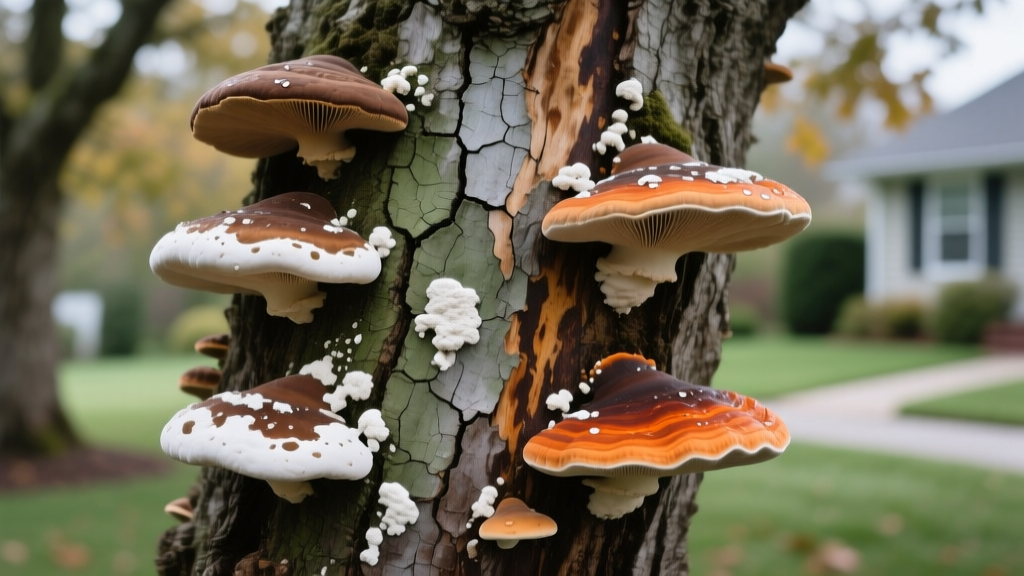
Identifying Tree Fungus Types: Symptom Diagnosis and Rescue Fixes
Fungal pathogens do not announce their arrival with subtle hints; they dismantle a tree's vascular system, decay its structural core, and suffocate its roots. Misdiagnosing the specific pathogen leads to wasted chemical applications and irreversible canopy dieback. Accurately identifying tree fungus types requires a systematic triage approach divided into three diagnostic zones: the canopy, the trunk, and the root flare.
This guide provides a symptom-to-solution framework for the most destructive landscape fungi, complete with specific active ingredients, application rates, and 2026 market pricing for professional-grade rescue treatments.
The Canopy Zone: Foliar and Needle Tree Fungus Types
Foliar pathogens rarely kill a mature tree outright in a single season, but consecutive years of defoliation deplete carbohydrate reserves, leaving the tree vulnerable to secondary borers. Diagnosis hinges on lesion shape, spore color, and leaf placement.
Anthracnose (Apiognomonia and Discula species)
Symptoms: Irregular, dark brown to black blotches that follow the leaf veins, often causing the leaf to curl or distort. In sycamores and oaks, you will see 'witches' brooms' (dense clusters of twigs) and severe spring defoliation.
Rescue Fix: Anthracnose is a cool-weather disease. Chemical rescue is only viable if applied at bud break. Use Chlorothalonil (e.g., Daconil Weather Stik) as a protectant. Mix at a rate of 1.4 to 2.0 pints per 100 gallons of water. Apply three times at 10-day intervals starting when buds swell. For larger specimens where spraying is impossible, trunk-inject Propiconazole (e.g., Alamo) at 2 ml per inch of Diameter at Breast Height (DBH) in early spring.
Powdery Mildew (Erysiphe and Podosphaera species)
Symptoms: A distinct white, talcum-powder coating on new growth and shaded lower branches. Unlike other fungi, powdery mildew thrives in dry, humid conditions with poor air circulation.
Rescue Fix: Avoid heavy nitrogen fertilization, which pushes the succulent new growth that mildew targets. For chemical intervention, use Myclobutanil (e.g., Eagle 20EW) at 6 to 12 fl oz per 100 gallons. Rotate with a biorational option like Potassium Bicarbonate (e.g., MilStop) at 2.5 to 5 lbs per 100 gallons to prevent fungicide resistance.
The Trunk Zone: Cankers and Wood-Decaying Tree Fungus Types
When tree fungus types attack the trunk, the structural integrity of the tree is immediately compromised. Wood-decaying fungi are generally untreatable with chemicals; management focuses on prolonging life and mitigating hazard.
⚠️ Hazard Warning: Fruiting Bodies (Conks)
If you see shelf-like mushrooms (conks) protruding from the lower trunk or root flare, the internal decay is already advanced. According to the University of California IPM program, the presence of Armillaria mellea (Oak Root Fungus) fruiting bodies indicates severe structural failure risk. No fungicide will cure wood decay; consult an ISA-certified arborist for a sonic tomography assessment to determine if removal is necessary.
If you see shelf-like mushrooms (conks) protruding from the lower trunk or root flare, the internal decay is already advanced. According to the University of California IPM program, the presence of Armillaria mellea (Oak Root Fungus) fruiting bodies indicates severe structural failure risk. No fungicide will cure wood decay; consult an ISA-certified arborist for a sonic tomography assessment to determine if removal is necessary.
Hypoxylon Canker (Hypoxylon atropunctatum)
Symptoms: Typically attacks stressed oaks. The bark sloughs off in patches, revealing a grayish-black, crusty layer of fungal stroma underneath. You will notice rapid canopy thinning and branch dieback starting at the top.
Rescue Fix: There is no chemical cure for Hypoxylon once the stroma is visible. The rescue protocol is entirely cultural: relieve drought stress via deep-root watering (delivering 1.5 inches of water weekly to the drip line) and apply a 3-inch layer of arborist wood chip mulch over the root zone, keeping it 6 inches away from the trunk flare to retain soil moisture without suffocating the cambium.
The Root Zone: Soil-Borne Tree Fungus Types
Root pathogens are the most insidious because above-ground symptoms (wilting, chlorosis) mimic drought stress, leading homeowners to overwater and accelerate the fungal life cycle.
Phytophthora Root and Crown Rot
Symptoms: The tree exhibits drought-like wilting despite moist soil. The definitive diagnostic test requires excavating the root flare and scraping the outer bark. If the inner cambium layer is cinnamon-brown to brick-red instead of healthy cream or green, Phytophthora is present. As noted by Penn State Extension, this water-mold thrives in heavy, poorly drained clay soils.
Rescue Fix:
- Site Correction: Excavate the root flare using an air spade to expose the trunk base and improve oxygen exchange.
- Chemical Drench: Apply Mefenoxam (e.g., Subdue MAXX) as a soil drench at a rate of 1 to 2 fl oz per 1,000 square feet of root zone. Water it in immediately with 0.25 inches of irrigation.
- Trunk Injection: For high-value specimens, inject Phosphorous Acid (e.g., Agri-Fos or Alamo). Phosphites do not eradicate the pathogen but boost the tree's natural phytoalexin defense response. Dosage: 4 ml per inch of DBH, diluted 1:1 with water.
Verticillium Wilt (Verticillium dahliae)
Symptoms: Sudden, unilateral wilting—one side of the tree or a single major scaffold branch will turn yellow and collapse while the rest of the canopy appears healthy. Scraping the sapwood of the affected branch reveals dark green to black vascular streaking.
Rescue Fix: Verticillium is a soil-borne fungus that permanently colonizes the xylem. Fungicides are ineffective once the tree is infected. The rescue strategy is supportive: prune out dead wood (sterilizing pruning shears with 70% isopropyl alcohol between every cut), apply a balanced 10-10-10 slow-release fertilizer to encourage callus tissue over the infected vascular rings, and heavily mulch to moderate soil temperatures.
Fungicide Application Matrix and Cost Breakdown
Selecting the correct chemistry is critical. Using a contact fungicide on a systemic root rot will yield zero results. Below is a diagnostic matrix for professional-grade products commonly used in residential and commercial tree care.
| Active Ingredient | Trade Name Example | Application Method | Target Tree Fungus Types | Est. Cost (2026) |
|---|---|---|---|---|
| Chlorothalonil | Daconil Weather Stik | Foliar Spray | Anthracnose, Leaf Spot, Rust | $85 / gallon |
| Propiconazole | Banner MAXX II | Trunk Injection / Spray | Rust, Powdery Mildew, Anthracnose | $140 / gallon |
| Mefenoxam | Subdue MAXX | Soil Drench | Phytophthora Root Rot, Pythium | $280 / gallon |
| Phosphorous Acid | Agri-Fos / Alamo | Trunk Injection | Phytophthora, Oak Root Fungus | $55 / quart |
| Myclobutanil | Eagle 20EW | Foliar Spray | Powdery Mildew, Apple Scab | $110 / lb (Wettable Powder) |
Step-by-Step: Executing a Phosphite Trunk Injection
For soil-borne tree fungus types like Phytophthora, trunk injections bypass poor soil conditions and deliver the active ingredient directly into the xylem. Follow this precise protocol to avoid girdling the tree.
- Measure DBH: Wrap a diameter tape around the trunk at exactly 4.5 feet above ground level. A tree with a 38-inch circumference has a 12-inch DBH.
- Calculate Dosage: Using Agri-Fos (4 ml per inch DBH), a 12-inch tree requires 48 ml of product. Dilute 1:1 with distilled water for a total injection volume of 96 ml.
- Drill Ports: Using a 5/32-inch drill bit, drill holes at a 45-degree downward angle into the sapwood (no deeper than 1.5 inches). Space the ports every 4 to 6 inches around the base of the trunk, staying within the bottom 12 inches of the root flare.
- Inject and Seal: Insert the injection tees, attach the pressurized canisters, and allow the tree to uptake the solution (usually 15-30 minutes). Remove tees and seal holes with a non-asphalt pruning sealer or wax to prevent secondary borer entry.
When to Abandon Chemical Rescue
Not every tree can be saved. Recognizing the point of no return prevents hazardous situations and wasted capital. Consider removal over treatment if:
- Advanced Armillaria: White mycelial fans are present under the bark at the root flare, and the soil is saturated with honey-colored mushrooms.
- Ganoderma Applanatum: Large, shelf-like conks are present at the base of a mature hardwood, indicating >40% internal structural decay.
- Vascular Collapse: More than 50% of the canopy has experienced sudden wilt due to Verticillium or Ceratocystis (Oak Wilt), and the tree is located near high-value targets (homes, power lines).
Accurate diagnosis of tree fungus types is the cornerstone of urban forestry management. By matching the specific pathogen's life cycle to the correct chemical active ingredient and application timing, you can successfully rescue compromised trees and preserve your landscape canopy.

