
Pest Control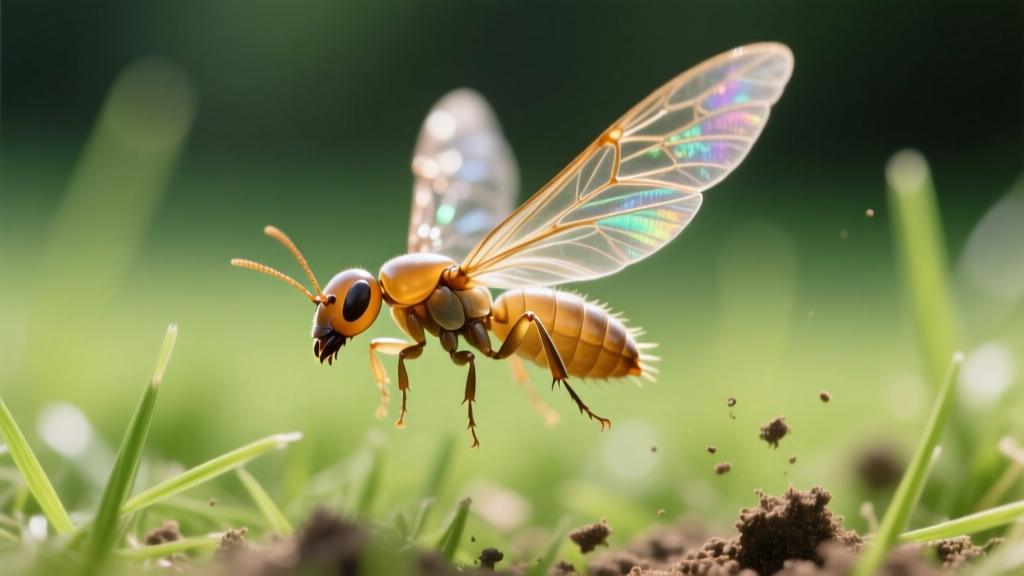
Termite Swarmers: What a Photo of a Termite With Wings Reveals
When you capture or examine a photo of a termite with wings, you are looking at a reproductive alate, commonly known as a swarmer. The presence of these winged insects in your yard or on your windowsills is not a random occurrence; it is a highly synchronized biological event indicating that a mature, established termite colony is nearby and actively attempting to expand. Unlike worker termites that remain hidden within soil and wood, swarmers emerge en masse to mate and establish new colonies. Recognizing the specific anatomical traits in a swarmer photograph is the first critical step in deploying an effective yard defense strategy.
Decoding the Visual Evidence: Swarmer Anatomy
Homeowners frequently mistake termite swarmers for flying ants, particularly carpenter ants. Misidentification leads to ineffective treatment protocols, as ant baits and sprays do not eradicate termite colonies. A close inspection of a photo of a termite with wings reveals three distinct morphological features that separate them from their ant counterparts.
| Anatomical Feature | Termite Swarmer | Flying Carpenter Ant |
|---|---|---|
| Antennae | Straight, bead-like (moniliform) | Elbowed (geniculate) |
| Wing Structure | Four wings of equal length, extending well past the abdomen | Front wings longer than hind wings |
| Waist (Thorax-Abdomen) | Thick, broad connection (no pinch) | Narrow, sharply pinched petiole |
| Coloration | Dark brown to black body, translucent milky wings | Varied (black, red, brown), tinted wings |
If the insect in your photograph exhibits straight antennae and four identical, paddle-shaped wings that easily detach when touched, you are dealing with a termite. According to the National Pest Management Association, discarded piles of these translucent wings near foundation walls or patio doors are often the only visible evidence of a swarming event, as the insects shed them shortly after landing.
The Biological Purpose of the Nuptial Flight
Termite colonies typically require three to five years to mature enough to produce alates. When you see a photo of a termite with wings, it confirms the local colony has reached reproductive maturity. Swarming is triggered by specific environmental cues: usually a combination of rising spring temperatures and recent rainfall that softens the soil, making it easier for newly mated pairs to excavate founding chambers.
CRITICAL WARNING: Do not ignore shed wings. Even if the swarmers themselves have died or been eaten by birds, the discarded wings indicate that surviving mated pairs have likely burrowed into the soil near your foundation to start secondary colonies.
Species Profiling Through Swarmer Characteristics
Not all winged termites pose the exact same threat level. Identifying the species based on swarmer size and color dictates your treatment approach.
- Eastern Subterranean Termites (Reticulitermes flavipes): The most common and destructive species in North America. Swarmers are dark brown to black, roughly 3/8 inch long, and typically swarm in the morning during early spring.
- Formosan Subterranean Termites (Coptotermes formosanus): An aggressive invasive species prevalent in the Gulf Coast and Southeast. Swarmers are larger (1/2 inch), pale yellowish-brown, and swarm at night in late spring, often congregating around exterior light fixtures.
- Drywood Termites (Incisitermes spp.): Unlike subterranean species, these do not require soil contact. Swarmers are reddish-brown with smoky gray wings and typically emerge in late summer or early fall.
Tactical Yard Defense: Eradicating the Source Colony
Surface spraying visible swarmers with over-the-counter aerosol insecticides is a futile defense mechanism. Swarmers are merely the reproductive fraction of the colony; the millions of wood-consuming workers remain safely underground. Effective yard defense requires targeting the subterranean network using non-repellent liquid termiticides.
The Fipronil Trenching Protocol
Creating a continuous chemical barrier in the soil prevents foraging workers from entering your home and transfers the active ingredient back to the colony through grooming and trophallaxis (food sharing).
- Calculate the Perimeter: Measure the total linear footage of your home's foundation. A standard 2,000 sq ft home typically requires treating 150 to 200 linear feet.
- Dig the Trench: Excavate a trench 6 inches wide and 6 inches deep directly against the foundation wall. Remove all debris and roots.
- Mix the Termiticide: Use a professional-grade non-repellent like Taurus SC (9.1% Fipronil). As of 2026, a 20oz bottle costs approximately $90 and yields 24 gallons of finished solution at the standard 0.06% concentration rate.
- Apply the Solution: Apply exactly 4 gallons of finished solution per 10 linear feet of trench. For a 200-foot perimeter, you will need 80 gallons of solution.
- Backfill and Treat: Push the excavated soil back into the trench and apply an additional 1 gallon of solution per 10 linear feet over the backfilled soil to seal the barrier.
The Environmental Protection Agency (EPA) emphasizes that soil-applied termiticides must be applied strictly according to label directions to prevent groundwater contamination and ensure structural safety.
Bait Station Deployment for Long-Term Monitoring
If trenching is physically impossible due to concrete patios, retaining walls, or landscaping features, a baiting system offers a highly effective alternative. Systems like the Advance Termite Bait System utilize cellulose matrices laced with chitin synthesis inhibitors (such as diflubenzuron).
Install bait stations in the soil every 10 feet around the perimeter of the structure, placing them 2 to 4 feet away from the foundation. The monitoring base contains untreated wood. Once termite activity is confirmed during your 90-day inspection intervals, replace the monitoring base with an active bait cartridge. The workers consume the bait and share it with the colony, ultimately disrupting their ability to molt and causing colony collapse within 60 to 90 days.
Moisture and Mulch Management Protocols
Chemical and bait treatments will fail if the yard environment remains highly conducive to termite survival. Subterranean termites require constant moisture to prevent desiccation. Modifying the yard's hydrology is a mandatory component of defense.
- Grading Corrections: Ensure the soil slopes away from the foundation at a minimum drop of 1/4 inch per foot for the first 6 feet. This prevents water from pooling against the concrete, which washes away soil termiticides and creates ideal termite habitats.
- Mulch Clearance: Wood mulch retains moisture and provides a hidden bridge over chemical barriers. Maintain a strict 12-inch bare-soil or gravel gap between the foundation wall and any organic mulch beds.
- Downspout Extensions: Route all gutter downspouts at least 5 feet away from the foundation using solid PVC or corrugated extensions to prevent concentrated soil saturation.
Frequently Asked Questions
How long do termite swarmers live after they emerge?
Most swarmers die within 24 to 48 hours if they fail to find a mate and suitable soil to burrow into. However, their short lifespan is irrelevant to your defense strategy; the primary colony that produced them remains active and destructive underground.
Can I treat the yard myself if I only see a few winged termites?
While DIY trenching with Fipronil is effective for preventative maintenance, a visible swarm usually indicates a massive, mature colony. For active infestations where structural wood is already compromised, hiring a licensed professional who can combine interior drilling, exterior trenching, and warranty-backed monitoring is highly recommended by Penn State Extension entomologists.
Do outdoor bug zappers help control termite swarmers?
No. Bug zappers are largely ineffective against termite swarmers. Termites are poor fliers and rely on wind currents; they rarely navigate toward UV light traps with the same efficiency as mosquitoes or moths. Relying on zappers provides a false sense of security while the colony continues to expand.

