
Pest Control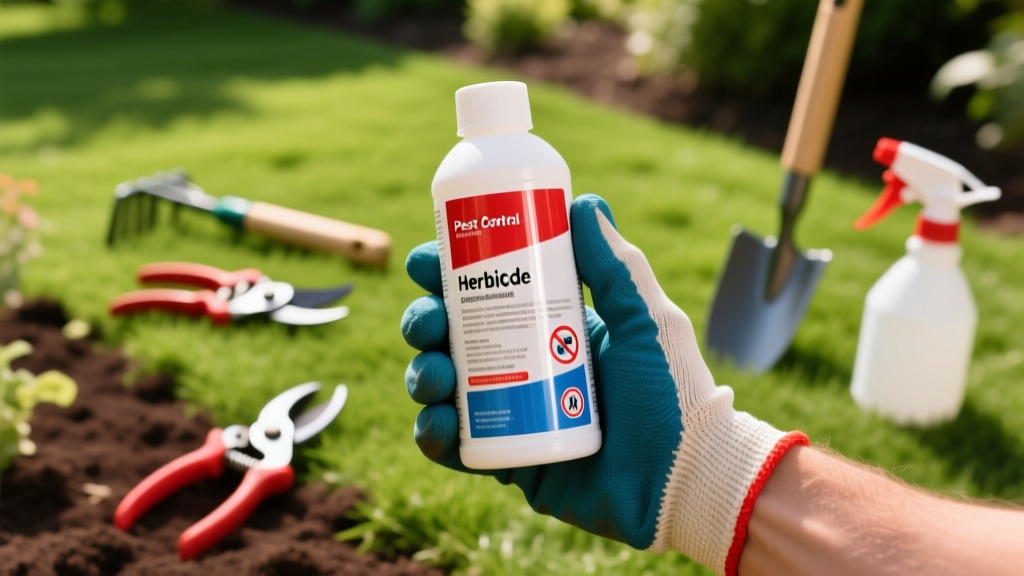
Decoding the Image Herbicide Label for Fertilizer Compatibility
The Chemistry Behind the Image Herbicide Label
When managing southern turfgrasses like Bermuda, Zoysia, and Centipede, integrating weed control with soil nutrition is a precise science. The image herbicide label provides critical instructions for eliminating stubborn weeds like yellow nutsedge and wild onion, but it rarely details the complex agronomic interactions between its active ingredients and your soil's nutrient profile. Most Image brand concentrates rely on Imazaquin (typically 70.5% in the 8 oz concentrate, retailing around $24.99 to $28.99 in 2026), an imidazolinone-class herbicide. Understanding how Imazaquin behaves in the soil matrix is the key to preventing nutrient lockout and turf phytotoxicity.
Imazaquin, Soil pH, and Cation Exchange
Imazaquin is a weak acid with a pKa of approximately 3.8. This chemical property dictates its behavior in the soil profile based on your lawn's pH and organic matter content. In alkaline soils (pH above 7.0), Imazaquin becomes highly anionic, reducing its binding to soil clay particles and organic matter. This increases its bioavailability, which can lead to severe root pruning in sensitive turfgrasses and carryover damage to nearby ornamental beds. Conversely, in acidic soils (pH 5.5 to 6.5), the herbicide binds tightly to the soil's cation exchange capacity (CEC), providing a safer environment for turf roots but potentially requiring a higher application rate (up to 1.0 oz per 1,000 sq ft) to maintain weed control efficacy.
⚠️ Critical Soil Warning: If your soil test reveals a pH above 7.2 and your turf is planted in sandy loam with low organic matter (below 1.5%), do not apply Image concentrate at the maximum label rate. The lack of organic binding sites combined with high pH will cause the herbicide to leach into the root zone, mimicking severe nitrogen burn and stunting root growth for up to 90 days.
Tank-Mixing Matrix: Image Herbicide and Fertilizers
Many homeowners attempt to save time by tank-mixing Image herbicides with liquid fertilizers. While the physical compatibility is generally stable, the chemical interactions can alter both the herbicide's efficacy and the fertilizer's nutrient uptake. Below is a compatibility matrix based on current agronomic data for southern turf management.
| Fertilizer Type | Compatibility with Image (Imazaquin) | Agronomic Impact & Label Adjustments |
|---|---|---|
| Ammonium Sulfate (21-0-0) | Excellent | Lowers localized soil pH, increasing herbicide binding and turf safety. Add 1 lb per 1,000 sq ft. |
| Chelated Iron (Fe-EDDHA) | Caution | Heavy metals can bind with imidazolinones in the tank. Mix separately or apply Iron 48 hours post-herbicide. |
| Urea (46-0-0) | Good | Rapid nitrogen flush can increase turf metabolism, potentially accelerating herbicide degradation. Standard rates apply. |
| Liquid Kelp / Humic Acid | Poor | High carbon binding sites in humics will neutralize Imazaquin in the tank, rendering the weed control useless. |
Sequencing Soil Nutrition and Weed Control
If you decide against tank-mixing to preserve the integrity of both your soil amendments and the herbicide, timing becomes your primary variable. The image herbicide label mandates specific waiting periods for seeding and planting, but it leaves the sequencing of granular and liquid fertilizers to the applicator's judgment. Follow this 14-day protocol to maximize nutrient uptake without compromising weed eradication.
- Day 1: Soil Preparation & Mowing. Mow the turf to 1.5 inches to expose the weed foliage. Do not apply any pre-emergent or liquid carbon products.
- Day 2: Herbicide Application. Apply Image concentrate at 0.5 oz per 1,000 sq ft using a calibrated pump sprayer. Ensure soil is moist but not saturated; Imazaquin requires soil moisture to move into the weed root zone.
- Day 3-5: Irrigation & Absorption. Apply 0.5 inches of water to activate the soil residual. Avoid heavy rainfall runoff, which can move the unbound herbicide into ornamental beds.
- Day 7: Foliar Nutrient Application. Apply a low-nitrogen, high-potassium foliar spray (e.g., 5-0-20) to support turf cell wall strength and mitigate any sub-lethal herbicide stress.
- Day 14: Granular Soil Feeding. Apply your primary granular fertilizer (e.g., 16-4-8 with 2% iron). By this time, the Imazaquin has firmly bound to the soil colloids, and the turf is ready to utilize the macronutrients without chemical interference.
Troubleshooting Phytotoxicity and Nutrient Lockout
Even with strict adherence to the label, environmental variables can trigger adverse reactions. If your lawn exhibits signs of distress after combining Image herbicide applications with soil nutrition programs, use this diagnostic framework to identify the failure mode.
- Symptom: Yellowing at the leaf tips with stunted root growth.
Cause: Imazaquin root uptake in high-pH soils. Fix: Apply a 1-inch layer of acidic organic compost (like pine bark fines) to lower the surface pH and increase organic binding sites. Avoid further nitrogen applications until roots recover. - Symptom: Rapid necrosis (browning) within 48 hours of application.
Cause: Tank-mixing with liquid iron or applying during ambient temperatures above 85°F. Fix: Flush the soil profile with 1 inch of water to dilute the chemical concentration in the thatch layer. Apply a liquid seaweed extract to stimulate stress-hormone recovery. - Symptom: Weeds survive despite correct application rates.
Cause: High soil organic matter (above 5%) or heavy clay content sequestering the active ingredient. Fix: For the next application cycle, increase the Image concentrate rate to the maximum label allowance (1.0 oz/1,000 sq ft) and add a non-ionic surfactant at 0.25% v/v to improve foliar absorption, bypassing the soil-sequestration issue.
Expert Sourcing and Label Verification
Herbicide formulations and environmental regulations are subject to continuous updates. Always verify the most current physical image herbicide label on the product container before mixing, as manufacturers periodically adjust inert ingredients and surfactant blends that can alter fertilizer compatibility. For comprehensive data on imidazolinone soil dynamics and turfgrass nutrition, consult the Environmental Protection Agency's pesticide labeling guidelines and the University of Georgia Turfgrass Extension resources, which provide region-specific soil management protocols for southern lawns.

