
Pest Control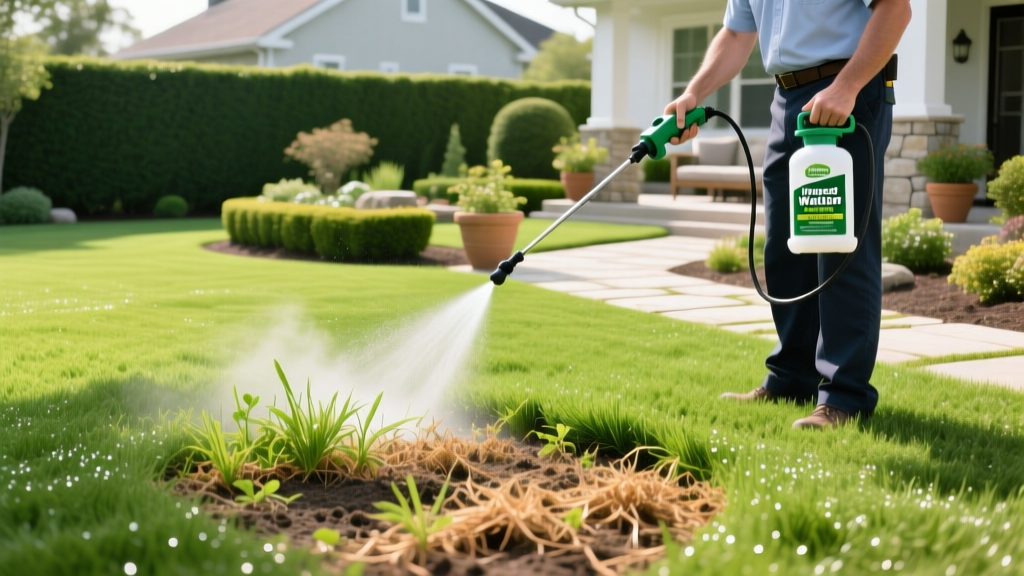
Mastering Spot Treatments with Image Southern Lawn Weed Killer
Broadcast spraying herbicides across an entire southern lawn is often inefficient, expensive, and increases the risk of phytotoxicity to warm-season grasses. When dealing with localized infestations of stubborn broadleaf and sedge weeds, targeted application is the superior strategy. Image Southern Lawn Weed Killer, primarily relying on the active ingredient Imazaquin, is a cornerstone product for southern turf managers and homeowners. However, its efficacy relies entirely on precise calibration, correct surfactant selection, and strict adherence to temperature thresholds.
This guide details the exact spot-treatment protocols for utilizing Image formulations against the most pervasive southern weeds, specifically yellow nutsedge and dollarweed, while protecting sensitive turfgrasses like St. Augustine and Centipedegrass.
Decoding the Active Ingredient: How Imazaquin Works
The flagship active ingredient in most Image southern lawn products is Imazaquin (an imidazolinone herbicide). Unlike contact herbicides that burn foliage on impact, Imazaquin is a systemic, root-absorbed, and foliar-absorbed amino acid synthesis inhibitor. It halts the production of valine, leucine, and isoleucine, effectively starving the weed at the cellular level.
Critical Information Gain: Imazaquin possesses significant soil residual activity. While this is excellent for preventing nutsedge tubers (nutlets) from germinating, it means you cannot overseed your lawn with cool-season grasses (like annual ryegrass) for up to 18 months after application. Plan your winter lawn strategy accordingly.
Target Weed Profiles and Spot-Treatment Strategies
Spot-treating requires identifying the specific morphology of the weed to ensure the herbicide reaches the meristematic tissue.
1. Yellow and Purple Nutsedge (Cyperus spp.)
Nutsedge is technically a sedge, not a grass or broadleaf weed, making it immune to standard 2,4-D formulations. It reproduces via underground tubers. A single purple nutsedge plant can produce hundreds of tubers in a single season.
- Identification: Triangular stem (roll it between your fingers), leaves arranged in sets of three, rapid vertical growth that outpaces surrounding Bermuda or Zoysia.
- Spot-Treatment Timing: Apply when the nutsedge is actively growing and has reached the 3- to 5-leaf stage. Treating it too early (1-leaf stage) means the root system isn't developed enough to translocate the Imazaquin down to the tubers.
- Application Technique: Spray until the foliage is uniformly wet but not dripping. Imazaquin requires heavy soil activity, so watering the spot with 0.25 inches of irrigation 24 hours after application drives the chemical into the root zone.
2. Dollarweed (Hydrocotyle spp.)
Dollarweed thrives in poorly drained, compacted soils and shaded areas where St. Augustinegrass struggles. Its round, scalloped leaves and creeping stolons make it highly competitive.
- Identification: Circular leaves with a petiole (stem) attaching directly to the center of the leaf blade (unlike pennywort, where the stem attaches at the edge).
- Spot-Treatment Timing: Early spring when soil temperatures consistently hit 65°F. Dollarweed is highly susceptible to Imazaquin during its active vegetative expansion phase.
- Application Technique: Use a flat-fan nozzle to ensure the waxy leaf cuticle is thoroughly coated. Adding a non-ionic surfactant is non-negotiable for dollarweed to break the surface tension of the water droplets.
Step-by-Step Spot-Treatment Calibration Protocol
Using a 1-gallon or 2-gallon pump sprayer for spot treatments requires precise mixing to avoid turf burn. Follow this exact protocol for a 1-gallon batch:
- Water Selection: Use distilled or filtered water if your local tap water has a pH above 7.5. High pH water rapidly degrades Imazaquin through alkaline hydrolysis.
- Herbicide Measurement: For a 1-gallon spot treatment targeting 500 square feet, mix 0.15 fluid ounces (approx. 4.5 mL) of Image Southern Weed Killer concentrate. Use a graduated syringe for accuracy; the cap measurements on retail bottles are notoriously inaccurate for small batches.
- Surfactant Addition: Add 0.5 teaspoons (2.5 mL) of a high-quality Non-Ionic Surfactant (NIS). Do not use Methylated Seed Oil (MSO) or Crop Oil Concentrates (COC) when spot-treating St. Augustinegrass in the summer, as these drastically increase the risk of foliar burn.
- Agitation: Close the sprayer and shake vigorously for 30 seconds. Imazaquin formulations can settle if left static.
- Nozzle Selection: Swap the default cone-spray nozzle for an 8002 or 8004 flat-fan nozzle. This provides a uniform swath, preventing overlapping overlaps that double the chemical dose on a single patch of grass.
Grass Safety Matrix: Turf Tolerance Limits
Warm-season grasses metabolize Imazaquin at different rates. Exceeding the maximum application rate for a specific turf type will result in severe chlorosis (yellowing) and root stunting. Consult the matrix below before treating.
| Turfgrass Species | Tolerance Level | Max Spot-Treatment Rate | Critical Restrictions |
|---|---|---|---|
| St. Augustinegrass | Moderate | 0.15 oz per 1,000 sq ft | Do not apply if air temp exceeds 90°F. Highly prone to stunting. |
| Bermudagrass | High | 0.30 oz per 1,000 sq ft | May cause temporary growth retardation; avoid during spring green-up. |
| Zoysiagrass | High | 0.30 oz per 1,000 sq ft | Safe for established lawns; do not treat newly sodded Zoysia. |
| Centipedegrass | Low to Moderate | 0.10 oz per 1,000 sq ft | Extremely sensitive to iron deficiency; Imazaquin can exacerbate chlorosis. |
For comprehensive regional data on turfgrass safety and weed management, refer to the Clemson University Home & Garden Information Center guidelines on lawn herbicides. Additionally, the NC State University TurfFiles database provides updated, state-specific extension recommendations for warm-season grass maintenance.
Common Application Failures and Edge Cases
Even with the correct product, spot treatments frequently fail due to environmental and mechanical variables. Here is how to troubleshoot the most common issues:
The 'Green but Stunted' Failure Mode
If the nutsedge turns yellow at the tips but the base remains green and stops growing, the herbicide dose was too low to translocate to the tubers, or the weed was under drought stress. Weeds shut down their vascular systems during drought to conserve water, preventing the systemic herbicide from moving into the roots. Fix: Irrigate the lawn deeply two days before application to ensure the weeds are actively translocating nutrients (and herbicide) downward.
Rainfastness Miscalculations
Unlike contact herbicides that become rainfast in 2 hours, Imazaquin requires a minimum of 24 hours of dry weather to be fully absorbed by the foliage and begin moving into the soil profile. If a sudden thunderstorm washes the product off the leaves within 12 hours, the spot treatment will fail. Monitor localized micro-climates and radar closely before spraying.
Hard Water Interference
Calcium and magnesium ions in hard tap water can bind to the Imazaquin molecule, rendering it inactive before it even reaches the weed. If you notice white scale buildup on your sprayer nozzle, your water is too hard for direct herbicide mixing. Add 1 to 2 ounces of Ammonium Sulfate (AMS) to your 1-gallon sprayer before adding the herbicide. The AMS acts as a water conditioner, tying up the hard water ions and protecting the active ingredient.
Warning on Ornamental Proximity: Imazaquin is highly mobile in sandy soils and can be absorbed by the roots of nearby ornamental shrubs and trees. Never spot-treat weeds within the drip line of azaleas, camellias, or dogwoods, as root uptake will cause severe leaf cupping, necrosis, and potential plant death.
Frequently Asked Questions
How long does it take to see results on nutsedge?
Because Imazaquin is a slow-acting systemic herbicide, do not expect overnight browning. Initial yellowing of the weed foliage typically appears in 7 to 14 days. Complete necrosis and tuber death can take 3 to 4 weeks, depending on soil moisture and temperature.
Can I mix Image Southern Weed Killer with fertilizers?
It is not recommended to tank-mix Imazaquin with liquid nitrogen fertilizers for spot treatments. The high salt index of liquid nitrogen increases the osmotic pressure on the weed leaf, causing rapid cell dehydration (burn) before the herbicide has time to translocate systemically. Apply your fertilizer separately, at least 5 days apart from your herbicide application.
Is it safe for pets after application?
Keep pets and children off the treated spots until the liquid has completely dried into the turf canopy. In optimal conditions (low humidity, light breeze), this takes 2 to 3 hours. Once dry, the chemical is bound to the foliage and soil matrix, posing minimal risk of dermal transfer.

