
Pest Control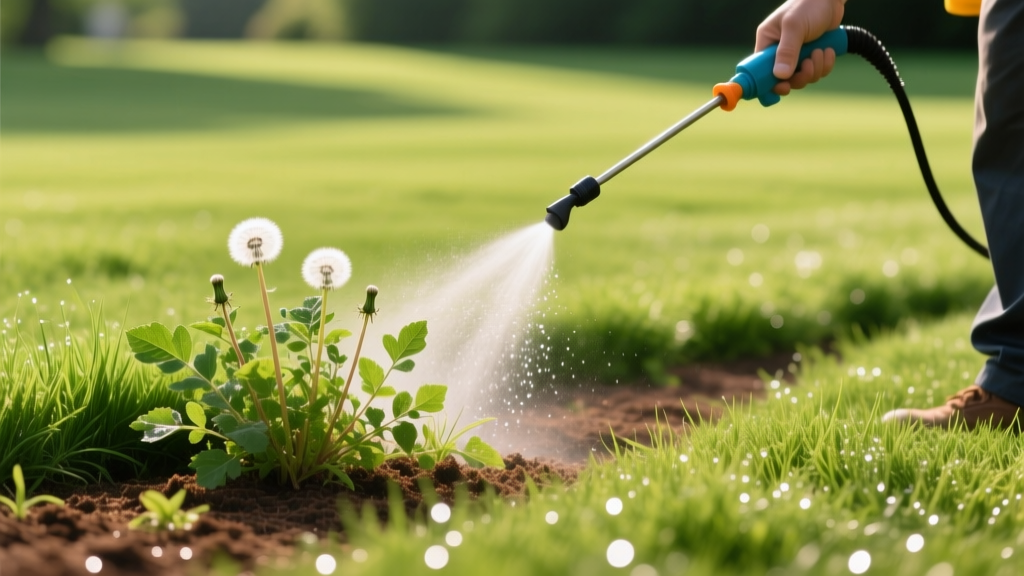
Image Weed Killer for Southern Lawns: Spot-Treatment Guide
The Image Brand Ecosystem: Matching Active Ingredients to Southern Grasses
When deploying an image weed killer for southern lawns, the most critical failure point is grass-species mismatch. The 'Image' brand portfolio relies on distinct active ingredients that react violently if applied to the wrong warm-season turf. Unlike broad-spectrum glyphosate, these selective herbicides target specific enzymatic pathways in weeds while sparing desirable grass—provided you select the correct SKU for your turf type.
⚠️ Phytotoxicity Warning: Never apply Image products containing 2,4-D, Mecoprop-p, or Dicamba (formulated specifically for Bermuda and Zoysia) to St. Augustinegrass or Centipedegrass. This will cause severe chlorosis, leaf curling, and turf death within 72 hours. Conversely, Atrazine-based Image products are safe for St. Augustine but will severely stunt Bermudagrass if applied during active summer growth.
For precise spot-treatments in mixed or sensitive southern lawns, Image Kills Nutsedge Concentrate (Active Ingredient: Imazaquin 1.5%) is the gold standard. As an Acetolactate Synthase (ALS) inhibitor, Imazaquin halts the synthesis of branched-chain amino acids in target weeds. Because it relies on root and shoot translocation, it is highly effective against perennial sedges and broadleaves but requires a 14 to 21-day window to show complete necrosis.
Weed Species Spot-Treatment Matrix
Broadcast spraying wastes chemical and increases the risk of soil residual buildup. Use this matrix to calibrate your spot-treatment approach based on the specific weed species invading your turf.
| Target Weed | Recommended Image SKU | Mix Rate (per 1,000 sq ft) | Surfactant Required? | Rainfast Time |
|---|---|---|---|---|
| Yellow Nutsedge | Image Kills Nutsedge (Imazaquin) | 2.5 fl oz | Yes (NIS at 0.25% v/v) | 4 Hours |
| Dollarweed | Image Kills Nutsedge (Imazaquin) | 2.5 fl oz | Yes (NIS at 0.25% v/v) | 4 Hours |
| Lawn Burweed | Image Atrazine Weed Killer | 4.3 fl oz | No | 2 Hours |
| Virginia Buttonweed | Image Kills Nutsedge (Imazaquin) | 2.5 fl oz (Repeat in 6 weeks) | Yes (NIS at 0.25% v/v) | 4 Hours |
Step-by-Step Spot-Treatment Protocol
Spot-treating requires a different methodology than hose-end broadcast applications. Follow this protocol to ensure maximum herbicide translocation to the weed's rhizomes and tubers.
- Pre-Treatment Irrigation: Water the target area deeply 24 hours before application. Imazaquin requires active plant translocation to kill the underground nutlets. If the weeds are drought-stressed, their stomata close and metabolic activity stalls, rendering the herbicide ineffective.
- Map and Measure the Patch: Do not guess the square footage. Measure the length and width of the weed cluster. A 5 ft by 10 ft patch equals 50 square feet. This exact measurement dictates your chemical volume.
- Mix the Surfactant First: Fill your 1-gallon pump sprayer halfway with water. Add a Non-Ionic Surfactant (NIS) at a rate of 1/2 teaspoon per gallon. Agitate the tank. Never use Crop Oil Concentrate (COC) during summer months, as it will burn St. Augustinegrass.
- Add the Herbicide: Using a dedicated measuring syringe, draw the exact volume of Image concentrate required for your measured square footage. Inject it into the sprayer and fill the rest with water.
- Apply with a Flat-Fan Nozzle: Adjust your sprayer wand to a flat-fan pattern rather than a cone spray. Keep the nozzle 12 to 18 inches above the weed canopy and maintain a steady walking pace to deliver a uniform, fine mist until the leaves are wet, but not dripping.
Calibration Math for Micro-Patches
The label states 2.5 fl oz per 1,000 sq ft. If you are treating a small 100 sq ft cluster of dollarweed, the math requires precision to avoid overdosing the soil. Divide 2.5 oz by 10, which equals 0.25 fl oz. Mix this 0.25 oz into roughly 0.5 gallons of water to ensure adequate coverage without saturating the soil profile, which can lead to root uptake by your desirable turf.
"Precision in spot-treatment isn't just about saving money on chemical costs; it's about preserving the soil microbiome and preventing residual herbicide lockup that can stunt your turf's root development for months."
Common Application Failures and Edge Cases
Even experienced landscapers encounter edge cases when using ALS-inhibitors in southern climates. Troubleshoot your applications using these common failure modes:
- The 'Melted' St. Augustine Edge Case: If you notice leaf tip burn 48 hours after spraying Imazaquin, check your local weather history. Applications made when ambient temperatures exceed 85°F cause rapid herbicide vaporization and tissue burn. Always spot-treat before 10:00 AM in summer months.
- Ignoring the Mowing Window: Mowing immediately before or after application strips the leaf surface area needed to absorb the chemical. Wait a minimum of 3 days after mowing to allow weed foliage to regenerate, apply the herbicide, and wait another 3 days before your next mow.
- Soil pH Lockup: Imazaquin activity and soil persistence are heavily influenced by soil pH. In highly alkaline soils (pH > 7.5), Imazaquin degrades slower and can persist, potentially stunting the roots of desirable turfgrass if overlapping passes occur. Spot-treating minimizes this risk, but avoid treating the exact same soil footprint more than twice per season.
- Expecting Overnight Results: Homeowners often reapply after 5 days because the weeds 'look fine.' ALS inhibitors do not cause rapid contact burn like carfentrazone. The weeds will slowly yellow and collapse over 14 to 21 days. Reapplication before this window causes severe turf toxicity.
Post-Treatment Lawn Recovery and Cultural Controls
Chemical eradication is only half the battle. Weeds like nutsedge and dollarweed are indicator species for underlying environmental stressors. According to turf management protocols outlined by NCSU TurfFiles, yellow nutsedge thrives in compacted, poorly drained soils, while dollarweed indicates excessive irrigation.
After your Image herbicide has successfully eliminated the weed canopy, address the root cause. For nutsedge patches, use a manual core aerator to relieve soil compaction in the treated zone. For dollarweed, recalibrate your irrigation system to deliver 0.5 inches of water per cycle rather than 1 inch, allowing the topsoil to dry out between waterings. Furthermore, the EPA Safe Pest Control guidelines mandate proper rinsing of spot-treatment equipment to prevent cross-contamination of sensitive ornamental beds.
Frequently Asked Questions
Can I mix Image Kills Nutsedge with fertilizer?
No. Mixing Imazaquin with liquid nitrogen fertilizers increases the uptake rate unpredictably, leading to severe phytotoxicity on Centipedegrass and St. Augustinegrass. Apply fertilizers at least 7 days apart from your herbicide application.
What is the cost difference between concentrate and ready-to-spray?
As of 2026, a 16 oz bottle of Image Kills Nutsedge Concentrate retails between $18.00 and $22.00, treating up to 6,400 sq ft. A 32 oz Ready-to-Spray (RTS) hose-end bottle costs around $14.00 but is highly discouraged for spot-treatment due to massive overspray and inability to control the exact application volume.

