
Pest Control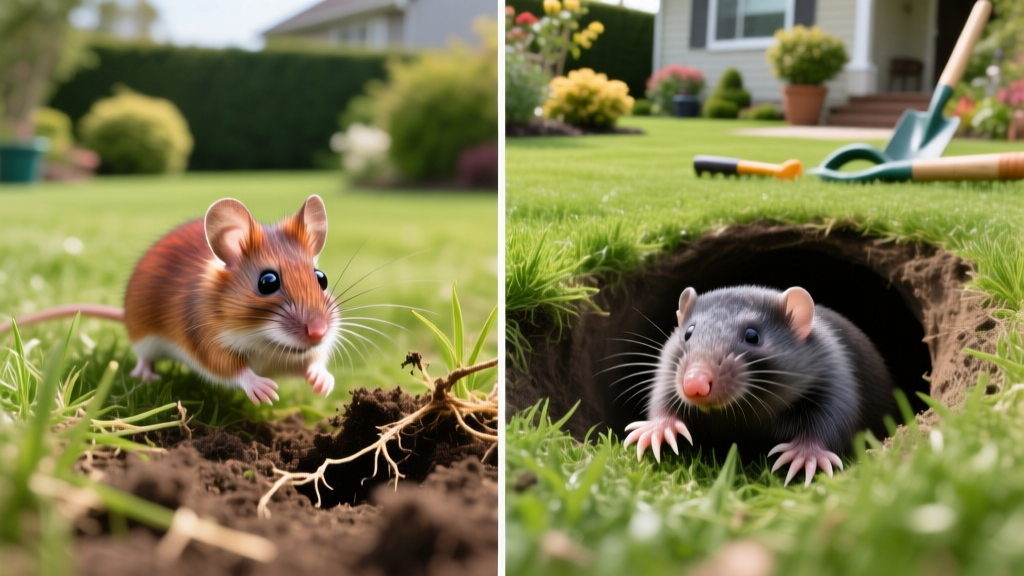
Images of Voles vs Moles: Visual Identification & Deterrence
The Limits of Static Images: Why Behavior Matters
Homeowners frequently search for images of voles after waking up to mysterious, frustrating lawn damage. While reference pictures are a helpful starting point, relying solely on static images to identify the culprit destroying your turf often leads to misdiagnosis. A meadow vole (Microtus pennsylvanicus) and an Eastern mole (Scalopus aquaticus) may both wreak havoc on a landscape, but their biology, tunneling habits, and dietary preferences are vastly different. Treating a mole infestation with vole bait, or vice versa, is a waste of time and money.
To effectively manage rodent and mammal pests, you must look beyond the physical appearance of the animal and learn to read the environmental signatures they leave behind. This guide bridges the gap between simple visual identification and advanced, behavior-based pest management, providing you with the exact frameworks needed to reclaim your lawn.
Visual Identification Matrix: Voles vs. Moles vs. Gophers
When you finally trap or spot the animal, use this morphological matrix to confirm your suspect. Note that voles are rodents (related to mice), while moles and gophers are insectivores and burrowing mammals, respectively.
| Physical Feature | Meadow Vole | Eastern Mole | Pocket Gopher |
|---|---|---|---|
| Snout Shape | Blunt, rounded, mouse-like | Pointed, elongated, star-nosed | Blunt, wide with prominent incisors |
| Tail Length | Short (approx. 1-2 inches) | Very short, nearly hairless | Hairless, rat-like (3-4 inches) |
| Ears | Small, partially hidden by fur | Completely hidden beneath skin | Small, visible but can close tightly |
| Front Paws | Standard rodent paws for grasping | Massive, outward-turned digging claws | Strong claws, smaller than mole paws |
| Primary Diet | Vegetation, bark, roots, bulbs | Earthworms, grubs, soil insects | Plant roots, tubers, underground crops |
Decoding Lawn Damage: Runways, Mounds, and Gnaw Marks
Because these animals spend 90% of their lives out of sight, the damage they leave is the most reliable identifier—far more useful than any photographs of the animals themselves.
The Vole Signature: Surface Runways and Bark Stripping
Voles are largely surface dwellers. They construct distinct 'runways'—trenches about 1.5 to 2 inches wide that weave through the grass. If you part the dead grass in these runways, you will notice the turf has been clipped at a sharp 45-degree angle. Furthermore, voles are notorious for girdling trees. If you find bark stripped from the base of young saplings or ornamental shrubs, extending up to the snow line or about 6 inches above the soil, you have a vole problem.
The Mole Signature: Volcano Mounds and Raised Ridges
Moles dig deep and push soil upward, creating perfectly symmetrical, volcano-shaped mounds. They also create raised surface ridges as they tunnel just beneath the topsoil hunting for grubs. Crucially, moles do not eat plant roots; if a plant dies in a mole tunnel, it is because the roots were suspended in the air and dried out, not because they were consumed.
The Gopher Signature: Fan-Shaped Mounds and Plugged Holes
Pocket gophers create asymmetric, fan-shaped or crescent-shaped mounds of soil. Unlike mole mounds, gopher mounds have a visible 'plug' of dirt off to one side where the animal entered and exited, which they immediately seal behind them to keep predators out.
Tactical Deterrence: Traps, Baits, and Exclusion
Once you have confirmed the presence of voles via runway inspection and bark damage, immediate intervention is required. As of 2026, integrated pest management (IPM) protocols favor targeted trapping and specific toxicants over broad-spectrum poisons.
⚠️ Toxicity Warning: When using Zinc Phosphide baits (such as Kaput-D ZP), extreme caution is required. This compound releases toxic phosphine gas when it contacts stomach acid. Never place this bait in open surface runways where foraging birds, pets, or non-target wildlife can access it. Always place it deep inside active underground burrows and cover the entry point.
1. Precision Trapping
Forget expensive, specialized 'mole' traps for voles. Standard wooden snap traps (like the Victor M040, costing roughly $4 for a two-pack) are highly effective when deployed correctly.
- Bait: Use a mixture of peanut butter and a small piece of Granny Smith apple.
- Placement: Set the trap directly inside an active surface runway, perpendicular to the path, so the trigger rests in the center of the trench.
- Concealment: Cover the trap with an inverted bucket or a specialized trap cover to prevent pets and birds from interacting with it.
2. Chemical Control (Rodenticides)
For severe infestations where trapping is insufficient, specialized baits are necessary. Kaput-D ZP Gopher Bait (active ingredient: 2% Zinc Phosphide) is a leading choice, retailing for approximately $22 per 4lb bag. Alternatively, anticoagulant baits containing Diphacinone can be used in secured bait stations, though they carry a higher risk of secondary poisoning to local owls and hawks.
3. Physical Exclusion
To protect high-value ornamental trees and garden beds, install physical barriers. Use 1/4-inch galvanized hardware cloth. Bury the mesh at least 6 inches deep and bend the bottom 2 inches outward into an 'L' shape facing away from the tree. This prevents voles from simply digging under the fence. Above ground, the mesh should extend 18 to 24 inches high to account for winter snow depths, which voles use as a shield to gnaw on bark.
Habitat Modification: Making Your Lawn Uninviting
Deterrence is a long-term strategy focused on removing the cover and food sources that attract voles in the first place. According to the University of Minnesota Extension, modifying the micro-habitat is the most sustainable way to reduce vole populations.
- Mowing Heights: Maintain your turf at 2.5 to 3 inches. Grass shorter than this exposes voles to aerial predators like hawks, while grass taller than 3 inches provides the dense canopy they require to hide their runways.
- Mulch Management: Keep mulch at least 3 inches away from the base of tree trunks. Limit mulch depth to a maximum of 2 inches. Deep, thick mulch beds are prime real estate for vole nesting.
- Debris Removal: Clear away thick brush piles, dense groundcovers (like ivy or pachysandra), and accumulated leaf litter near the perimeter of your home.
The 'Apple Sign' Test for Active Runways
Before deploying traps or baits, you must confirm which runways are currently active. Voles often abandon old tunnels. Perform the 'Apple Sign' test:
- Cut a 1-inch thick slice of fresh apple.
- Place the slice directly over a suspected runway, ensuring it blocks the path.
- Cover the apple with a heavy bucket or dark tarp to block out light and protect it from birds.
- Check the apple after 24 hours. If it features distinct, parallel gnaw marks, the runway is highly active and ready for trap placement.
Encouraging Natural Predators
A single barn owl can consume over 1,000 rodents in a year. Encouraging natural predators provides a free, continuous layer of pest control. Install a barn owl box 15 to 20 feet high on a pole or tree, facing east or southeast to catch the morning sun. Ensure the entrance hole is at least 3 inches in diameter. Additionally, avoid using broad-spectrum insecticides that kill the grubs and earthworms moles feed on; if you eliminate the mole's food source, the moles will move on, but the voles—which eat your plants—will remain.
For more comprehensive regional data on rodent life cycles and localized breeding seasons, consult the UC Statewide Integrated Pest Management Program. By combining accurate visual identification with targeted, behavior-specific interventions, you can effectively eliminate vole damage and restore the health of your landscape.

