
Pest Control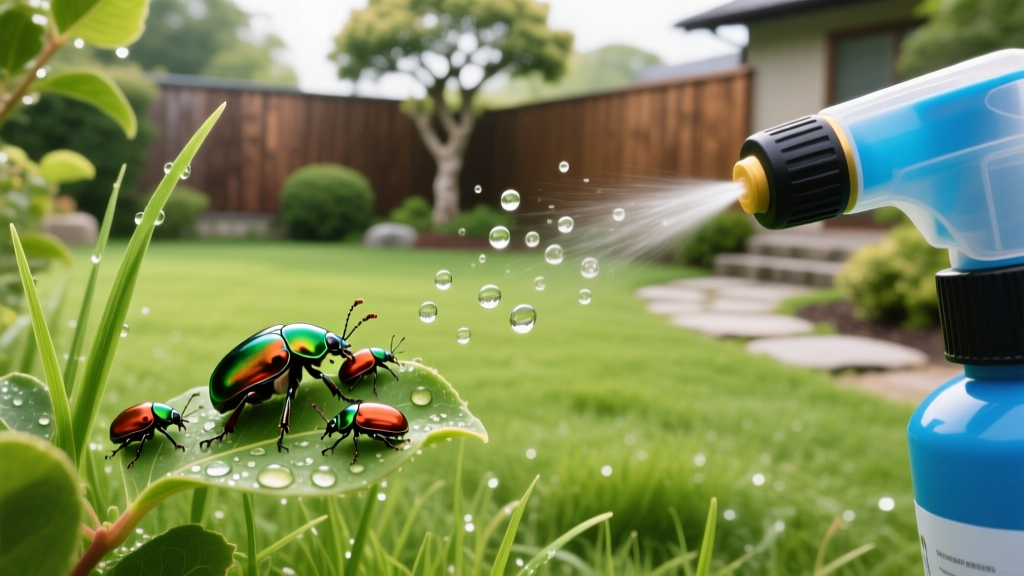
Effective Insect Spray for Japanese Beetles: A Yard Defense Guide
The Dual-Threat Lifecycle: Why Spray Timing is Non-Negotiable
Japanese beetles (Popillia japonica) present a unique challenge in yard defense because they inflict severe damage in two entirely different life stages. As adults, they skeletonize the foliage of over 300 plant species, with a particular affinity for roses, grapes, and linden trees. Below ground, their larval stage (white grubs) severs the root systems of turfgrass, causing massive brown patches that roll back like loose carpet. Selecting the correct insect spray for Japanese beetles requires matching the active ingredient to the specific lifecycle stage currently threatening your landscape.
Timing your application is dictated by local phenology rather than a fixed calendar date. Adult emergence typically correlates with the accumulation of 1,000 Growing Degree Days (GDD) with a base temperature of 50°F, which usually falls between mid-June and early July in temperate zones. Conversely, grub control sprays and drenches must be applied either preventatively in late spring or curatively in late summer when grubs are small and feeding near the soil surface. According to the USDA APHIS Japanese Beetle Program, misaligning your spray schedule with these biological triggers is the primary reason homeowners experience treatment failure.
Active Ingredient Matrix: Matching Chemistry to the Target Stage
Not all insect sprays are created equal. The efficacy of a product depends on its mode of action, residual half-life, and environmental toxicity profile. Below is a comparative breakdown of the most reliable active ingredients for Japanese beetle defense.
| Active Ingredient | Target Stage | Residual Activity | Pollinator Toxicity | Avg. Cost per 1,000 sq ft |
|---|---|---|---|---|
| Spinosad | Adults (Foliar) | 10-14 Days | Low (Once Dry) | $4.50 |
| Pyrethrin | Adults (Foliar) | 2-3 Days | High (Direct Contact) | $3.00 |
| Bifenthrin | Adults & Grubs | 30-60 Days | High | $2.50 |
| Chlorantraniliprole | Grubs (Soil) | 90-120 Days | Very Low | $8.00 |
| Trichlorfon | Grubs (Soil) | 7-14 Days | Moderate | $5.50 |
Adult Foliage Sprays: Contact and Ingestion Defense
When targeting adult beetles feeding on ornamental foliage, your goal is rapid knockdown combined with a residual feeding deterrent. Spinosad (found in products like Captain Jack's Deadbug Brew) is the premier organic choice. It is derived from soil bacteria and must be ingested by the beetle, meaning thorough coverage of the leaf surface is mandatory. It provides up to 14 days of residual control and is safe for pollinators once the spray has completely dried.
For conventional, broad-spectrum control, Bifenthrin (Talstar P) offers a longer residual window and acts as a contact poison. However, it is highly toxic to bees and aquatic life. If you opt for pyrethroids like bifenthrin or cyfluthrin, you must strictly avoid spraying any plants that are currently in bloom to protect foraging pollinators.
Turf Grub Drenches: Systemic and Soil-Applied Sprays
Foliar sprays do nothing to stop the subterranean grub stage. To protect your lawn, you must apply soil drenches or liquid sprays that penetrate the thatch layer. Chlorantraniliprole (Acelepryn) is the modern gold standard for preventative grub control. It binds tightly to soil organic matter, providing season-long control with virtually zero toxicity to bees or earthworms. It must be applied in May or early June, as it takes 30 to 60 days to fully translocate into the root zone where grubs will eventually feed.
If you miss the preventative window and discover active grub damage in August or September, you need a fast-acting curative spray. Trichlorfon (Dylox) penetrates the soil rapidly and kills grubs within 24 to 48 hours, though its residual life is short. It requires immediate watering-in (at least 0.5 inches of irrigation) to move the active ingredient past the thatch layer.
Step-by-Step Foliar Spray Application Protocol
Achieving maximum efficacy from your insect spray for Japanese beetles requires precise mechanical execution. Follow this protocol to ensure optimal canopy penetration and chemical adherence.
- Scout and Assess: Inspect susceptible plants (roses, grapes, crabapples) in the early morning when beetles are sluggish and clustered. Note the severity of skeletonization.
- Mix with a Surfactant: Japanese beetle feeding damage creates a waxy, degraded leaf surface that repels water. Add a non-ionic surfactant (NIS) to your tank mix at a rate of 0.25% v/v (approximately 1/2 teaspoon per gallon of water). This breaks the surface tension and forces the spray to coat the undersides of the leaves.
- Select the Correct Nozzle: Use a hollow-cone nozzle for foliar sprays. This nozzle type produces fine, swirling droplets that wrap around leaf structures, ensuring the underside of the canopy—where beetles prefer to feed—is thoroughly coated.
- Apply During Low Wind: Spray when wind speeds are below 5 mph and temperatures are under 85°F to prevent drift and rapid volatilization of the active ingredient.
- Establish a Re-treatment Schedule: If using organic Spinosad, plan to reapply every 10 to 14 days during peak emergence (late June through July). If using conventional Bifenthrin, a single application may suffice for 30 days, but monitor for secondary pests like spider mites, which can flare up when pyrethroids eliminate their natural predators.
⚠️ Pollinator Protection Warning: Never apply any insect spray to blooming weeds (like clover or dandelions) interspersed within your lawn or garden beds. Even products labeled as 'bee-safe' when dry can cause acute mortality if bees are directly hit by the wet spray mist. Mow blooming weeds immediately before treating the area.
Organic vs. Conventional: Cost, Efficacy, and Trade-offs
Choosing between organic and conventional sprays involves balancing immediate knockdown power against long-term ecological impact and budget constraints.
The Organic Route: Spinosad and Neem
Organic sprays prioritize environmental safety and targeted action. Spinosad disrupts the insect's nervous system upon ingestion, causing paralysis and death within 48 hours. While it costs roughly 40% more per application than synthetic pyrethroids, it preserves beneficial predatory insects like ladybugs and lacewings, which help control secondary pests like aphids. Neem oil acts primarily as an antifeedant and growth regulator; it will not kill adult beetles on contact but will deter them from feeding if applied before heavy infestations begin.
The Conventional Route: Pyrethroids and Carbaryl
Conventional sprays like Carbaryl (Sevin) and Bifenthrin offer aggressive, immediate contact kills. They are highly cost-effective for large properties with severe infestations. However, their broad-spectrum nature means they will indiscriminately kill beneficial insects, potentially triggering outbreaks of non-target pests later in the season. Furthermore, repeated use of pyrethroids can lead to localized resistance in beetle populations and severe toxicity to aquatic ecosystems if runoff reaches storm drains.
Three Fatal Application Mistakes That Guarantee Rebound
Mistake 1: Relying on Pheromone Traps
Many homeowners deploy floral-scented pheromone traps believing they are reducing the local population. Research from the University of Minnesota Extension confirms that these traps attract significantly more beetles from neighboring properties than they actually catch. The result is a concentrated swarm of beetles feeding on the plants immediately adjacent to the trap. Rely on targeted sprays, not traps.
Many homeowners deploy floral-scented pheromone traps believing they are reducing the local population. Research from the University of Minnesota Extension confirms that these traps attract significantly more beetles from neighboring properties than they actually catch. The result is a concentrated swarm of beetles feeding on the plants immediately adjacent to the trap. Rely on targeted sprays, not traps.
Mistake 2: Ignoring the Thatch Layer During Grub Treatment
Applying a liquid grub spray to a lawn with more than 0.5 inches of thatch is a waste of money. The thatch acts as a hydrophobic sponge, binding the chemical before it reaches the soil where the grubs are feeding. You must core aerate or use a liquid thatch-removal agent (like molasses-based soil conditioners) prior to applying soil drenches to ensure the active ingredient reaches the root zone.
Applying a liquid grub spray to a lawn with more than 0.5 inches of thatch is a waste of money. The thatch acts as a hydrophobic sponge, binding the chemical before it reaches the soil where the grubs are feeding. You must core aerate or use a liquid thatch-removal agent (like molasses-based soil conditioners) prior to applying soil drenches to ensure the active ingredient reaches the root zone.
Mistake 3: Spraying During Peak Heat
Applying emulsifiable concentrate (EC) sprays when ambient temperatures exceed 85°F causes the solvent carriers to vaporize too quickly, leading to severe phytotoxicity (leaf burn) on delicate plants like roses and hydrangeas. Always schedule foliar applications for the early morning or late evening.
Applying emulsifiable concentrate (EC) sprays when ambient temperatures exceed 85°F causes the solvent carriers to vaporize too quickly, leading to severe phytotoxicity (leaf burn) on delicate plants like roses and hydrangeas. Always schedule foliar applications for the early morning or late evening.
Expert References & Ongoing Monitoring
Effective Japanese beetle management is an ongoing process that requires adapting to local population fluctuations. By selecting the precise insect spray for the current lifecycle stage and adhering to strict application protocols, you can protect both your ornamental canopy and your turfgrass root systems without causing collateral ecological damage. For ongoing regional emergence data and localized treatment advisories, consult your state's university extension entomology department or the USDA APHIS tracking maps.

