
Pest Control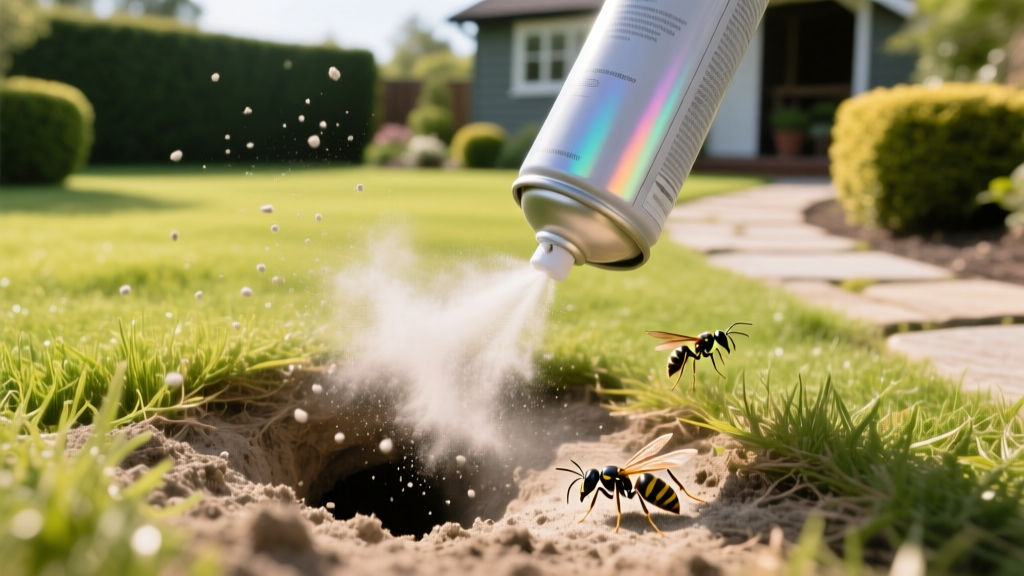
Best Insecticide Dust for Ground Wasps: Lawn Defense Guide
The Mechanics of Subterranean Wasp Eradication
Ground-nesting wasps, primarily aggressive yellowjackets (Vespula spp.) and large cicada killers (Sphecius speciosus), excavate extensive burrow systems in thin, well-draining turfgrass. Liquid sprays routinely fail in these scenarios because soil moisture rapidly degrades the active ingredient, and surface tension prevents the chemical from penetrating deep into the nesting chamber. In contrast, applying a targeted insecticide dust for ground wasps leverages the insects' natural grooming habits and the electrostatic adherence of soil particles to transfer the toxin directly into the colony's core.
According to the University of California Statewide IPM Program, subterranean yellowjacket colonies can house thousands of workers by late summer, making precise, low-impact dust applications the most reliable eradication method for residential lawns. This guide details the exact formulations, application protocols, and safety measures required to neutralize ground wasps without destroying your turf.
⚠️ CRITICAL IDENTIFICATION WARNING: Before treating, ensure you are targeting aggressive pests. Solitary ground-nesting bees (like Andrenidae) are vital, non-aggressive pollinators that leave small, harmless soil mounds. Yellowjackets exhibit rapid, erratic flight patterns, lack visible body hair, and will aggressively defend their 1-to-2-inch wide burrow entrances.
Why Dust Outperforms Liquid and Aerosol Sprays
When defending a lawn from stinging insects, understanding formulation physics is critical. Aerosol wasp sprays project a stream up to 20 feet, but they only kill insects on contact at the surface. The colony queen and thousands of larvae remain protected inches below the frost line. Liquid drenches often pool at the burrow entrance, creating a chemical barrier that surviving wasps will simply bypass by digging a secondary exit hole.
Insecticide dusts, formulated with silica aerogel or talc carriers, remain suspended in the burrow's dry air currents. As foraging wasps enter the treated tunnel, the dust clings to their legs and antennae. Through trophallaxis (food sharing) and social grooming, the active ingredient is distributed throughout the nesting chamber, ultimately reaching the queen. Furthermore, modern waterproof dust formulations resist clumping in morning dew, maintaining their efficacy for up to eight months in the soil matrix.
Active Ingredient Matrix: Choosing the Right Dust
Not all dusts are created equal. Carbaryl-based dusts (like traditional Sevin) face heavy regulatory restrictions in states like California and Washington due to aquatic toxicity. For 2026 lawn defense, synthetic pyrethroids and desiccant blends offer superior safety profiles for turf environments. Below is a comparison of the most effective commercial dusts available to homeowners.
| Product (Brand) | Active Ingredient | Mode of Action | Est. Price (2026) | Best Lawn Application |
|---|---|---|---|---|
| Delta Dust | Deltamethrin (0.05%) | Nerve toxin, waterproof carrier | $25 - $30 (1 lb) | Damp soil, high-moisture clay lawns |
| Drione Dust | Silica Gel + Pyrethrins + PBO | Desiccation + nerve toxin | $28 - $34 (7 oz) | Dry, sandy soils; rapid knockdown |
| Tempo Dust | Cyfluthrin (1%) | Contact nerve toxin | $18 - $22 (10 oz) | High-traffic areas requiring fast kill |
For most residential lawn scenarios, Delta Dust is the premier choice. Its unique waterproof formulation ensures that evening irrigation or morning dew will not deactivate the deltamethrin, providing a long-lasting residual barrier inside the burrow.
Precision Application Protocol: The Dusk Injection Method
Applying insecticide dust for ground wasps requires strict adherence to timing and technique. Executing this protocol incorrectly will result in angry, displaced wasps swarming your yard. Follow these exact steps for safe eradication.
Step 1: Daytime Mapping and Preparation
- Locate the Burrows: Between 10:00 AM and 2:00 PM, observe the lawn to identify active flight paths.
- Mark the Targets: Insert a brightly colored golf tee or wire flag 6 inches away from each active hole. Do not stand directly over the nest.
- Load the Duster: Use a professional-grade brass bellows duster (such as the JT Eaton Hand Duster). Fill the canister only 1/3 full with your chosen dust. Pro Tip: Drop two copper pennies into the canister to agitate the dust and prevent clumping during compression.
Step 2: The Dusk Approach
Wait until dusk or after dark. According to Texas A&M AgriLife Extension, ground wasps are highly sensitive to light and will aggressively fly toward light sources at night. Use a flashlight equipped with a red-lens filter, as wasps cannot perceive red light wavelengths. Wear thick leather gloves, long pants tucked into socks, and a veil if dealing with a massive colony.
Step 3: Injection and Retreat
- Approach the marked hole from the side, never casting your shadow directly over the entrance.
- Insert the duster's metal extension tube approximately 1 inch into the burrow opening.
- Deliver exactly 2 to 3 quick puffs (approximately 2 grams of dust). You should see a faint cloud settle at the lip of the hole.
- Do NOT plug the hole. Leave the entrance completely open. Plugging it with dirt or a rock forces the wasps to dig alternative escape routes, bypassing the treated zone entirely.
- Back away slowly and leave the area undisturbed for 48 to 72 hours.
Troubleshooting Common Application Failures
Even with precise execution, environmental variables can impact efficacy. Use this decision framework to diagnose and resolve post-treatment issues.
Issue: High wasp activity continues after 72 hours.
Diagnosis: The colony has a secondary exit hole you missed, or heavy soil moisture clumped a non-waterproof dust.
Solution: Re-map the area at noon. Treat any newly discovered exits with a waterproof Deltamethrin dust.
Diagnosis: The colony has a secondary exit hole you missed, or heavy soil moisture clumped a non-waterproof dust.
Solution: Re-map the area at noon. Treat any newly discovered exits with a waterproof Deltamethrin dust.
Issue: Dust blew back into your face during application.
Diagnosis: Over-pressurizing the bellows or applying during high evening winds.
Solution: Squeeze the bellows gently to create a smoke-like suspension rather than a forceful blast. Always apply when wind speeds are under 5 mph.
Diagnosis: Over-pressurizing the bellows or applying during high evening winds.
Solution: Squeeze the bellows gently to create a smoke-like suspension rather than a forceful blast. Always apply when wind speeds are under 5 mph.
Post-Treatment Lawn Recovery and Nest Capping
Once 72 hours have passed and no flight activity is observed at the burrow entrances, the colony is neutralized. The residual soil mounds left behind can cause scalping issues when mowing and create tripping hazards.
To restore the turf, use a steel rake to break apart the dried soil mound. Fill the voided burrow shaft with a 50/50 mix of screened topsoil and fine compost to prevent the ground from sinking after heavy rains. Overseed the bare patch with a fast-germinating perennial ryegrass blend, keeping the area lightly moist for 14 days to ensure seamless integration with the surrounding lawn canopy.
Frequently Asked Questions
Can I pour gasoline or boiling water into the ground wasp hole?
No. Pouring gasoline is illegal, highly toxic to your lawn's root system, and creates a severe groundwater contamination risk. Boiling water rarely penetrates deep enough to kill the queen and will instantly sterilize the soil, killing beneficial microbes and preventing grass regrowth in that spot for months.
Will treating the lawn harm my pets?
When applied correctly inside the burrow using 2-3 grams of dust, the exposure risk to pets is negligible. However, keep dogs and cats off the treated lawn for 24 hours post-application to ensure the dust settles fully into the subterranean tunnel and is not tracked across the surface grass.
Do I need to treat the entire lawn preventatively?
Never broadcast insecticide dust across an entire lawn for preventative wasp control. This practice is ecologically damaging and economically wasteful. Ground wasps seek out specific micro-environments (bare, dry, sandy patches). Maintain a thick, well-irrigated turf canopy; dense grass naturally deters ground-nesting wasps from excavating in the first place.

