
Pest Control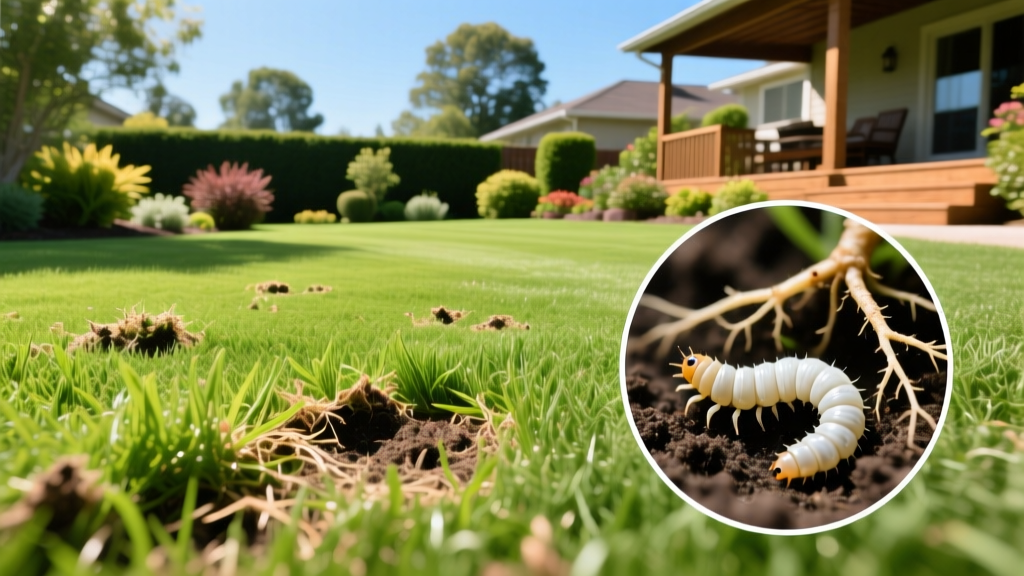
Insecticide Grub Control: Preventative vs. Curative Lawn Treatments
The Biology of Grub Damage: Why Timing Dictates Success
White grubs—the larval stage of Japanese beetles, June bugs, and European chafers—are among the most destructive subterranean pests in residential turfgrass. They sever grass roots just below the soil line, leading to irregular brown patches that can be rolled back like loose carpet. However, applying the wrong chemical at the wrong time is the leading cause of treatment failure. According to University of Minnesota Extension, understanding the specific life stage of the grub is the single most critical factor in selecting an effective insecticide grub treatment.
Data Highlight: Grub Consumption Rates
A single mature third-instar grub can consume up to 15 times its body weight in turfgrass roots daily. A threshold of 5 to 10 grubs per square foot is generally required to cause visible turf decline, though highly stressed or drought-prone lawns may show damage at lower populations.
A single mature third-instar grub can consume up to 15 times its body weight in turfgrass roots daily. A threshold of 5 to 10 grubs per square foot is generally required to cause visible turf decline, though highly stressed or drought-prone lawns may show damage at lower populations.
Grubs hatch in mid-summer, feed aggressively in late summer and early fall, burrow deep to overwinter, and resume feeding briefly in spring before pupating. This biological clock creates two distinct windows for chemical intervention: preventative (targeting eggs and early instars) and curative (targeting actively feeding mature larvae).
Preventative Insecticide Grub Treatments: The Proactive Route
Preventative treatments are designed to create a toxic barrier in the root zone before eggs hatch or while the newly emerged grubs are small and highly susceptible. These products must be applied between late May and early August, depending on your hardiness zone.
Key Preventative Active Ingredients
- Chlorantraniliprole (Trade names: Acelepryn, Scotts GrubEx1): This is the current gold standard for residential preventative care. It is highly effective against all major grub species and has an exceptionally low toxicity profile for pollinators and mammals. It requires 60 to 90 days to fully translocate through the soil profile, meaning it must be applied in April or May for mid-summer protection. Expect to pay around $5.00 per 1,000 square feet for granular formulations.
- Imidacloprid (Trade names: Merit, BioAdvanced Grub Killer Plus): A systemic neonicotinoid that is highly effective when applied in June or early July. It moves through the soil faster than chlorantraniliprole but carries higher risks for non-target pollinators. Crucial rule: Never apply imidacloprid to lawns containing flowering weeds like clover or dandelions, as bees will forage on the contaminated nectar.
- Clothianidin (Trade name: Arena): Often used by commercial applicators, this neonicotinoid offers a wider application window and rapid soil penetration, though it is harder to source for residential use.
Curative Insecticide Grub Treatments: The Emergency Route
If you missed the preventative window and discover active grub damage in late August, September, or October, preventative chemicals will not work. The grubs are now large (second or third instar), their exoskeletons are thicker, and they require a fast-acting, short-residual curative insecticide.
Key Curative Active Ingredients
- Trichlorfon (Trade name: Dylox 6.2): The most widely available curative granular insecticide. It acts rapidly, killing grubs within 24 to 48 hours of contact. However, trichlorfon is highly sensitive to soil pH and temperature. According to research cited by Michigan State University Extension, trichlorfon degrades rapidly in alkaline soils. If your soil pH is above 7.0, the active ingredient can break down before it even reaches the root zone.
- Carbaryl (Trade name: Sevin): An older carbamate insecticide that provides curative control but is generally less effective than trichlorfon against larger third-instar grubs. It also poses higher toxicity risks to earthworms and aquatic invertebrates.
Warning: The Alkaline Soil Trap
Before applying Dylox (trichlorfon), test your soil pH. If your pH is 7.5 or higher, trichlorfon will degrade in as little as 3 to 5 days in the thatch layer, rendering your application useless. In high-pH soils, liquid curative applications of trichlorfon that bypass the thatch and are immediately watered in offer slightly better efficacy than granular forms.
Before applying Dylox (trichlorfon), test your soil pH. If your pH is 7.5 or higher, trichlorfon will degrade in as little as 3 to 5 days in the thatch layer, rendering your application useless. In high-pH soils, liquid curative applications of trichlorfon that bypass the thatch and are immediately watered in offer slightly better efficacy than granular forms.
Comparison Matrix: Preventative vs. Curative Grub Insecticides
Selecting the right product requires matching the chemical to the season and the pest's life stage. Use this matrix to guide your purchasing decision.
| Active Ingredient | Treatment Type | Target Window | Est. Cost (per 1k sq ft) | Residual Activity |
|---|---|---|---|---|
| Chlorantraniliprole | Preventative | April - May | $4.50 - $6.00 | 4 - 6 months |
| Imidacloprid | Preventative | June - Mid July | $3.00 - $4.50 | 2 - 3 months |
| Trichlorfon | Curative | August - October | $10.00 - $12.50 | 7 - 14 days |
| Carbaryl | Curative | August - September | $6.00 - $8.00 | 7 - 10 days |
Step-by-Step Application Protocol for Maximum Efficacy
Even the most expensive insecticide grub treatment will fail if applied incorrectly. Granular products sit harmlessly in the thatch layer unless properly activated. Follow this exact protocol to ensure the active ingredient reaches the feeding zone.
- Mow the Lawn First: Cut your grass to its normal height (usually 2.5 to 3.5 inches) and remove any excessive thatch. If your thatch layer exceeds 0.5 inches, core aerate or dethatch before applying chemicals, as thatch will bind the active ingredients and prevent them from reaching the soil.
- Calibrate Your Spreader: Do not guess the spreader setting. Check the product label for your specific broadcast or drop spreader model. Over-application wastes money and increases environmental runoff; under-application leads to surviving grubs and continued turf damage.
- Apply on Dry Foliage: Apply granular insecticides when the grass blades are completely dry to ensure the granules bounce off the foliage and fall directly to the soil surface.
- Water In Immediately (The Critical Step): You must apply 0.25 to 0.5 inches of irrigation immediately after application. This washes the granules off the grass blades and dissolves the active ingredient into the top 2 to 4 inches of soil where the grubs feed. Use a rain gauge or an empty tuna can placed on the lawn to measure exact water volume.
- Allow the Lawn to Dry: Keep children and pets off the treated area until the grass is completely dry. Once the water has evaporated, the chemical is locked into the soil matrix and the surface is safe for foot traffic.
Organic and Biological Alternatives to Synthetic Chemicals
For homeowners managing edible landscapes, protecting sensitive watersheds, or avoiding synthetic pesticides entirely, biological controls offer highly effective insecticide grub management when timed correctly.
Beneficial Nematodes (Heterorhabditis bacteriophora)
The Hb strain of beneficial nematodes are microscopic, unsegmented worms that actively hunt grubs in the soil. They enter the grub through natural openings, release a symbiotic bacteria that kills the host within 48 hours, and then reproduce inside the carcass.
Application Rules for Nematodes:
- Soil Temperature: Must be between 59°F and 86°F. Applying them to cold spring soil will result in total mortality.
- UV Protection: Nematodes are highly sensitive to ultraviolet light. Apply them at dusk or on a heavily overcast day.
- Moisture: The soil must be kept consistently moist for 14 days post-application to allow the nematodes to move through the soil water film.
- Rate: Apply at a rate of 1 billion nematodes per acre (approximately 25,000 per square foot).
Milky Spore (Paenibacillus popilliae)
Milky spore is a naturally occurring bacterium that specifically targets Japanese beetle grubs. While it is a popular long-term organic solution, it is important to manage expectations. Milky spore takes 2 to 4 years to build up sufficient spore counts in the soil to provide reliable control, and it is entirely ineffective against European chafers and June bugs. It is a legacy investment, not an emergency rescue treatment.
The Decision Framework: Which Route Should You Take?
Choose Preventative (Chlorantraniliprole) if your lawn has a history of grub damage, you live near wooded areas where adult beetles emerge, and you want a low-toxicity, season-long solution.
Choose Curative (Trichlorfon) ONLY if you are actively seeing brown, peeling turf in late summer and confirm the presence of 5+ grubs per square foot by digging a 1x1 foot test square.
Choose Nematodes if you maintain an organic yard, have an automated irrigation system to keep the soil moist, and are targeting late-summer instars.
Choose Preventative (Chlorantraniliprole) if your lawn has a history of grub damage, you live near wooded areas where adult beetles emerge, and you want a low-toxicity, season-long solution.
Choose Curative (Trichlorfon) ONLY if you are actively seeing brown, peeling turf in late summer and confirm the presence of 5+ grubs per square foot by digging a 1x1 foot test square.
Choose Nematodes if you maintain an organic yard, have an automated irrigation system to keep the soil moist, and are targeting late-summer instars.

