
Pest Control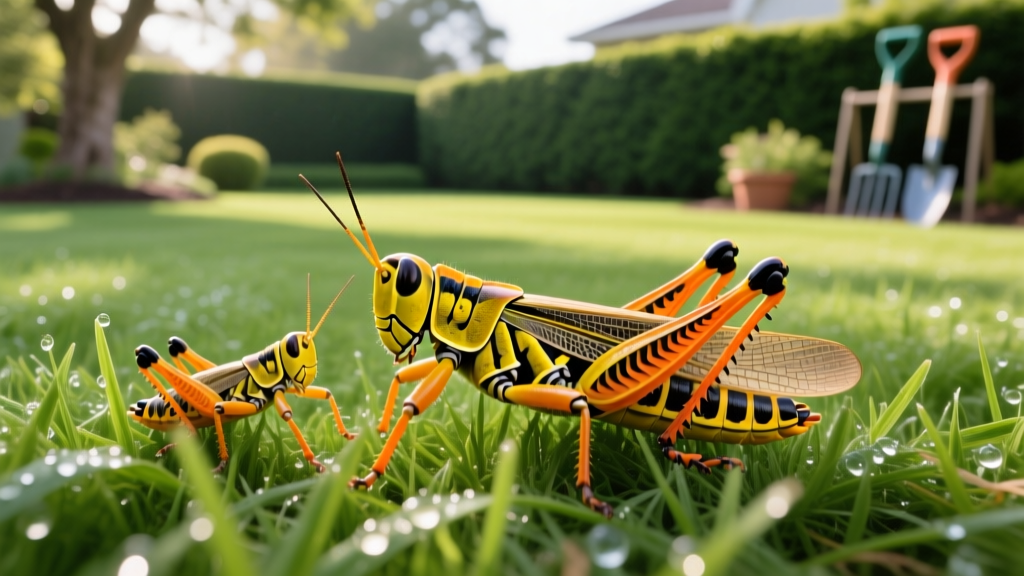
Best Insecticide for Lubber Grasshoppers: Nymph & Adult Control
Diagnosing the Infestation: Nymphs vs. Adults
The Eastern lubber grasshopper (Romalea microptera) is a heavy-bodied, flightless pest notorious for defoliating ornamental landscapes across the Southeastern United States. Before selecting an insecticide for lubber grasshoppers, you must accurately diagnose the life stage present in your yard, as their biological armor changes drastically as they mature.
Spring Nymphs (March to May)
Nymphs emerge from overwintering eggs in early spring. They are relatively small (1/4 to 1/2 inch), predominantly black with distinct yellow or orange longitudinal stripes, and highly gregarious. You will typically find them clustered by the dozens on broadleaf weeds or the lower leaves of susceptible ornamentals like crinum lilies, amaryllis, and cannas. Because they lack a hardened exoskeleton and detoxifying enzymes, nymphs are highly vulnerable to a wide range of contact and systemic insecticides.
Summer Adults (June to September)
By mid-summer, lubbers molt into massive adults reaching up to 3 inches in length. They display striking yellow, black, and red warning coloration (aposematism). Adults are solitary, possess a thick, waxy cuticle, and have evolved specialized midgut enzymes that rapidly detoxify many common botanical and synthetic pesticides. Treating adults requires a fundamentally different chemical approach than treating nymphs.
Why Standard Bug Sprays Fail on Adult Lubbers
Homeowners frequently report failure when using standard ready-to-spray pyrethroid hose-end products on adult lubbers. This failure occurs for three reasons:
- Cuticle Thickness: The adult exoskeleton is heavily sclerotized, preventing rapid dermal absorption of dilute active ingredients.
- Enzymatic Detoxification: Adult lubbers produce high levels of cytochrome P450 enzymes, which break down mild neurotoxins before they reach the central nervous system.
- Behavioral Avoidance: Adults are clumsy but mobile; they often drop to the soil base when disturbed, avoiding foliar sprays entirely.
Active Ingredient Comparison Matrix
Selecting the correct insecticide for lubber grasshoppers depends on your budget, organic preferences, and the current life stage of the pest. Below is a breakdown of the most effective active ingredients available to homeowners and lawn care professionals.
| Active Ingredient | Target Life Stage | Product Example | Approx. Cost | Application Rate |
|---|---|---|---|---|
| Bifenthrin (7.9%) | Nymphs & Adults | Talstar P / Bifen IT | $45 / 3/4 gal | 0.5 - 1.0 fl oz per gallon |
| Spinosad | Nymphs (Organic) | Monterey Garden Insect Spray | $25 / 16 oz | 2.0 fl oz per gallon |
| Carbaryl (5% Dust) | Adults (Bait/Dust) | Sevin Dust | $12 / 1 lb | Light dusting on soil/base |
| Nosema locustae | Early Nymphs (Bio) | Nolo Bait / Semaspore | $25 / 1 lb | 1 tsp per sq ft in weedy areas |
The Spring Nymph Protocol (March - May)
Catching the nymph stage is the single most effective way to prevent summer defoliation. According to the University of Florida IFAS Entomology Department, targeting the first and second instar nymphs prevents the population from establishing and spreading to high-value ornamentals.
Pro-Tip: The Perimeter Strategy
Lubber eggs are almost exclusively laid in sandy, weedy, overgrown margins at the edge of properties—not in maintained turfgrass. Focus 80% of your chemical application on the perimeter weeds, fence lines, and ditch banks bordering your yard.
Lubber eggs are almost exclusively laid in sandy, weedy, overgrown margins at the edge of properties—not in maintained turfgrass. Focus 80% of your chemical application on the perimeter weeds, fence lines, and ditch banks bordering your yard.
Step-by-Step Nymph Treatment
- Mix a Bifenthrin Solution: Combine 1.0 fluid ounce of a 7.9% Bifenthrin concentrate (like Talstar P) per gallon of water in a pump spraker. This yields a 0.06% active ingredient solution, strong enough to penetrate the nymph's cuticle.
- Target the Weeds: Spray the weedy perimeter margins thoroughly, ensuring runoff on the lower stems where nymphs congregate at night.
- Treat Susceptible Foliage: Apply a lighter foliar spray to the lower leaves of crinum lilies, amaryllis, and citrus trees. Bifenthrin leaves a residual surface barrier that remains lethal for up to 30 days.
Summer Adult Management (June - September)
If you missed the nymph window, you are now dealing with 3-inch adults. Foliar sprays are largely ineffective and wasteful at this stage. Instead, pivot to soil-applied dusts, toxic baits, and manual removal.
Carbaryl Bran Bait
Commercial lubber baits are difficult to source for small residential properties, but you can create a highly effective DIY bait. Mix 1 lb of wheat bran with 1 cup of water and 2 tablespoons of liquid Sevin (Carbaryl). Form the mixture into small clumps and place them at the base of heavily damaged plants in the evening. Lubbers are nocturnal foragers and will consume the bait overnight, dying by the following morning.
Manual Removal (The Soapy Water Method)
Because adults are slow and flightless, physical removal is highly practical for small infestations. Fill a half-gallon bucket with water and 3 tablespoons of dish soap. Knock the adults off the foliage directly into the bucket. The soap breaks the surface tension, drowning them instantly. Do not crush them on the ground; their hemolymph (blood) contains defensive toxins that can stain concrete and irritate skin.
Warning: Toxicity to Pets and Wildlife
Eastern lubber grasshoppers sequester toxins from the plants they eat and synthesize their own defensive chemicals. They are highly toxic to dogs, cats, and backyard poultry. If you use a chemical insecticide to kill them, the resulting carcasses remain toxic and can cause secondary poisoning. Always rake up and dispose of dead lubbers in sealed trash bags after a treatment.
Eastern lubber grasshoppers sequester toxins from the plants they eat and synthesize their own defensive chemicals. They are highly toxic to dogs, cats, and backyard poultry. If you use a chemical insecticide to kill them, the resulting carcasses remain toxic and can cause secondary poisoning. Always rake up and dispose of dead lubbers in sealed trash bags after a treatment.
Organic and Biological Controls
For homeowners managing sensitive ecosystems, near water bodies, or maintaining organic gardens, synthetic pyrethroids like bifenthrin are not viable options. The Clemson University Home & Garden Information Center recommends utilizing biological controls and reduced-risk organics for sustainable management.
Spinosad for Organic Nymph Control
Spinosad is a natural substance derived from soil-dwelling bacteria (Saccharopolyspora spinosa). It causes rapid excitation of the insect nervous system. It is highly effective on lubber nymphs when ingested or contacted. Mix 2.0 fl oz per gallon and apply to foliage. Note that Spinosad degrades rapidly in UV light, so apply it in the late evening and reapply every 7 to 10 days during peak nymph emergence.
Nosema locustae (Protozoan Bait)
Sold under brand names like Nolo Bait or Semaspore, Nosema locustae is a naturally occurring protozoan parasite that specifically targets grasshoppers and crickets. It is applied as a wheat bran bait scattered in weedy breeding areas.
The Catch: It only works on early-stage nymphs, takes 3 to 6 weeks to kill the host, and will not affect adult lubbers. However, it provides long-term, multi-year population suppression because the spores persist in the soil and are passed to subsequent generations.
Prevention and Habitat Modification
No insecticide for lubber grasshoppers will provide permanent relief if the habitat remains conducive to breeding. Lubbers require tall, unmanaged weeds to lay their egg pods (which contain 30-80 eggs each) in late summer.
- Mow Perimeters: Keep ditch banks, fence lines, and wooded edges mowed below 4 inches from August through October to destroy egg-laying sites.
- Remove Debris: Clear away piles of brush, tall grass clippings, and overgrown groundcover where adults hide during the heat of the day.
- Plant Resistant Ornamentals: If lubbers are an annual plague, replace highly susceptible plants like amaryllis and daylilies with resistant alternatives such as agapanthus, society garlic, or tough native ferns, which lubbers generally avoid due to their fibrous or chemically defended leaves.

