
Pest Control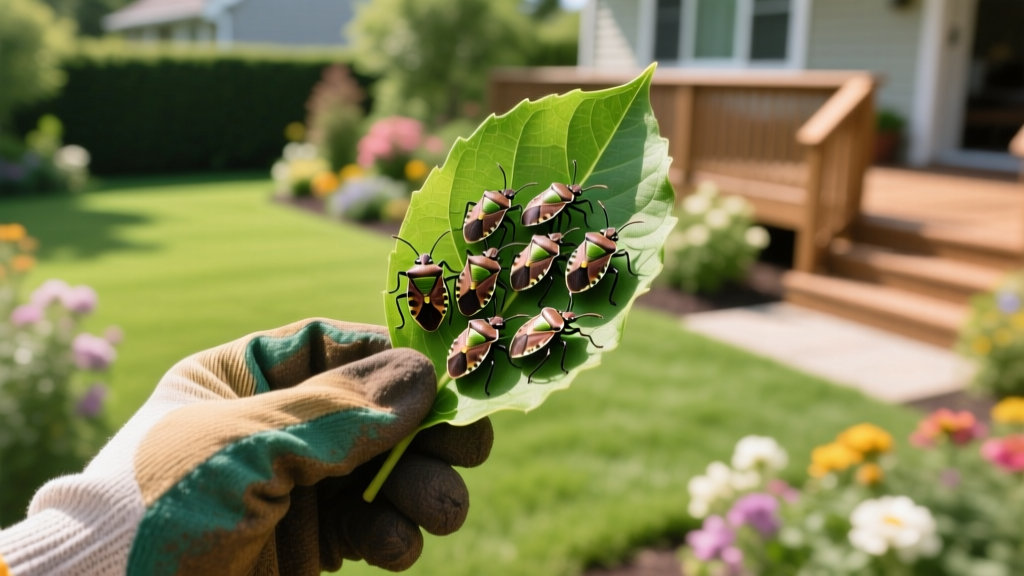
Defeating the Invasive Stink Bug: Yard Defense & Garden Control
The Invasive Stink Bug Threat Profile
The brown marmorated stink bug (Halyomorpha halys) is not merely a seasonal nuisance; it is a highly destructive invasive species that causes millions of dollars in agricultural damage annually and aggressively invades residential structures to overwinter. Originating from East Asia, this pest has established populations in over 40 U.S. states. Unlike native stink bugs that primarily target specific crops, the invasive stink bug is highly polyphagous, feeding on over 300 plant species, including ornamental trees, fruit-bearing shrubs, and vegetable gardens.
Overwintering Warning: As daylight hours shorten and temperatures drop below 60°F in late summer and early autumn, invasive stink bugs initiate diapause. They migrate from your yard's canopy to the sunny, south- and west-facing exterior walls of your home, seeking microscopic cracks to infiltrate your attic and wall voids. Yard defense must transition to structural perimeter defense during this critical August-to-October window.
Identifying the Invasive Stink Bug vs. Native Species
Accurate identification is the first step in effective yard defense. Misidentifying beneficial native predators as invasive pests can disrupt your garden's natural ecosystem. According to StopBMSB.org, a multi-state extension initiative, homeowners frequently confuse the invasive brown marmorated stink bug (BMSB) with native lookalikes.
| Feature | Invasive BMSB | Green Stink Bug (Native) | Spined Soldier Bug (Beneficial) |
|---|---|---|---|
| Coloration | Mottled brown/gray with copper metallic spots on head | Bright to dull green, uniform | Brown with distinct yellow/orange abdominal margins |
| Antennae | Distinct white bands on the last two segments | Uniformly dark, no bands | Dark, no bands |
| Abdomen Edges | Alternating black and white checkerboard pattern | Green, sometimes with faint yellow edge | Black with yellow/orange spots |
| Shoulders (Pronotum) | Smooth, rounded edges | Smooth, rounded edges | Sharp, prominent spines pointing outward |
Perimeter Yard Defense: Sealing the Exterior
Because the invasive stink bug uses your yard as a staging ground before invading your home, physical exclusion is the most effective long-term defense strategy. The Environmental Protection Agency (EPA) emphasizes that sealing entry points is vastly superior to relying solely on reactive chemical treatments.
- Inspect Weep Holes and Vents: Brick weep holes and soffit vents are primary entry vectors. Do not seal these completely, as they are required for moisture ventilation. Instead, stuff them with Stuf-Fit Copper Mesh (approximately $15 for a 20-foot roll). Stink bugs cannot chew through copper, and the mesh allows airflow while blocking insects.
- Upgrade Window Screening: Standard fiberglass window screens often have a 18x16 mesh count, which can allow early-instar nymphs to pass through if torn. Replace damaged screens with 20x20 mesh fiberglass or aluminum screening to ensure a physical barrier small enough to block nymphs.
- Caulk Exterior Penetrations: Use a high-quality, exterior-grade sealant like GE Advanced Silicone 2 (approx. $8 per 10oz tube) to seal gaps around outdoor electrical outlets, HVAC lines, and window casings. Silicone remains flexible in freezing temperatures, unlike cheap acrylic latex caulks that crack and fail during winter.
Garden & Landscape Treatment Strategies
When physical barriers are insufficient, or when protecting high-value crops like tomatoes, peppers, and fruit trees, targeted chemical and organic interventions are required. Timing is critical: treatments must be applied before the pests reach adulthood and begin their autumn migration.
Organic Defense: Kaolin Clay Barrier
For organic gardeners, Surround WP (active ingredient: Kaolin clay) is the gold standard for invasive stink bug management. When mixed at a rate of 1/2 pound per gallon of water and sprayed onto plant foliage, it leaves a white, powdery film. This film acts as a physical irritant and visual camouflage, disrupting the stink bug's ability to feed and lay eggs. While it does not kill the insect on contact, field trials by Penn State Extension have shown it reduces crop damage by up to 70% when applied consistently before peak feeding periods in July and August.
Conventional Chemical Control: Pyrethroids
For severe yard infestations, synthetic pyrethroids offer rapid knockdown and residual control. Products containing Bifenthrin 7.9% (such as Talstar P) or Cyfluthrin (such as Tempo SC Ultra) are highly effective. Mix 1 ounce of Bifenthrin concentrate per gallon of water and apply it as a perimeter band treatment. Spray a 3-foot wide band on the ground extending outward from the foundation, and a 3-foot high band up the exterior siding. Critical Application Rule: Pyrethroids are highly toxic to foraging bees. Always apply these treatments at dusk or dawn when pollinators are inactive, and avoid spraying directly onto blooming flowers.
"The biggest mistake homeowners make is spraying for stink bugs in the middle of winter when they are already inside the walls. By the time you see them indoors, the battle for the yard perimeter has already been lost. The critical window for exterior chemical defense is late August through mid-September."
Cost Breakdown: DIY vs. Professional Extermination
Deciding between a DIY yard defense protocol and hiring a licensed pest control professional depends on the severity of the infestation and the size of your property. Below is a comparative cost analysis based on 2026 market rates for a standard 1/4-acre residential lot.
| Method | Materials / Service | Estimated Cost | Efficacy & Longevity |
|---|---|---|---|
| DIY Physical Exclusion | Copper mesh, 20x20 screens, silicone caulk | $45 - $85 | High (Permanent if maintained) |
| DIY Organic Spray | Surround WP Kaolin Clay (3 lb bag) | $35 - $50 | Moderate (Requires reapplication after rain) |
| DIY Chemical Perimeter | Bifenthrin concentrate (3/4 gallon) + pump sprayer | $60 - $90 | High (30-45 day residual) |
| Professional Service | Licensed exterior perimeter power-spray | $250 - $400 per visit | Very High (Commercial-grade microencapsulated formulations) |
Frequently Asked Questions
Do invasive stink bugs bite humans or pets?
No. The brown marmorated stink bug possesses piercing-sucking mouthparts designed exclusively for extracting plant sap. They cannot bite humans, dogs, or cats. However, if crushed or threatened, they release a defensive aldehyde chemical that can cause mild contact dermatitis or eye irritation in sensitive individuals.
What plants naturally repel the invasive stink bug?
While no plant will completely repel a determined stink bug population, interplanting strong-smelling herbs like garlic, mint, and marigolds can create localized deterrent zones. Conversely, you should avoid planting their favorite host trees near your home's foundation, particularly the Tree of Heaven (Ailanthus altissima), which is a highly preferred host and should be removed from the yard entirely.
Should I use indoor bug bombs for stink bugs?
Never use total-release foggers (bug bombs) for stink bugs. Foggers do not penetrate the wall voids where the insects overwinter, and the irritating chemical cloud will actually cause the bugs to scatter deeper into your home's insulation. Furthermore, killing large numbers of stink bugs inside wall voids will attract secondary pests, such as carpet beetles and rodents, which feed on the dead insect carcasses.

