Pest Control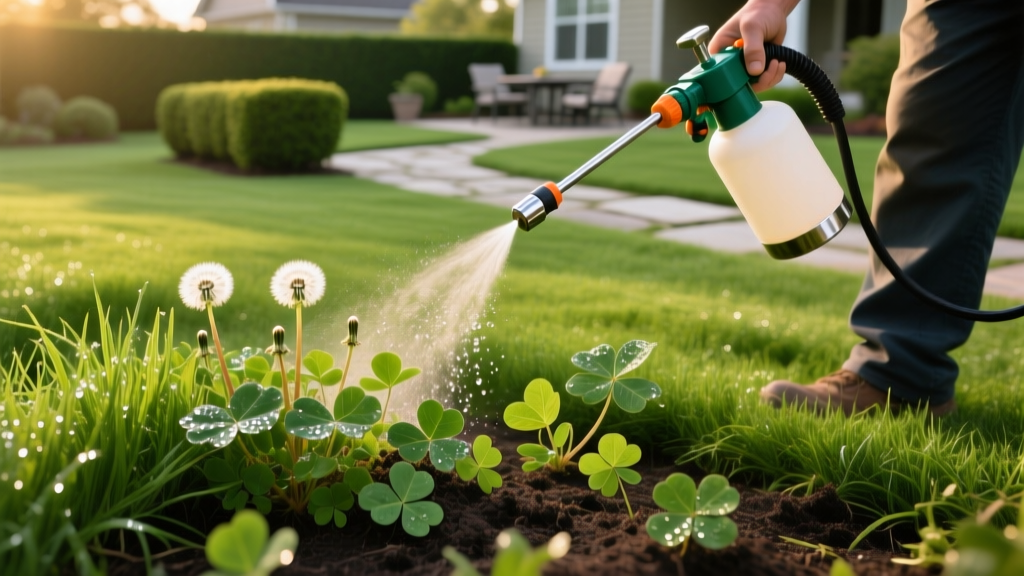
How to Spot-Treat Broadleaf Weeds Using an Iron Based Weed Killer
The shift away from synthetic auxin herbicides like 2,4-D has accelerated the adoption of chelated iron formulations for residential lawn care. An iron based weed killer, specifically utilizing Iron HEDTA (Hydroxyethylethylenediaminetriacetic acid), offers a highly effective, low-toxicity method for spot-treating broadleaf weeds without causing systemic damage to surrounding monocot turfgrasses. However, unlike traditional synthetic herbicides, Iron HEDTA is highly sensitive to water chemistry, temperature, and application timing. Misapplication routinely leads to poor efficacy or unintended turf phytotoxicity.
This guide details the exact physiological mechanisms, target weed profiles, and precise application protocols required to successfully eradicate broadleaf weeds using chelated iron spot-treatments.
The Biochemistry of Iron HEDTA Selectivity
Iron is an essential micronutrient for all plants, but broadleaf weeds (dicots) and turfgrasses (monocots) process it differently. In an iron based weed killer, the iron molecule is bound to a chelating agent (HEDTA) to keep it soluble in water and available for foliar absorption.
Why Grass Survives but Weeds Die:
When applied to foliage, broadleaf weeds rapidly absorb the Iron HEDTA complex and translocate it into their cells. The excess iron catalyzes the Fenton reaction, generating highly reactive hydroxyl radicals. These radicals cause severe lipid peroxidation, destroying cell membranes and resulting in rapid tissue desiccation (necrosis) within 24 to 48 hours. Turfgrasses, conversely, possess superior iron-regulation mechanisms at the cellular level and restrict excessive uptake, allowing them to tolerate the application with only minor, temporary tip-browning.
According to the National Pesticide Information Retrieval System (NPIRS), Iron HEDTA exhibits low mammalian toxicity and breaks down rapidly in the soil environment, making it a preferred choice for pet-safe and organic-compliant lawn care programs when verified by the Organic Materials Review Institute (OMRI).
Target Weed Species and Efficacy Matrix
Not all weeds respond identically to chelated iron. Thick, waxy cuticles and deep taproots require modified approaches. Below is the efficacy matrix for common lawn weeds targeted via spot-treatment.
| Weed Species | Efficacy (1-5) | Applications Needed | Spot-Treatment Notes |
|---|---|---|---|
| Dandelion (Taraxacum officinale) | 4/5 | 1 - 2 | Target young rosettes in spring. Mature taproots may resprout; apply second dose 14 days after initial necrosis. |
| White Clover (Trifolium repens) | 5/5 | 1 | Highly susceptible. Thin stolons desiccate rapidly upon contact. Avoid overspray on surrounding desirable legumes. |
| Broadleaf Plantain (Plantago major) | 3/5 | 2 - 3 | Thick, ribbed leaves shed liquids. Must include a non-ionic surfactant to break surface tension and ensure foliar penetration. |
| Creeping Charlie (Glechoma hederacea) | 4/5 | 2 | Best treated in early fall when the plant is actively storing carbohydrates in its root system. |
Step-by-Step Spot-Treatment Protocol
Achieving complete necrosis requires strict adherence to mixing and environmental parameters. The most common cause of iron based weed killer failure is improper water chemistry.
1. Water Preparation (The Hard Water Trap)
Iron HEDTA is highly reactive to calcium and magnesium. If you mix a concentrate with hard tap water (typically >150 ppm hardness), the calcium ions will displace the iron from the HEDTA chelate. This causes the iron to precipitate out of the solution as insoluble iron hydroxide, rendering the herbicide completely useless and potentially clogging your sprayer nozzle.
- Solution: Always use distilled water, reverse-osmosis water, or rainwater when diluting FeHEDTA concentrates.
- Alternative: If you must use tap water, add a commercial water conditioner (ammonium sulfate) at a rate of 8.5 lbs per 100 gallons of water to bind the hard minerals before adding the herbicide.
2. Environmental Timing
- Temperature: Apply only when ambient temperatures are between 60°F and 80°F (15°C - 26°C). Applications above 85°F drastically increase the risk of phytotoxicity to surrounding turfgrass.
- Rainfastness: Iron HEDTA requires a minimum of 3 to 4 hours of dry weather post-application to fully penetrate the leaf cuticle.
- Time of Day: Spot-treat in the early morning after dew has dried, or in the late afternoon. Avoid mid-day applications when stomata are closed to prevent moisture loss.
3. Application Technique
- Fit a 1-gallon or 2-gallon pump sprayer with a shielded nozzle to prevent drift onto desirable ornamental beds.
- Shake the FeHEDTA product vigorously; chelated iron can settle in the container.
- Spray the target weed until the foliage is uniformly wet, but not to the point of runoff. Dripping leaves waste product and increase soil iron loading.
- Wait 48 hours. The weed leaves will turn dark brown or black as cellular destruction completes.
- Do not mow the lawn for at least 3 days post-application to allow maximum translocation into the weed's crown.
2026 Product Matrix: Top Iron-Based Formulations
The market for chelated iron herbicides has matured, with formulations now featuring improved surfactant packages for better leaf adhesion. Below is a comparison of the leading products available for residential spot-treatment.
| Product Name | Active Ingredient % | Format | Avg. Price | Best Use Case |
|---|---|---|---|---|
| Fiesta Turf Weeder (Wellmark) | 4.43% | Concentrate | $75 / 2.5 gal | Large properties; professional-grade efficacy; requires precise dilution. |
| Natria Lawn Weed Control (SBM) | 3.00% | Ready-to-Use | $18 / 32 oz | Small urban lawns; convenient battery-powered sprayer attachment; no mixing required. |
| Sunday Dandelion Doom | 3.00% | Concentrate Pouch | $25 / pouch | Hose-end attachment; includes proprietary surfactants for waxy leaves like plantain. |
Troubleshooting: Edge Cases and Failure Modes
Even with correct application, specific environmental factors can compromise an iron based weed killer. Use this diagnostic guide to address common issues.
Warning: Concrete and Hardscape Staining
Iron HEDTA solutions will leave permanent rust-colored stains on concrete driveways, stone patios, and light-colored vinyl siding if allowed to dry on the surface. Always rinse hardscapes immediately with a high-pressure hose if overspray occurs, and avoid spot-treating weeds growing directly in concrete cracks with liquid iron formulations.
Symptom: Weed leaves turned yellow but did not die back completely.
- Cause: Under-dosing or application during high heat (>85°F) caused rapid evaporation before the iron could penetrate the cuticle.
- Fix: Wait 14 days and reapply in the early morning when temperatures are below 75°F, ensuring the addition of a non-ionic surfactant (0.25% v/v) to improve retention.
Symptom: Surrounding turfgrass developed severe brown tipping.
- Cause: Phytotoxicity due to excessive application volume (runoff) or application during peak summer heat stress.
- Fix: Irrigate the area deeply to flush excess iron from the root zone. The grass will recover and push new green growth from the crown within 7 to 10 days. Reduce spray pressure and use a shielded nozzle for future treatments.
Symptom: The mixed solution turned cloudy or formed a brown sludge.
- Cause: Hard water interference or accidental mixing with a high-phosphorus liquid fertilizer. Phosphates bind tightly to iron, creating insoluble iron phosphate.
- Fix: Discard the mixture. Flush the sprayer tank with white vinegar to dissolve mineral deposits, then rinse with distilled water. Never tank-mix FeHEDTA with liquid fertilizers.
Frequently Asked Questions
Can I use an iron based weed killer on newly seeded lawns?
No. While established turfgrasses tolerate Iron HEDTA well, newly germinated grass seedlings lack the mature cellular regulation required to process excess iron. Wait until the new turf has been mowed at least three times before applying any chelated iron spot-treatments.
Does Iron HEDTA leave residual control in the soil?
No. Iron based weed killers are strictly contact and short-term translocative herbicides. They do not provide pre-emergent control or soil residual activity. Once the iron reaches the soil, it rapidly binds to organic matter and clay particles, becoming unavailable and functioning simply as a micronutrient fertilizer for the surrounding grass.
Is it safe for pollinators and pets?
Yes. Once the liquid application has fully dried on the foliage (typically 2 to 3 hours), the treated area is safe for pets and human foot traffic. Because it is not a systemic neonicotinoid or synthetic auxin, it poses minimal risk to foraging bees, provided you avoid directly spraying blooming clover or dandelion flowers. Mow off weed blooms prior to spot-treatment to eliminate pollinator exposure risks.