
Pest Control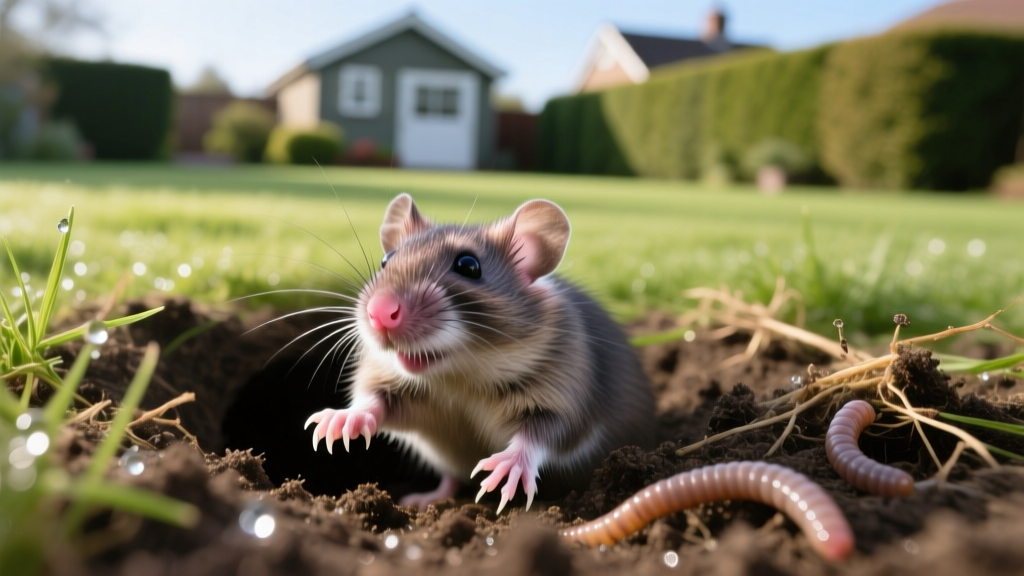
Is a Mole a Rodent? Identification and Lawn Control Guide
The Biological Reality: Why Moles Are Not Rodents
The short answer to the question 'is a mole a rodent' is a definitive no. While homeowners frequently group moles with mice, rats, and gophers when shopping for pest control products, moles belong to an entirely different biological order. Moles are classified under the order Eulipotyphla (formerly Soricomorpha), making them close relatives of shrews and hedgehogs. True rodents belong to the order Rodentia, characterized by their continuously growing incisors designed for gnawing on tough plant matter and seeds.
This taxonomic distinction is not just academic trivia; it is the single most important factor in lawn pest management. Because moles are insectivores with entirely different digestive systems, foraging behaviors, and tunnel architectures, standard rodent control methods are biologically ineffective against them. Applying rodent-targeted grain baits to a mole infestation will result in wasted money, unresolved lawn damage, and potentially hazardous toxic exposure to non-target wildlife.
Taxonomy and Biology Comparison Matrix
| Characteristic | Moles (Eulipotyphla) | Rodents (Voles, Gophers, Mice) |
|---|---|---|
| Primary Diet | Earthworms, grubs, soil insects | Plant roots, bulbs, seeds, bark |
| Dentition | Sharp, pointed teeth for piercing | Chisel-like, continuously growing incisors |
| Snout Shape | Elongated, highly sensitive to touch | Short, blunt, adapted for gnawing |
| Front Paws | Broad, rotated outward for digging | Narrow, adapted for grasping and climbing |
| Daily Food Intake | 70% to 100% of their body weight | Small fraction of body weight |
Lawn Damage Identification: Mole vs. Vole vs. Gopher
Before purchasing any traps or baits, you must confirm which species is actively destroying your turf. Misidentifying the pest is the leading cause of control failure. According to the Internet Center for Wildlife Damage Management, accurate identification relies on analyzing the surface mounds and subsurface runways left behind.
Mole Damage Signatures
- Volcano-Shaped Mounds: Moles push dirt straight up through the surface, creating symmetrical, conical mounds (molehills) that resemble mini volcanoes.
- Plugged Entry Holes: Unlike rodents, moles do not leave open holes at the top of their mounds. They plug the exit point with dirt clods to maintain the humid microclimate of their tunnel system.
- Raised Surface Ridges: As moles tunnel just beneath the turf (1 to 3 inches deep) hunting for earthworms, they push the soil upward, creating spongy, raised ridges that crumble underfoot.
Rodent Damage Signatures (Voles and Pocket Gophers)
- Vole Runways: Voles do not create mounds. Instead, they chew through grass and roots to create shallow, 2-inch-wide surface runways, often leaving behind small, golf-ball-sized entry holes and piles of clipped grass.
- Gopher Mounds: Pocket gophers create asymmetrical, fan-shaped or D-shaped mounds of fine dirt. The entry hole is located at the edge of the fan and is always plugged with a distinct plug of dense soil.
The Diet Factor: Why Rodent Baits Fail on Moles
Critical Pest Control Warning: Applying standard rodent grain baits (like those containing zinc phosphide or diphacinone) into a mole tunnel is a severe misapplication. Moles will push the foreign grain pellets out of their tunnels as they dig, leaving toxic bait exposed on your lawn where pets, children, and ground-foraging birds can easily access it.
Rodenticides are formulated with grain, seed, or peanut butter bases to attract herbivorous and omnivorous rodents. Moles possess a hyper-active metabolism and a strictly carnivorous digestive tract. They consume 70% to 100% of their body weight in live invertebrates daily. A mole will simply ignore a pile of poisoned grain pellets, treating it as an inanimate obstacle to be pushed aside.
To successfully bait a mole, you must use a biomimetic insectivore bait. The industry standard active ingredient for mole eradication is Bromethalin, formulated into a synthetic earthworm matrix. Products like Bell Labs Talpirid or the Tomcat Mole Killer Worm Formula mimic the exact size, texture, and scent of a nightcrawler. When a mole encounters this bait in its tunnel, its natural foraging instinct triggers an immediate strike. Expect to pay between $25 and $35 for a box of 10 to 20 bromethalin-infused synthetic worms.
Proven Mole Eradication Framework
While baits are effective, mechanical trapping remains the most reliable, immediate, and environmentally sound method for eliminating moles. The University of Missouri Extension emphasizes that trap placement is vastly more important than the trap brand itself. Follow this exact framework to ensure success.
Step 1: Locate the Main Artery
Moles construct two types of tunnels: deep main arteries (6 to 10 inches below the surface) and shallow lateral foraging tunnels. Setting a trap in a lateral tunnel is a guaranteed failure; the mole will simply abandon it once it detects the disturbance. To find a main artery:
- Locate a straight runway that follows a structural boundary, such as a fence line, driveway edge, or retaining wall.
- Flatten a 3-foot section of the raised ridge with your boot.
- Mark the spot and return in 24 hours. If the ridge is pushed back up, you have identified an active, high-traffic main artery.
Step 2: Select the Right Lethal Trap
Invest in heavy-duty, steel-jawed traps specifically engineered for subterranean deployment. Expect to spend $20 to $45 per trap. The two most reliable models used by professional nuisance wildlife operators are:
- Wire Tek 1001 EasySet (Choker-Loop): Ideal for deep, narrow main tunnels. It features a sensitive trigger pan that activates when the mole pushes through the soil plug.
- Victor 0631 Out O'Sight (Scissor-Jaw): Best for shallower, wider runways. The scissor action provides immense crushing force, ensuring a quick, lethal strike.
Step 3: Proper Trap Deployment
- Excavate a Pilot Hole: Using a narrow trowel, carefully dig a small hole directly into the active main tunnel. Remove all loose dirt; moles are highly sensitive to foreign debris and will plug off the tunnel before reaching the trap if it is messy.
- Set and Insert: Set the trap jaws according to the manufacturer's instructions. Lower the trap into the tunnel so the trigger pan sits flush with the tunnel floor.
- Block the Light: Moles will abandon a tunnel if they detect drafts or sunlight. Cover the trap and the excavated hole with a piece of dark sod, a bucket, or a specialized trap cover to block all light while allowing the mole to pass through.
- Secure the Trap: Attach a heavy gauge wire and a landscaping flag to the trap. This prevents scavengers from dragging the trap away and allows you to locate it easily in tall grass.
Debunking Common Mole Control Myths
The internet is saturated with home remedies for mole control. As a domain expert in lawn pest management, I must advise you to avoid these biologically flawed approaches:
- Castor Oil Repellents: While castor oil can temporarily irritate a mole's digestive tract if ingested, it does not kill them. It merely encourages them to relocate 10 feet down the lawn before they acclimate to the scent. It is a temporary deterrent, not an eradication tool.
- Ultrasonic Solar Stakes: Multiple university entomology and wildlife departments have tested sonic and vibrating stakes. The consensus is clear: moles quickly habituate to the low-frequency vibrations and will often build their tunnels directly adjacent to the stakes. They are entirely ineffective.
- Chewing Gum or Laxatives: The urban legend that moles will eat bubble gum and die from intestinal blockages is completely false. Moles do not recognize synthetic gum as food and will simply push it out of their tunnels.
Summary and Next Steps
Understanding that a mole is an insectivore, not a rodent, fundamentally shifts your pest control strategy. Stop wasting capital on grain-based rodenticides and sonic repellents. By accurately identifying the volcano-shaped mounds, locating the deep main runways, and deploying biomimetic bromethalin worms or precision scissor-jaw traps, you can permanently reclaim your turf from subterranean damage.

