
Pest Control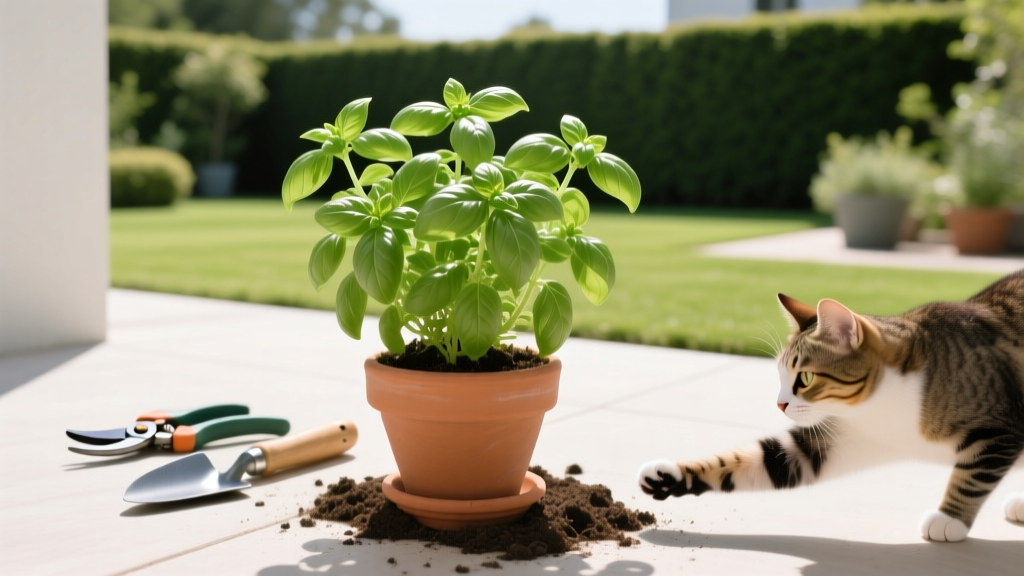
Is Basil Plant Poisonous to Cats? Garden Safety Guide
The Short Answer: Is Basil Plant Poisonous to Cats?
No, the common sweet basil plant (Ocimum basilicum) is not poisonous to cats. According to the ASPCA Animal Poison Control Center, basil is classified as non-toxic to both cats and dogs. If your cat nibbles on a fresh basil leaf from your garden or knocks over a potted plant on your windowsill, they will not suffer from systemic toxicity or organ failure.
However, the question of feline safety in the garden extends far beyond the basil plant itself. Homeowners must navigate toxic look-alike plants, hazardous organic pesticides, and dangerous DIY cat deterrent myths. This guide breaks down the biochemical realities of feline plant ingestion and provides actionable, safe pest management strategies for your herb garden.
Feline Metabolism: Why Some Herbs Are Safe and Others Are Not
To understand garden safety, you must understand the feline liver. Cats lack a specific liver enzyme called glucuronyl transferase. This enzyme is responsible for glucuronidation—the process of breaking down and eliminating certain compounds, particularly phenols and monoterpenes, from the bloodstream.
Basil contains trace amounts of eugenol and linalool. In humans and dogs, these are easily metabolized. Because cats lack the necessary enzymes, highly concentrated forms of these compounds (like basil essential oil) can cause hepatic toxicity. However, the fresh leaves of Ocimum basilicum contain these compounds in such low, trace concentrations that a cat would have to consume an impossible volume of fresh leaves to experience liver stress.
Contrast this with other common garden herbs like oregano (Origanum vulgare) and thyme (Thymus vulgaris), which contain much higher concentrations of problematic terpenes that can trigger gastrointestinal distress and mild toxicity in felines.
Toxic Look-Alikes: Misidentified Herbs That Harm Felines
The greatest risk to cats in an herb garden is misidentification. Several plants share visual similarities with basil or are sold in the same nursery sections, but they pose genuine toxicity risks.
| Plant Name | Scientific Name | Toxicity Level | Symptoms in Cats |
|---|---|---|---|
| Sweet Basil (Safe) | Ocimum basilicum | Non-Toxic | None (mild GI upset if overeating) |
| Coleus | Plectranthus scutellarioides | Mild to Moderate | Vomiting, diarrhea, lethargy |
| Perilla Mint | Perilla frutescens | Moderate | Respiratory distress, GI upset |
| Spanish Thyme | Plectranthus amboinicus | Mild | Drooling, vomiting, skin irritation |
Note: Coleus is frequently sold as an ornamental companion to basil due to its vibrant purple and green foliage, leading to accidental ingestion by pets.
The Real Threat: Pesticides and Essential Oils
If your cat becomes ill after interacting with your basil, the plant is rarely the culprit. The danger usually lies in what you have applied to the plant to control aphids, whiteflies, or spider mites.
Organic Does Not Mean Cat-Safe
Many homeowners assume that because a pesticide is labeled "organic" or "natural," it is safe for pets. This is a dangerous misconception in garden pest control.
- Pyrethrins: Derived from chrysanthemum flowers, pyrethrins are a staple in organic insect sprays (e.g., Safer Brand Pyrethrin Spray). They work by delaying the closure of sodium channels in insect nerves. Cats are exceptionally sensitive to pyrethrins because they cannot rapidly metabolize them. Exposure can lead to severe tremors, hyperthermia, and seizures. The Pet Poison Helpline frequently treats cats for pyrethrin poisoning.
- Neem Oil: While generally safe as a topical foliar spray once fully dried, neem oil has a bitter taste and strong odor. If a cat licks wet neem oil off a basil leaf, it can cause severe salivation, vomiting, and lethargy.
- Insecticidal Soaps: Potassium salts of fatty acids are safe for cats once dry, but direct ingestion of the liquid concentrate can cause oral ulceration and GI distress.
🛑 Critical Warning: Essential Oil Diffusers and Sprays
Never use concentrated basil, peppermint, or citrus essential oils as a DIY cat deterrent on your garden plants. Essential oils are highly concentrated phenols that will rapidly overwhelm a cat's liver, leading to acute toxicity and potential liver failure.
Feline Deterrent Strategies: Keeping Cats Out of Herb Beds
If you want to protect your basil from being trampled, dug up, or used as a litter box by neighborhood cats or your own pets, you must use safe, physical, and behavioral deterrents.
1. Physical Barriers (The Most Reliable Method)
Cats despise walking on uncomfortable surfaces. Instead of chemical repellents, alter the physical environment of your garden beds.
- Plastic Scat Mats: These flexible plastic mats feature blunt, upward-facing spikes that are uncomfortable but will not pierce a cat's paws. They cost approximately $15 to $25 for a 13x20 inch mat. Lay them over the soil and cover lightly with mulch.
- Chicken Wire Under Mulch: Lay 1-inch galvanized chicken wire flat over the soil before planting, cutting small holes for your basil stems. Cats cannot dig through the wire, and the plants will grow through the gaps unhindered.
2. Technological Deterrents
For larger garden perimeters, motion-activated devices provide excellent conditioning without physical contact.
- Motion-Activated Sprinklers: Devices like the Orbit Yard Enforcer (retailing around $70-$80) use infrared sensors to detect motion and release a sudden, harmless burst of water. The sudden noise and spray effectively condition cats to avoid the area after 2 or 3 encounters.
- Ultrasonic Repellents: These emit high-frequency sounds (typically 13.5 to 23.5 kHz) inaudible to most humans but irritating to felines. Efficacy varies depending on the cat's age and hearing health, but they serve as a good secondary layer of defense.
💡 Mythbusting: The Coffee Ground and Cocoa Mulch Danger
Many gardening blogs recommend spreading used coffee grounds or cocoa bean mulch to deter cats due to the strong scent. Do not do this. Coffee grounds contain caffeine, and cocoa bean mulch contains theobromine. Both are methylxanthines, which are highly toxic to cats. If a cat walks through the mulch and later grooms its paws, it can ingest enough methylxanthines to cause tachycardia, tremors, and potentially fatal seizures.
Frequently Asked Questions About Cats and Garden Herbs
Can cats eat basil from the grocery store?
Yes. Grocery store basil is non-toxic. However, always wash the leaves thoroughly before allowing your cat to chew on them, as commercial produce may carry trace pesticide residues or fertilizers that could cause mild stomach upset.
Why does my cat vomit after eating safe basil?
Cats are obligate carnivores and lack the necessary digestive enzymes (like amylase in saliva) to efficiently break down large amounts of plant cellulose. If a cat eats a large volume of any non-toxic plant matter, including basil or cat grass, they will often regurgitate it. This is a mechanical digestive response, not a sign of poisoning.
Is holy basil (Tulsi) safe for cats?
Holy basil (Ocimum tenuiflorum) is generally considered non-toxic to cats, similar to sweet basil. However, it contains higher concentrations of eugenol than sweet basil. While a few nibbles will not cause harm, it is best to discourage heavy chewing of holy basil compared to standard culinary sweet basil.

