
Pest Control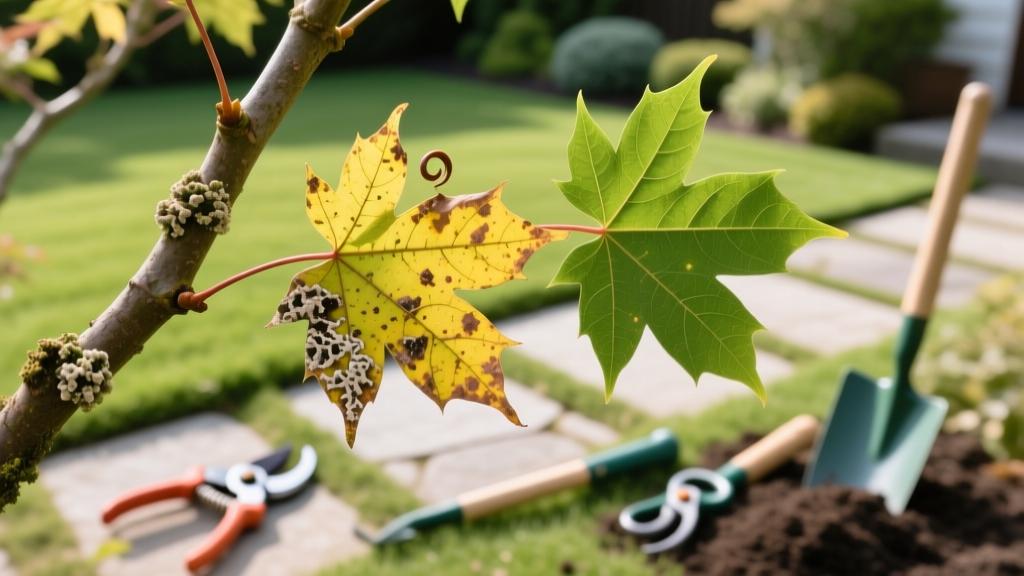
Diagnosing Japanese Maple Disease: Symptoms & Rescue Fixes
The Diagnostic Framework: Biotic Pathogens vs. Abiotic Stress
Before applying fungicides or altering soil chemistry, you must confirm that your Japanese maple (Acer palmatum) is actually suffering from a biotic disease. Homeowners frequently misdiagnose abiotic environmental stress as a fungal or bacterial infection, leading to wasted chemicals and further tree decline.
The Cambium Scratch Test: Use a sterilized pocket knife to gently scratch the bark on a declining branch. If the cambium layer underneath is bright green, the branch is alive and likely suffering from environmental stress (drought, sunscald, or nutrient lockout). If the cambium is brown, brittle, or olive-green, you are likely dealing with a vascular disease like Verticillium wilt or severe root rot.
Sunscald vs. Anthracnose: Sunscald exclusively affects the south or west-facing canopy exposed to harsh afternoon light, leaving leaves crispy and bleached. Anthracnose, a fungal disease, follows the leaf veins and will appear on shaded, lower-canopy leaves as well. According to the Clemson Home and Garden Information Center, proper identification of these vein-following necrotic lesions is critical before initiating a chemical spray program.
Top 5 Japanese Maple Diseases: Symptoms and Rescue Fixes
1. Verticillium Wilt (The Vascular Blocker)
Caused by soil-borne fungi Verticillium dahliae and V. albo-atrum, this is the most lethal Japanese maple disease. It enters through microscopic root wounds and blocks the xylem, preventing water transport.
- Symptoms: Sudden 'flagging' (wilting and browning) of branches on only one side of the tree. Peeling back the bark on affected branches reveals olive-green to black vertical streaking in the sapwood.
- Rescue Fix: There is no chemical cure for Verticillium. You must prune out dead wood 6 inches below the visible sapwood streaking. Avoid high-nitrogen fertilizers, which promote succulent, vulnerable growth. Instead, apply a low-nitrogen, high-potassium fertilizer (e.g., 5-10-10 NPK) to harden off remaining tissues. Introduce bio-fungicides containing Trichoderma harzianum (like RootShield PLUS) to the root zone at $25-$30 per pound to outcompete the pathogen in the soil.
2. Anthracnose (The Spring Defoliator)
Driven by Discula and Gloeosporium fungi, anthracnose thrives in cool, wet spring weather (50°F to 55°F). It can cause severe, early-season defoliation in laceleaf and dissectum varieties.
- Symptoms: Irregular, tan-to-brown dead spots on leaves that distinctly follow the leaf veins. In severe cases, leaves curl, wither, and drop by late May.
- Rescue Fix: Fungicides are useless once symptoms appear. You must apply a preventative systemic fungicide containing Myclobutanil or Thiophanate-methyl exactly at bud break (when buds swell but before leaves unfurl). Apply a second coat 14 days later if spring rains persist. Rake and destroy all fallen leaves to eliminate overwintering spores.
3. Tar Spot (The Cosmetic Nuisance)
Caused by Rhytisma acerinum, tar spot is highly visible but rarely threatens the life of a mature Japanese maple. It is primarily a cosmetic issue that weakens the tree only if defoliation occurs prematurely year after year.
- Symptoms: Raised, black, tar-like stromata (fungal fruiting bodies) up to 0.5 inches in diameter on the upper leaf surface, surrounded by a yellow halo.
- Rescue Fix: Chemical intervention is rarely justified. The most effective rescue fix is aggressive fall sanitation. Rake and bag 100% of fallen leaves before the first snow. If the tree has a history of severe tar spot, apply a copper-based fungicide (like Bonide Liquid Copper at 2 fl oz per gallon) in early spring as leaves expand.
4. Phytophthora Root Rot (The Soil Suffocator)
Soil-borne water molds (Phytophthora cinnamomi and P. nicotianae) attack the fine feeder roots and the root flare, especially in heavy clay soils with poor drainage.
- Symptoms: Overall canopy thinning, stunted leaf size, and dark, oozing 'bleeding cankers' at the soil line. The University of Minnesota Extension notes that digging into the root flare often reveals black, mushy, and foul-smelling root tissue.
- Rescue Fix: Excavate the root flare to expose it to air and sunlight. Improve drainage by aerating the soil outward to the drip line. Apply a systemic fungicide containing Phosphorous acid (e.g., Monterey Garden Phos). For soil drench, mix 2 fl oz per gallon of water and apply to the root zone. For severe cases, a professional trunk injection of Agri-Fos is required ($150-$250 per tree).
5. Powdery Mildew (The Humidity Hanger-on)
Unlike most fungi, powdery mildew (Uncinula species) does not require free moisture on the leaf surface to infect; it thrives in high humidity and stagnant air.
- Symptoms: A white-to-gray powdery fungal mycelium coating the upper leaves, causing young shoots to curl and stunt.
- Rescue Fix: Prune interior crossing branches to increase airflow. For a rapid, organic rescue fix, mix 1 tablespoon of Potassium Bicarbonate and 1/2 teaspoon of non-detergent liquid soap into 1 gallon of water. Spray thoroughly until runoff, covering the undersides of the leaves. Repeat every 10 days during humid spells.
Chemical and Biological Fungicide Selection Matrix
Selecting the correct active ingredient is critical. Misapplying a contact fungicide for a systemic vascular disease will waste time and money. Below is a 2026 reference matrix for Japanese maple disease management.
| Active Ingredient | Brand Example | Target Disease | Application Rate | Est. Cost |
|---|---|---|---|---|
| Myclobutanil | Spectracide Immunox | Anthracnose, Powdery Mildew | 1 tbsp per gallon | $18 / pint |
| Thiophanate-methyl | Cleary's 3336F | Anthracnose, Tar Spot | 1.5 tsp per gallon | $45 / quart |
| Phosphorous Acid | Monterey Garden Phos | Phytophthora Root Rot | 2 fl oz per gallon (drench) | $32 / quart |
| Copper Octanoate | Bonide Liquid Copper | Tar Spot, Bacterial Blight | 2 fl oz per gallon | $15 / pint |
| Trichoderma harzianum | RootShield PLUS | Verticillium, Root Rot (Bio) | 1 to 3 oz per 100 sq ft | $28 / pound |
Step-by-Step Rescue Protocol for a Declining Maple
When a Japanese maple shows rapid decline, follow this exact 5-step protocol to halt disease progression and stabilize the tree.
- Hydration and Soil Probe Check: Insert a 24-inch soil probe or a long screwdriver into the soil at the drip line. If it cannot penetrate past 4 inches, the soil is compacted and dry. Deep-water the tree using a soaker hose for 4 hours to rehydrate the root zone before applying any chemical treatments.
- Tool Sterilization: Wipe your pruning saw and bypass pruners with 70% isopropyl alcohol. Do not use household bleach; bleach corrodes carbon steel blades, creating micro-pits where fungal spores can hide and be transferred to fresh cuts.
- Precision Pruning: Remove all dead, cankered, or flagging branches. Make cuts exactly 1/4 inch above the branch collar (the swollen ridge where the branch meets the trunk). Never paint or seal pruning wounds with tree wound paint; this traps moisture and accelerates decay. Allow the tree to compartmentalize the wound naturally.
- Targeted Fungicide Application: Based on your diagnosis, apply the appropriate fungicide from the matrix above. For soil drenches, ensure the soil is moist but not waterlogged so the roots actively uptake the systemic chemical.
- Mulch Correction (The Donut Method): Remove any mulch piled against the trunk (volcano mulching). Apply a 2-to-3-inch layer of arborist wood chips, but keep the mulch exactly 3 inches away from the trunk bark to prevent collar rot and rodent damage.
Preventative Soil and Canopy Management
Long-term disease resistance in Japanese maples relies on soil chemistry and microclimate management. These trees require a slightly acidic soil pH between 5.5 and 6.5. If your soil pH creeps above 7.0, the tree cannot uptake iron or manganese, leading to interveinal chlorosis that mimics disease but is actually a nutrient lockout. Test your soil annually using a digital pH meter or a university extension lab test ($15-$25).
If the pH is too high, apply elemental sulfur at a rate of 1 pound per 100 square feet to lower it by approximately 0.5 points over six months. For immediate relief of iron chlorosis in high-pH soils, apply a chelated iron drench (Fe-EDDHA, which remains stable in alkaline soils, unlike Fe-EDTA) at the manufacturer's recommended rate. By maintaining optimal soil chemistry and executing rapid, precise rescue fixes when pathogens strike, your Japanese maple will remain a resilient focal point in the landscape for decades.

