
Pest Control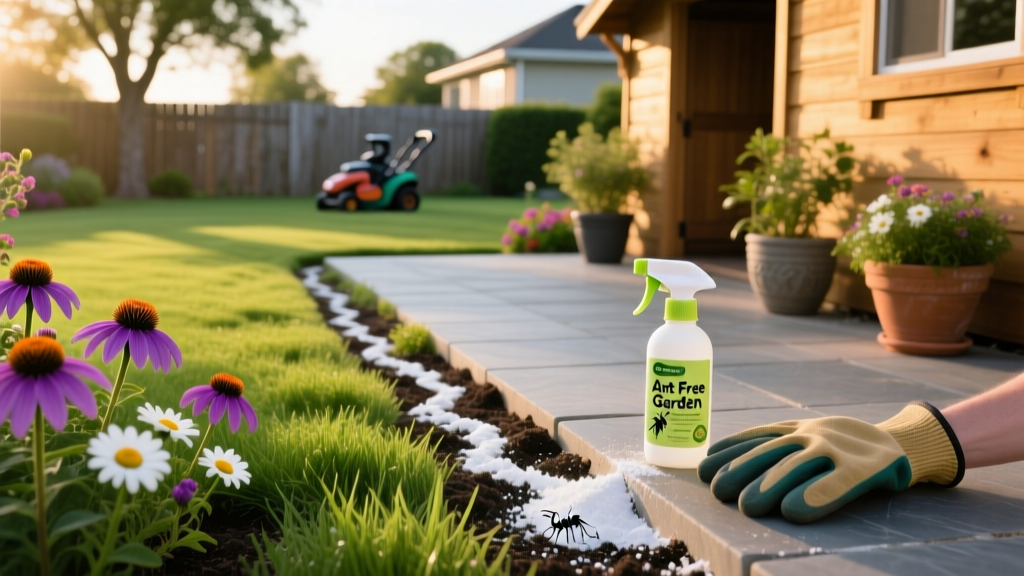
How Do I Keep Ants Away? The Ultimate Yard and Patio Defense Guide
The Biology of the Invasion: Why Your Current Strategy is Failing
When homeowners ask, 'how do i keep ants away from my patio and lawn,' they usually start with surface-level repellents. This is a fundamental misunderstanding of ant biology. Ants are eusocial organisms; the foragers you see represent only about 5% to 10% of the total colony. Spraying visible trails with over-the-counter contact killers (like pyrethrin aerosols) only eliminates the foragers. Worse, it triggers a survival mechanism called budding, where the colony senses a chemical threat and splits into multiple satellite colonies, effectively multiplying your problem.
To permanently defend your yard, you must abandon the 'spray and pray' method and implement a targeted, multi-zone strategy that either transfers lethal active ingredients back to the queen or creates an invisible, non-repellent chemical barrier.
Warning: The Bait and Spray Conflict
Never use a liquid residual spray and a granular bait in the exact same area at the same time. The spray will repel the ants, preventing them from picking up the bait and carrying it back to the colony. Use sprays for the foundation perimeter and baits for the lawn and garden beds.
Never use a liquid residual spray and a granular bait in the exact same area at the same time. The spray will repel the ants, preventing them from picking up the bait and carrying it back to the colony. Use sprays for the foundation perimeter and baits for the lawn and garden beds.
Identify the Enemy: Common Yard Ant Species
Different species require different active ingredients and bait matrices (sugar-based vs. protein-based). According to the University of Minnesota Extension, identifying the species is the critical first step in integrated pest management.
| Species | Primary Diet | Yard Threat Level | Best Treatment Approach |
|---|---|---|---|
| Odorous House Ants | Sugars, Honeydew | Nuisance (High budding risk) | Non-repellent liquid sprays |
| Carpenter Ants | Proteins, Moist Wood | Structural Damage | Targeted dusts and baits |
| Pavement Ants | Grease, Seeds | Hardscape Damage | Granular baits in cracks |
| Fire Ants | Omnivorous | Severe Health Hazard | Mound drenches + broadcast bait |
The 3-Zone Perimeter Defense Strategy
To answer how do i keep ants away long-term, you must treat your property as a series of defensive zones. This framework mimics professional pest control protocols.
Zone 1: The Foundation and Hardscape (0 to 3 Feet)
Your goal here is to create an invisible barrier that ants cross without knowing it, picking up a lethal dose that they track back to the nest.
- Product: Termidor SC (Fipronil 9.1%).
- Cost: $65 - $75 for a 32oz bottle (makes 48 gallons of solution, treating roughly 10,000 linear feet).
- Application: Mix 0.8 fluid ounces of Termidor SC per gallon of water. Using a 1- or 2-gallon pump sprayer, apply a continuous band 1 foot up the exterior foundation wall and 1 foot out onto the soil, concrete, or mulch.
- Pro-Tip: Drill 1/4-inch holes every 12 inches into the mortar joints of brick patios and inject the solution directly into the voids where pavement ants nest.
Zone 2: The Lawn and Garden Beds (3 to 20 Feet)
Spraying the entire lawn is ecologically damaging and ineffective. Instead, use slow-acting granular baits that foragers will carry back to the colony. The EPA recommends using baits as a primary tool for minimizing broad-spectrum pesticide use in yards.
- Product: Advance 375A Select Granular Ant Bait (Abamectin 0.011%).
- Cost: ~$25 for a 2 lb shaker bottle.
- Application: Broadcast at a rate of 1.5 ounces per 1,000 square feet in garden beds and along the edges of the lawn.
- Timing: Apply in the late afternoon. Ants forage heavily at dusk, and UV light degrades some bait matrices over time.
Zone 3: The Property Line and Habitat Modifiers (20+ Feet)
Ants need moisture and shelter. Modifying the outer edges of your property removes the incentive to migrate toward your home.
- Move firewood stacks at least 25 feet away from the house and elevate them on concrete blocks or metal racks.
- Trim all tree branches and shrubs so they are at least 18 inches away from your roofline and siding. Ants use these as 'highways' to bypass your Zone 1 foundation spray.
- Clear leaf litter and decaying wood from fence lines, which serve as primary nesting sites for carpenter ants.
Expert Insight: The Aphid Connection
If you have a massive ant problem in your ornamental garden beds, inspect your plants for aphids or scale insects. Ants 'farm' these pests for their sugary honeydew secretions. Treating the aphids with insecticidal soap or neem oil will inadvertently starve the ant colony, forcing them to relocate.
If you have a massive ant problem in your ornamental garden beds, inspect your plants for aphids or scale insects. Ants 'farm' these pests for their sugary honeydew secretions. Treating the aphids with insecticidal soap or neem oil will inadvertently starve the ant colony, forcing them to relocate.
Chemical vs. Organic Barriers: What Actually Works?
Many homeowners seek organic solutions. While some work as temporary deterrents, they rarely eliminate an established colony. Here is a realistic comparison of popular yard defenses.
| Method | Mechanism | Effectiveness | Best Use Case |
|---|---|---|---|
| Fipronil (Termidor) | Non-repellent transfer toxin | 95-100% Colony Kill | Foundation perimeter |
| Food-Grade DE | Desiccant (dries exoskeleton) | Low (Fails when wet) | Dry patio cracks |
| Tanglefoot (Resin) | Physical sticky barrier | High (Tree specific) | Protecting fruit trees |
| Cinnamon / Vinegar | Scent masking / mild irritant | Near Zero | None (Waste of time) |
Expert Troubleshooting: Why Your Ant Treatment Failed
If you have applied treatments and still see mounds or trails, you are likely falling victim to one of these common edge cases:
- You washed the perimeter spray away: Termidor SC needs 24 hours to bind to the soil. If your automated sprinkler system hits the foundation, or if it rains within 24 hours of application, the chemical barrier is compromised. Always check the 48-hour weather forecast before treating.
- Bait Shyness: If you use the exact same bait matrix (e.g., a sweet gel) for more than two months, the colony may develop an aversion to it. Rotate between sugar-based baits (like Maxforce Quantum) and protein/grease-based baits (like Advance 375A) every season.
- Sub-Slab Nesting: If ants are emerging from expansion joints in your concrete driveway or patio, surface sprays will not reach them. You must use a hammer drill with a 3/16-inch masonry bit to drill directly into the joint, inject a fipronil or imidacloprid solution, and then seal the crack with a polyurethane concrete caulk.
Seasonal Timing for Maximum Impact
Timing your yard defense is just as critical as the product you choose. Treat your property during these two critical windows:
- Early Spring (April - May): Queens are establishing new satellite colonies and foragers are actively searching for protein to feed the developing brood. Apply granular baits heavily during this window.
- Late Summer (August - September): Colonies are foraging aggressively for carbohydrates to store for winter. This is the ideal time to apply liquid foundation barriers and sweet baits before the ants attempt to migrate indoors to escape the dropping temperatures.
By implementing this 3-zone strategy and utilizing non-repellent transfer chemicals, you shift the advantage from the colony to your yard's perimeter, ensuring a pest-free outdoor space.

