
Pest Control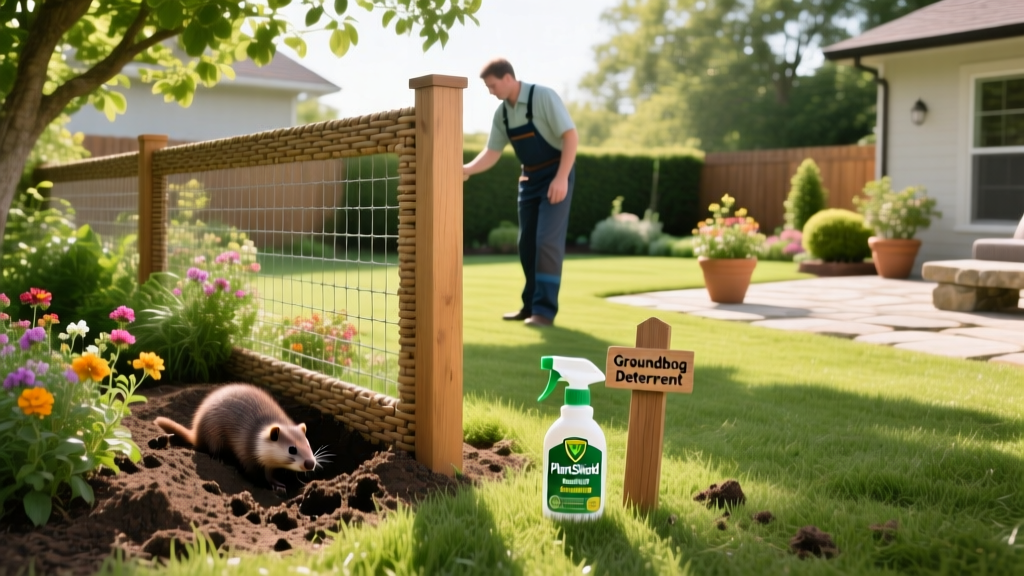
How to Keep Groundhogs Out of Garden: Fencing & Repellent Guide
The Groundhog Problem: More Than Just a Nuisance
Groundhogs (Marmota monax), frequently called woodchucks, are highly destructive burrowing rodents capable of consuming up to 1.5 pounds of vegetation daily. When a groundhog targets your garden, the damage is twofold: they decimate high-value crops like peas, beans, and sweet corn, and their extensive tunneling systems undermine the structural integrity of retaining walls, sheds, and garden beds. A single groundhog can move over 700 pounds of dirt excavating a single burrow. To successfully protect your landscape, you must implement a multi-tiered defense strategy combining physical exclusion, chemical deterrence, and habitat modification.
Physical Exclusion: The L-Shaped Fencing Standard
The only foolproof method for keeping groundhogs out of a garden is physical exclusion. However, standard vertical fencing will fail. Groundhogs are both adept climbers and aggressive diggers. According to the Internet Center for Wildlife Damage Management, an effective barrier must address both vectors of entry using an 'L-shaped' apron design.
Materials and Specifications
Do not use standard poultry netting (chicken wire). Groundhogs possess powerful incisors that easily breach 20-gauge chicken wire. Instead, use 16-gauge or 19-gauge galvanized hardware cloth with a 1/2-inch or 1-inch mesh size. Expect to pay approximately $45 to $65 for a 50-foot roll of 36-inch wide hardware cloth at major home improvement centers.
Pro Tip: The Trench and Bend Technique
Dig a trench 12 inches deep and 12 inches wide along the entire perimeter of your garden. Place the hardware cloth in the trench so that 12 inches extends horizontally outward (away from the garden) at the bottom of the trench, and the remaining 24 to 30 inches extends vertically above ground. Backfill the trench. When a groundhog digs at the base of the fence, it will hit the horizontal wire apron and fail to bypass the barrier.
Dig a trench 12 inches deep and 12 inches wide along the entire perimeter of your garden. Place the hardware cloth in the trench so that 12 inches extends horizontally outward (away from the garden) at the bottom of the trench, and the remaining 24 to 30 inches extends vertically above ground. Backfill the trench. When a groundhog digs at the base of the fence, it will hit the horizontal wire apron and fail to bypass the barrier.
Above-Ground Deterrence
While groundhogs are not acrobatic climbers, they can scale short, rough-textured barriers. To prevent climbing, leave the top 12 inches of the vertical fence unattached to the posts, allowing it to wobble and bend outward when the animal attempts to climb it. This instability discourages upward movement. Alternatively, install a single strand of electric fencing 4 inches off the ground and 4 inches away from the main fence to deliver a mild shock to the nose of any investigating woodchuck.
Chemical and Organic Repellents: Efficacy and Application
When fencing an entire property is cost-prohibitive, repellents offer a secondary line of defense. Repellents rely on taste aversion or olfactory fear responses. Based on field trials reviewed by Penn State Extension, taste-based repellents generally outperform scent-based options for protecting specific crops.
| Active Ingredient | Product Examples | Efficacy | Reapplication Rate | Avg. Cost |
|---|---|---|---|---|
| Capsaicin (Hot Pepper) | Bonide Go Away, Miller Hot Sauce | High (Taste) | After heavy rain / 14 days | $15 - $25 |
| Thiram (Fungicide) | Bonide Rabbit Scat | Very High (Taste) | Monthly | $30 - $45 |
| Castor Oil | Chase Mole & Gopher Repellent | Moderate (Taste/Smell) | Every 3 weeks | $15 - $20 |
| Predator Urine | Coyote/Red Fox Urine | Low-Moderate (Scent) | Weekly / After rain | $20 - $30 |
Warning: Crop Safety
Always check the label before applying capsaicin or Thiram-based products to edible crops. While capsaicin is generally safe for use on vegetables up to harvest (requiring a thorough wash before consumption), Thiram is often restricted to non-bearing plants, ornamentals, and trees. Never apply unapproved chemicals to food sources.
Always check the label before applying capsaicin or Thiram-based products to edible crops. While capsaicin is generally safe for use on vegetables up to harvest (requiring a thorough wash before consumption), Thiram is often restricted to non-bearing plants, ornamentals, and trees. Never apply unapproved chemicals to food sources.
Burrow Eviction and One-Way Exclusion Doors
If a groundhog has already established a burrow beneath your shed or garden perimeter, simply filling the hole with dirt is ineffective; the animal will easily dig back in from a secondary exit. Groundhog tunnel systems typically feature one main entrance (10 to 12 inches wide, marked by a large 'porch' mound of excavated dirt) and two to four smaller secondary escape holes (5 to 7 inches wide, flush with the ground).
Step-by-Step Humane Eviction
- Locate all exits: Probe the soil around the main mound to find secondary holes. Stuff these secondary holes loosely with newspaper or dirt, leaving only the main entrance open.
- Install a one-way door: Construct a cone-shaped exclusion door using 1/4-inch hardware cloth. The wide base should completely cover the main entrance, while the narrow exit end should have a 4-inch diameter opening pointing away from the burrow.
- Monitor for 48 hours: The groundhog will leave to forage and be unable to re-enter. Verify the animal has exited by checking if the newspaper in the secondary holes remains undisturbed.
- Permanently seal the burrow: Once vacated, remove the one-way door and fill the tunnel system with a mix of soil and sharp gravel, capping the top with heavy sod or paving stones.
Trapping Realities and Legal Restrictions
Live trapping using cage traps (such as the Havahart 1085, measuring 32x10x12 inches) is a common approach, but it is fraught with legal and ethical complications. In many states, including New York and Pennsylvania, groundhogs are classified as rabies vector species. According to the University of Maryland Extension, relocating rabies vector species across county lines or releasing them onto public lands is strictly illegal. If you trap a groundhog, you are typically legally required to either release it on the exact same property where it was caught (which solves nothing) or humanely euthanize it. For most homeowners, exclusion and eviction are vastly superior and legally safer alternatives to live trapping.
Landscape Modification: Plants Groundhogs Avoid
While no plant is 100% groundhog-proof when food is scarce, integrating highly aromatic or toxic plants around the perimeter of your garden creates a natural olfactory buffer. Groundhogs possess a highly developed sense of smell and actively avoid the following plant families:
- Alliums: Garlic, onions, leeks, and ornamental alliums.
- Narcissus: Daffodils (contain toxic lycorine alkaloids).
- Tagetes: Marigolds (strong aromatic oils deter foraging).
- Herbs: Rosemary, lavender, sage, and thyme.
Conversely, remove highly attractive weeds like clover and alfalfa from your property, as these serve as primary food sources that draw groundhogs into your yard.
Frequently Asked Questions
Do ultrasonic groundhog repellents work?
No. Independent university studies consistently show that ultrasonic pest repellers have no statistically significant impact on groundhog behavior. Groundhogs quickly habituate to high-frequency noises, and soil density severely limits the transmission range of ultrasonic waves.
Will mothballs keep groundhogs away?
Using mothballs outdoors is illegal, environmentally hazardous, and ineffective. Mothballs contain naphthalene or paradichlorobenzene, which leach toxic chemicals into the soil and groundwater. Furthermore, groundhogs simply dig around the mothballs or ignore them entirely.
How deep do groundhog burrows go?
Groundhog burrows can reach depths of up to 5 feet and extend laterally for 30 to 50 feet. This depth allows them to safely hibernate below the frost line during winter, making superficial deterrents like lawn vibrations entirely useless.
Action Plan Summary
- Immediate: Install 16-gauge L-shaped hardware cloth fencing around high-value vegetable beds.
- Secondary: Apply capsaicin-based taste repellents to vulnerable crops every 14 days.
- Eviction: Use one-way exclusion doors on active burrows before sealing them with gravel and soil.
- Landscaping: Plant allium and marigold borders to create an aromatic deterrent zone.

