
Pest Control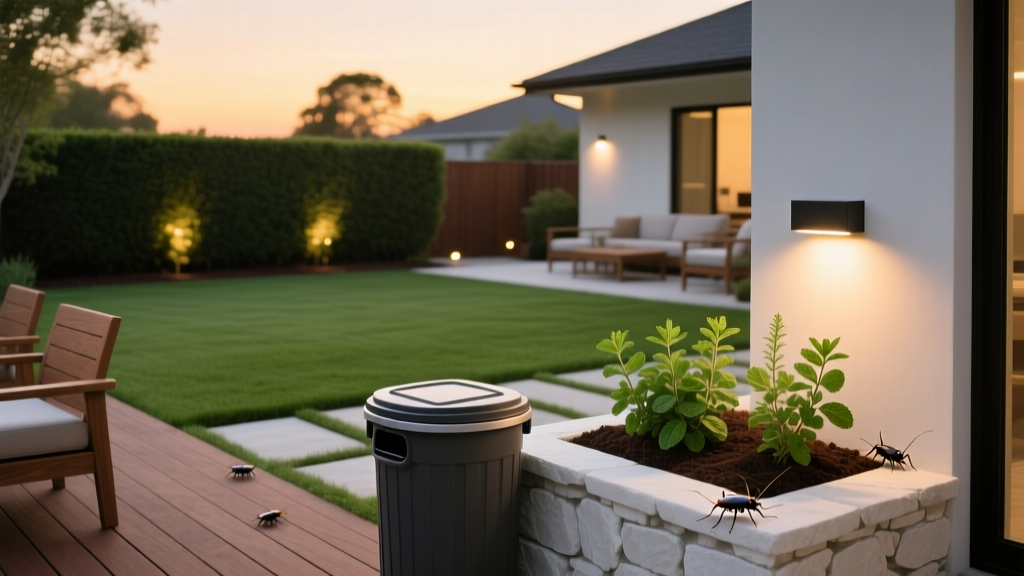
How to Keep Roaches Away at Night: Yard and Patio Defense
The Nocturnal Migration: Why Roaches Target Your Yard at Night
When the sun sets and ambient temperatures drop, peridomestic cockroaches—specifically the American cockroach (Periplaneta americana) and the Smokybrown cockroach (Periplaneta fuliginosa)—begin their nightly foraging migration. Unlike the German cockroach, which lives exclusively indoors, these larger species harbor in outdoor mulch, tree holes, and sewer systems during the day. At night, they follow moisture gradients and pheromone trails toward your home's foundation, patio, and eventually, your interior.
Understanding how to keep roaches away at night requires shifting your pest control strategy from reactive indoor spraying to proactive exterior defense. By manipulating the yard environment, altering lighting, and deploying targeted exterior baits, you can break the nocturnal foraging cycle before they ever reach your door sweeps.
Perimeter Exclusion: Sealing the Night Shift Entry Points
Roaches are thigmotactic, meaning they prefer tight spaces where their bodies touch surfaces on all sides. A gap as small as 1/16 of an inch under a patio door or around a plumbing penetration is a massive highway for a Smokybrown roach.
Warning: Avoid Standard Copper Mesh on Stucco and Brick
While many guides recommend stuffing weep holes with copper mesh, standard copper mesh oxidizes rapidly when exposed to outdoor moisture and alkaline masonry. This oxidation causes severe green/black staining on stucco and brick facades. Instead, use a stainless-steel/poly blend fabric like Xcluder Rodent/Insect Proofing Fabric (approx. $35 for a 10-foot roll). It rusts completely and blocks gaps without damaging your home's exterior.
Actionable Sealing Protocol:
- Weep Holes: Insert 1/2-inch pieces of Xcluder fabric into brick weep holes. This allows moisture to escape while blocking roaches and rodents.
- Pipe Penetrations: Use a high-quality polyurethane sealant (like Loctite PL S30) around HVAC lines, gas lines, and outdoor spigots. Do not use silicone; it shrinks and cracks under UV exposure within 12 months.
- Door Sweeps: Install heavy-duty rubber or brush door sweeps on all patio and garage doors. Ensure the sweep makes continuous contact with the threshold when closed.
Strategic Lighting to Disrupt Foraging Navigation
Cockroaches exhibit negative phototaxis—they actively avoid light. However, standard porch lights often create deep, dark shadows behind patio furniture and potted plants, providing perfect nocturnal cover. Furthermore, bright white exterior lights attract secondary insects, which can inadvertently draw roaches looking for protein sources or simply utilizing the shadow lines for navigation.
The Motion-Activated Floodlight Strategy
Rather than leaving a standard 60W porch bulb on all night, install motion-activated, high-lumen LED floodlights (3000+ lumens, 5000K daylight color temperature) angled at the foundation and patio perimeter. When a roach crosses the yard, the sudden blast of bright light startles them, disrupting their foraging pattern and forcing them to retreat to harborages. Pair this with low-voltage, warm-toned (2700K) pathway lights for human visibility that do not create harsh shadow lines.
Exterior Baiting: Intercepting the Night Patrol
Spraying liquid insecticides on your foundation at night is largely ineffective and environmentally hazardous due to runoff. Instead, use targeted gel baits and granular baits deployed in protective stations. According to the EPA's guidelines on safe pest control, targeted baits drastically reduce non-target exposure while effectively collapsing the local roach population through secondary transfer.
Top Exterior Roach Baits for Nighttime Defense
| Product | Active Ingredient | Avg. Cost (2026) | Best Exterior Application |
|---|---|---|---|
| Advion Cockroach Gel Bait | Indoxacarb (0.6%) | $28 - $32 (4-pack) | Highly palatable; use in PVC sleeve protectors along damp foundation lines. |
| Maxforce FC Magnum | Fipronil (0.05%) | $35 - $40 (4-pack) | Fast-acting; ideal for heavy Smokybrown infestations near sewer cleanouts. |
| Niban Granular Bait | Orthoboric Acid (5%) | $20 - $25 (4 lb shaker) | Weather-resistant granules; broadcast in mulch beds, tree holes, and crawlspaces. |
The PVC Bait Sleeve Trick (Crucial for Outdoor Gel)
Gel baits like Advion degrade rapidly when exposed to UV sunlight and rain. To keep roaches away at night using gels outdoors, purchase a 10-foot stick of 1/2-inch PVC pipe from a hardware store (approx. $3). Cut it into 4-inch sections. Cap one end with a standard PVC cap. Squeeze a pea-sized dot of gel bait deep inside the open end. Lay these "sleeves" flat against the foundation, under decks, and near outdoor AC units. The sleeve protects the bait from weather while providing the dark, tight space roaches naturally seek out at night.
Landscaping Adjustments for Nocturnal Pest Control
Your yard's physical layout either invites or deters nighttime roach activity. The University of Kentucky Entomology Department emphasizes that modifying the outdoor habitat is the most permanent solution for peridomestic cockroach management.
- The 18-Inch Clearance Rule: Maintain an 18-inch gap between your home's foundation and any vegetation, mulch, or shrubbery. Replace this gap with a barrier of crushed gravel or river rock, which drains quickly and offers poor harborage for roaches.
- Irrigation Timing: Roaches require high humidity to survive. If your sprinkler system runs at 8:00 PM, you are creating a massive nighttime moisture event that draws roaches to your foundation. Reprogram your irrigation controller to run between 4:00 AM and 6:00 AM so the topsoil dries before dusk.
- Gutter and Downspout Management: Ensure downspouts discharge at least 4 feet away from the foundation. A puddling downspout near a patio is a primary nighttime congregation zone for American cockroaches.
The 10-Minute Nightly Yard Patrol Routine
To maintain a roach-free perimeter, conduct a brief, structured inspection once a week after dark. Equip yourself with a high-lumen LED flashlight and a pair of nitrile gloves.
- Check the AC Condensate Line: Ensure the PVC drip line is draining freely and not pooling near the slab. Clear any algae buildup.
- Inspect Mulch Edges: Use your foot to gently pull back mulch near the foundation. Look for aggregations of roaches or egg cases (oothecae). If found, apply Niban granular bait directly to the soil beneath.
- Audit Bait Sleeves: Check your PVC bait stations. If the Advion gel is gone or has dried into a hard, translucent crust, clean the sleeve with a cotton swab and rubbing alcohol, then reapply fresh gel.
- Examine Patio Furniture: Lift the cushions of outdoor sofas and check the hollow legs of metal patio tables. Smokybrown roaches frequently harbor inside hollow metal furniture legs during the day and exit at night.
Frequently Asked Questions
Does leaving the porch light on keep roaches away at night?
No. While roaches generally avoid direct light, a static porch light simply forces them to navigate through the dark shadows cast by your furniture and landscaping. Motion-activated floodlights that suddenly illuminate the entire yard are far more effective at disrupting their nocturnal foraging routes.
Can I use indoor roach spray on my patio at night?
Most indoor aerosol sprays (like Raid) use pyrethrins that break down almost instantly under UV light and moisture. Furthermore, spraying broad-spectrum aerosols outdoors kills beneficial predators like centipedes and spiders, which naturally hunt roaches. Stick to targeted baits and perimeter exclusion for outdoor defense.
Why do I only see roaches outside at night, but never during the day?
Peridomestic roaches are highly sensitive to desiccation (drying out). Daytime heat and direct sunlight will kill them quickly, so they hide in deep mulch, sewer grates, and tree canopies. Once the sun sets and relative humidity spikes, they emerge to forage for starchy debris and pet food left on patios.

