
Pest Control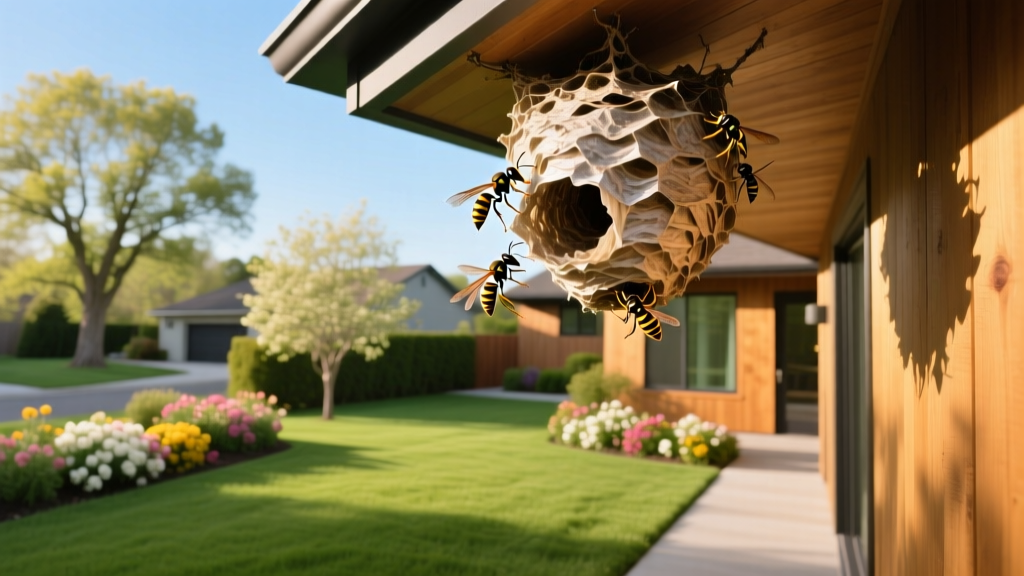
How to Keep Wasps From Building Nests in Your Yard and Eaves
The Biology of Wasp Nesting: Intercepting the Queen
Understanding how to keep wasps from building nests requires a basic grasp of their reproductive cycle. Unlike honeybees, most social wasps (including paper wasps, yellowjackets, and bald-faced hornets) operate on an annual colony cycle. In late autumn, mated queens seek out sheltered crevices to overwinter, while the rest of the colony dies off. When spring temperatures consistently reach 50°F to 60°F, these solitary queens emerge to scout for nesting sites and establish a new colony.
The most critical window for yard defense is early spring (typically April through May, depending on your USDA hardiness zone). A founding queen builds a small, golf-ball-sized nest and lays the first batch of eggs alone. Once the first generation of worker wasps hatches in early summer, the colony scales rapidly, making removal dangerous and difficult. Intercepting the queen before she establishes a foothold is the cornerstone of effective perimeter defense.
Expert Insight: Paper wasps prefer elevated, sheltered overhangs like eaves, pergolas, and porch ceilings. Yellowjackets, conversely, often build subterranean nests in abandoned rodent burrows or dense ground cover. Your defense strategy must target the specific species prevalent in your microclimate.
Early Spring Perimeter Defense Protocol
To physically deter wasps from attaching nests to your home's exterior, you must alter the surface chemistry and visual appeal of their preferred nesting sites. Follow this three-step protocol in early spring before the first major warm spell.
- Lubricate Eaves and Soffits: Paper wasps require a rough surface to anchor their papery nest pedicel (the stalk that attaches the nest to the ceiling). Spraying a light, even coat of WD-40 Specialist Silicone Lubricant (approximately $8 per 11-oz can) along the inside lips of your eaves, fascia boards, and pergola beams creates a slick surface that prevents the nest from adhering. Reapply every 6 to 8 weeks during the active season.
- Seal Structural Voids: Inspect your siding, attic vents, and weep holes. Use a high-quality silicone caulk or copper mesh to seal gaps larger than 1/4 inch. This prevents queens from entering wall voids to build hidden, highly dangerous colonies.
- Deploy Visual Decoys: Wasps are highly territorial and will generally avoid building a nest within 200 feet of an existing, competing colony. Hanging realistic fake hornet nest decoys (such as the Get Lost Wasps decoy, typically $15 for a two-pack) in early April tricks scouting queens into bypassing your yard entirely.
Deterrent Comparison Matrix: Decoys vs. Botanicals vs. Barriers
Choosing the right deterrent depends on your budget, the severity of local wasp pressure, and your preference for organic versus conventional methods. The table below breaks down the primary defense mechanisms.
| Method | Estimated Cost | Efficacy Window | Maintenance Requirement |
|---|---|---|---|
| Visual Decoys | $10 - $20 | Early Spring (Queens only) | Low (Relocate monthly) |
| Surface Lubricants (Silicone) | $8 - $15 | Spring through Fall | Medium (Reapply bi-monthly) |
| Botanical Repellent Sprays | $40 - $60 / gallon | Spring through Fall | High (Reapply every 14 days) |
| Physical Mesh Screening | $25 - $50 | Permanent | Very Low (Inspect annually) |
Botanical Sprays and Chemical Repellents for Yard Defense
If physical barriers and decoys are insufficient, botanical insecticides offer a highly effective, eco-friendly layer of defense. Unlike synthetic pyrethroids, which can harm beneficial pollinators like honeybees, botanical oils break down rapidly in sunlight and target the octopamine receptors specific to pests like wasps.
Essentria IC3: The Industry Standard Botanical
Essentria IC3 is a commercial-grade botanical insecticide widely used by pest control professionals. Its active ingredients include rosemary oil, geraniol, and peppermint oil. Priced around $45 to $55 per gallon in 2026, it provides excellent residual repellency.
- Mixing Ratio: Combine 2 to 4 fluid ounces of Essentria IC3 per gallon of water.
- Application: Use a pump sprayer to coat the underside of eaves, soffits, window frames, and door casings. Apply in the early morning or late evening when pollinators are inactive.
- Reapplication: Botanical oils volatilize quickly. Reapply every 14 to 21 days during peak summer heat to maintain the olfactory barrier.
DIY Peppermint and Clove Oil Spray
For a localized, budget-friendly alternative, you can formulate a highly concentrated essential oil spray. According to research highlighted by the University of Minnesota Extension, wasps possess a strong aversion to peppermint and clove oils.
- Fill a 16-ounce glass spray bottle with warm water.
- Add 1 teaspoon of liquid dish soap (acts as an emulsifier to bind the oils to water).
- Add 15 drops of pure peppermint essential oil, 15 drops of clove oil, and 15 drops of lemongrass oil.
- Shake vigorously before every use and spray directly onto potential nesting sites.
Warning: Never spray any repellent—botanical or synthetic—directly onto an active, established wasp nest. Repellents will only agitate the colony and trigger a mass defensive attack. Active nests larger than a tennis ball require professional extermination or targeted aerosol wasp killers applied from a safe distance at night.
Landscaping Tweaks to Make Your Yard Uninviting
Wasps are driven by two primary needs: shelter for nesting and food for the colony. By modifying your landscaping and yard maintenance routines, you can eliminate the foraging incentives that draw them to your property.
Plant Wasp-Repellent Flora
Integrate strong-smelling herbs and plants around your patio, deck, and high-traffic yard areas. While not a 100% forcefield, dense plantings of these species create an olfactory mask that confuses scouting wasps:
- Wormwood (Artemisia absinthium): Contains absinthin, a compound highly unpalatable to most stinging insects.
- Spearmint and Thyme: Plant in containers near outdoor dining areas to deter foraging workers.
- Citronella Grass and Marigolds: Provide a mild deterrent effect while adding visual appeal to garden borders.
Eliminate Food and Water Sources
Yellowjackets are particularly aggressive scavengers in late summer and early fall when their colony shifts from feeding on insects to seeking out sugars and proteins.
- Manage Compost Bins: Use enclosed, tumbling compost bins rather than open piles. Ensure the lid seals tightly to prevent access to fermenting fruit scraps.
- Harvest Fallen Fruit: Promptly pick up dropped apples, pears, and berries from the ground. Rotting fruit emits ethylene gas, a massive attractant for yellowjackets.
- Secure Hummingbird Feeders: Wasps frequently raid nectar feeders. Install feeders with built-in bee guards (small plastic mesh screens over the feeding ports) and wipe down the exterior of the feeder daily to remove sticky nectar residue.
- Fix Leaky Spigots: Wasps need water to regulate the temperature of their nests and to mix with wood fibers to create paper. Eliminate standing water and fix dripping outdoor faucets.
Edge Cases: When to Call a Professional
While DIY perimeter defense is highly effective for paper wasps and minor yellowjacket activity, certain scenarios require professional intervention. According to guidelines from Penn State Extension, homeowners should not attempt to manage the following situations:
- Subterranean Yellowjacket Nests: Ground nests often house thousands of highly aggressive workers. Plugging the hole with dirt or pouring boiling water into it is ineffective and dangerous. Professionals use specialized dust insecticides (like Tempo Dust) that the workers track deep into the burrow.
- Wall Void Colonies: If you hear a distinct buzzing sound coming from inside your siding or attic, a colony has breached the exterior. Do not seal the exterior hole while the colony is active; they will simply chew through the drywall into your living space. A pest control operator must inject the void with a residual dust and safely remove the nest to prevent secondary pest issues (like carpet beetles feeding on the abandoned hive).
- Bald-Faced Hornets: These large, aggressive wasps build massive, football-shaped aerial nests. Their defensive radius is significantly larger than that of paper wasps, making DIY removal a severe anaphylaxis risk.
Frequently Asked Questions
Do ultrasonic wasp repellers work?
No. Independent entomological studies have repeatedly shown that ultrasonic pest repellers have zero measurable effect on wasps, hornets, or yellowjackets. Wasps do not possess the auditory anatomy to be deterred by high-frequency sound waves. Save your money and invest in botanical sprays or physical decoys instead.
Will painting my eaves a specific color keep wasps away?
There is a persistent myth that painting porch ceilings 'haint blue' (a pale, sky blue) deters wasps by tricking them into thinking the ceiling is the open sky. While this is a charming piece of Southern folklore, there is no scientific evidence to support it. Wasps readily build nests on painted surfaces of any color. Rely on silicone lubricants and botanical repellents for proven results.
How far away do I need to place a decoy nest?
For optimal effectiveness, hang decoy nests at the perimeter of your property or at the four corners of your home's eaves. Wasps generally maintain a territorial buffer zone of about 200 feet. Ensure the decoy is placed in a shaded, elevated area (at least 8 feet off the ground) to mimic a natural hornet nest placement.

