
Pest Control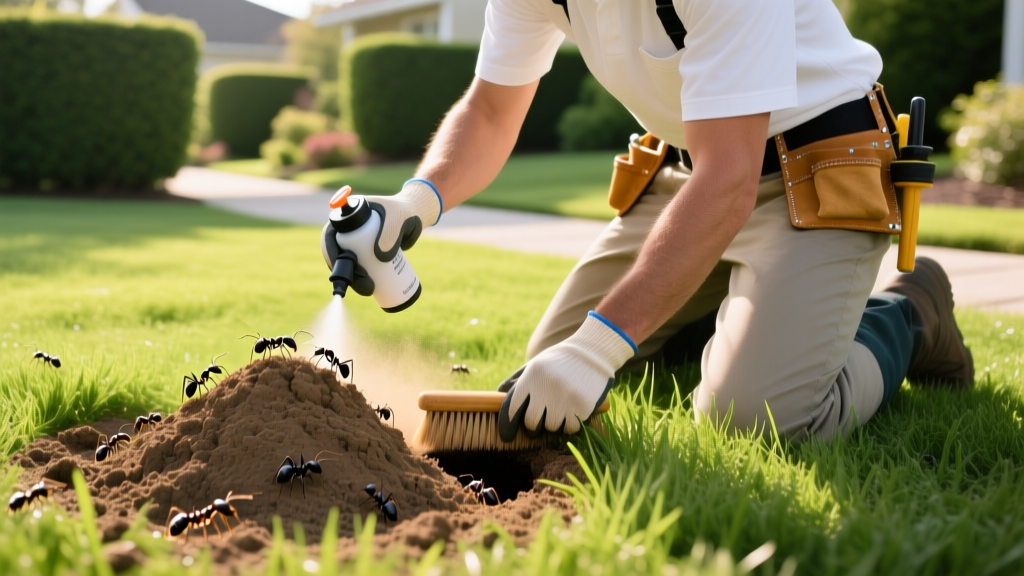
How Do You Kill Ants Nest Mounds in Your Lawn? Proven Defense Tactics
Eliminating an ant colony in your yard requires more than just spraying the surface of a mound. When homeowners ask, "how do you kill ants nest colonies effectively?", the answer always comes down to one biological imperative: you must eliminate the queen. Surface contact sprays only kill the 10% of foraging workers above ground, leaving the queen to rapidly replace them or trigger colony budding. Successful yard defense relies on transferring active ingredients deep into the subterranean chambers where the brood and queen reside.
Identify the Target: Lawn Ant Species & Nest Signatures
Before selecting a treatment protocol, you must identify the species. Misidentifying a carpenter ant mound for a fire ant colony will lead to wasted chemicals and continued turf damage. According to the Texas A&M Fire Ant Project, accurate species identification dictates the depth of the drench and the type of bait matrix required.
| Species | Mound Signature | Turf Threat Level | Primary Eradication Method |
|---|---|---|---|
| Red Imported Fire Ant (RIFA) | Dome-shaped, loose soil, no central opening, 2-18 inches tall. | High (Root damage, aggressive stinging) | Granular bait followed by liquid drench. |
| Allegheny Mound Ant | Massive mounds (up to 3 feet tall), often multiple in a cluster. | Moderate (Injects formic acid, killing grass/trees) | Deep mound drenching with Dinotefuran. |
| Pavement Ant | Small craters along driveways/patios, fine soil particles. | Low (Mostly cosmetic, undermines hardscape) | Liquid borax-based bait stations. |
| Carpenter Ant | Coarse sawdust (frass) near rotting stumps or landscape timbers. | High (Structural damage to wood features) | Non-repellent transfer sprays (Fipronil). |
The Boiling Water Myth: Thermal Eradication Realities
A common internet remedy suggests pouring boiling water onto a mound. While thermal shock can kill ants, the execution required to actually reach the queen makes this method highly destructive to your lawn. The queen chamber of a mature RIFA colony is typically located 18 to 24 inches below the surface. To deliver lethal heat (>130°F) to that depth, you must pour a minimum of 3 to 4 gallons of boiling water directly into the mound's center.
Warning: Turf Burn Risk
Applying 3+ gallons of boiling water will instantly boil the root zone of your turfgrass, leaving a dead, muddy crater that will require complete sod replacement. The EPA's outdoor pest control guidelines strongly recommend targeted chemical or organic baits over thermal methods to preserve soil microbiology and root health.
Applying 3+ gallons of boiling water will instantly boil the root zone of your turfgrass, leaving a dead, muddy crater that will require complete sod replacement. The EPA's outdoor pest control guidelines strongly recommend targeted chemical or organic baits over thermal methods to preserve soil microbiology and root health.
Phase 1: The Colony Kill (Baiting Strategies)
Baiting exploits the ants' natural foraging and trophallaxis (food-sharing) behavior. You are using the worker ants as delivery vectors to transport the poison to the queen.
Top Professional-Grade Baits for Yard Defense
- Advion Fire Ant Bait (0.73% Indoxacarb): Priced around $35 for a 20-pound bag. Indoxacarb is a pro-insecticide that only becomes active when metabolized by the ant's enzymes. This delayed action (48-72 hours) ensures the foragers have ample time to carry the bait deep into the nest before they die. Apply 1.5 ounces in a 4-foot circle around the mound perimeter, never directly on top.
- Terro T304B Outdoor Liquid Ant Bait (5.4% Borax): A budget-friendly organic option (~$15 for 12 stations). Borax disrupts the ant's digestive tract. Best for pavement ants and smaller sweet-eating colonies near hardscapes.
- Extinguish Plus (0.36% Hydramethylnon + 0.25% (S)-Methoprene): Costs roughly $40 for 25 lbs. This dual-action bait kills the workers while the insect growth regulator (IGR) sterilizes the queen, causing a slow but permanent colony collapse over 3-4 weeks.
Phase 2: Step-by-Step Mound Drenching Protocol
If you need immediate elimination (e.g., the mound is near a children's play area or high-traffic patio), a liquid mound drench is the fastest method. This requires a non-repellent or fast-acting contact insecticide mixed with a surfactant to break the soil's surface tension.
Pro Tip: The Surfactant Secret
Ant mounds are naturally hydrophobic (water-repellent). Adding 1 teaspoon of liquid dish soap or a dedicated non-ionic surfactant (like Dyne-Amic) to your drench mixture allows the water to penetrate the soil instantly rather than pooling and running off the sides.
Ant mounds are naturally hydrophobic (water-repellent). Adding 1 teaspoon of liquid dish soap or a dedicated non-ionic surfactant (like Dyne-Amic) to your drench mixture allows the water to penetrate the soil instantly rather than pooling and running off the sides.
- Mix the Solution: In a 2-gallon pump sprayer, mix 1 ounce of Alpine WSG (Dinotefuran) or Bifen IT (Bifenthrin) with 1.5 gallons of water and 1 tsp of surfactant. Alpine WSG costs about $45 for 200g and is highly effective as a non-repellent transfer agent.
- Disturb the Mound: Use a long-handled garden trowel or metal stake to punch 3 to 4 holes into the top and sides of the mound, penetrating about 6 inches deep. This opens the internal galleries for the liquid.
- Apply the Drench: Remove the sprayer nozzle to allow a heavy stream (not a fine mist). Pour the mixture slowly directly into the holes and over the mound. You need 1.5 to 2 gallons per mound to ensure the chemical reaches the deepest queen chambers.
- Seal and Wait: Do not cover the mound with soil immediately. Allow the liquid to soak for 2 hours, then lightly rake the area to disperse the treated soil and prevent lawn burn from chemical concentration.
Phase 3: Perimeter Defense & Barrier Treatments
Killing the existing nest is only half the battle. Neighboring colonies will quickly send scouts to reclaim the vacated territory. Establishing a granular perimeter barrier prevents re-infestation.
Apply Bifen L/P (Bifenthrin 0.2% granules) across your entire lawn using a rotary spreader. Set your spreader to the setting recommended on the bag for ants (typically setting 3 or 4 on a Scotts Classic spreader, delivering 2.3 lbs per 1,000 sq ft). A 25-pound bag costs around $30 and treats up to 10,000 square feet.
Critical Watering Step: Bifenthrin granules must be watered into the soil to activate. Apply exactly 0.25 inches of irrigation immediately after spreading. This washes the active ingredient off the granules and binds it to the top 1 inch of the soil profile, creating a lethal zone for foraging ants without harming earthworms deeper in the soil profile.
Common Eradication Mistakes to Avoid
- Using Repellent Sprays (e.g., Raid, Ortho Home Defense) directly on mounds: These contain pyrethroids that kill on contact but act as a massive alarm signal. The colony will instantly split into multiple smaller satellite nests (budding), multiplying your problem by 3 or 4.
- Mowing Over Active Mounds: Running a mower blade over a fire ant mound scatters the workers and queens into the surrounding turf, establishing new colonies across your yard. Always treat mounds before mowing.
- Applying Bait During Rain or High Heat: Ants do not forage when surface temperatures exceed 95°F or during heavy rain. Apply baits in the early morning or late evening when soil temperatures are between 70°F and 85°F.
Frequently Asked Questions
How long does it take for ant bait to kill the entire nest?
Slow-acting baits like Indoxacarb (Advion) or Hydramethylnon (Extinguish) typically take 7 to 14 days to completely eradicate a mature colony. You will see a reduction in surface foragers within 48 hours, but the queen's death and brood collapse take longer.
Will vinegar kill an ant nest in the lawn?
No. While a 50/50 white vinegar and water solution will kill ants on contact and temporarily disrupt their pheromone trails, it does not penetrate deep enough to reach the queen. Furthermore, pouring high volumes of acetic acid into your lawn will severely lower the soil pH and burn your turfgrass roots.

