
Pest Control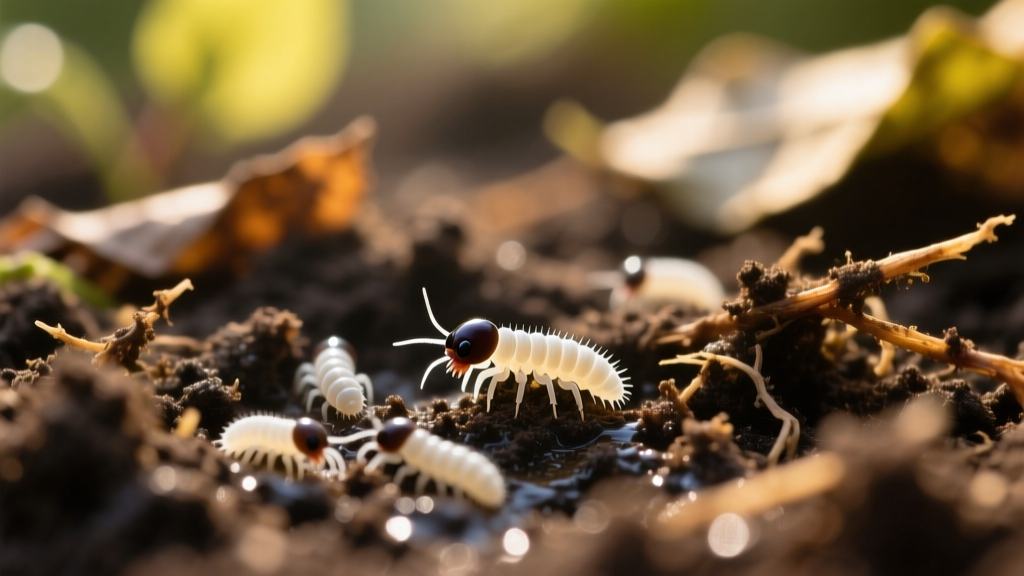
Baby Gnats in Yard Soil: How to Identify and Kill Larvae
The Entomology Reality: What Are 'Baby Gnats'?
When homeowners complain about 'baby gnats' swarming their yard or crawling in garden beds, they are actually observing gnat larvae. In entomology, there is no such classification as a baby gnat; these are the immature, soil-dwelling stages of insects like fungus gnats (Bradysia spp.) and biting midges (Ceratopogonidae). While adult gnats are a nuisance that live for only 7 to 10 days, the larval stage lasts 2 to 3 weeks and causes the actual damage to your landscape.
⚠️ Critical Mistake Warning: Do not waste time and money deploying yellow sticky traps or adulticide foggers if your goal is to protect plant roots. Adult traps capture less than 5% of the breeding population. To stop the lifecycle, you must target the larvae directly in the top 2 to 3 inches of the soil profile where they feed on fungi, organic matter, and fine root hairs.
Identifying Gnat Larvae in Your Yard
Before applying any treatment, you must confirm the presence of larvae and identify the specific species. Fungus gnat larvae are the most common culprits in overwatered lawn edges, shaded mulch beds, and container plants. They measure roughly 1/4 inch long, featuring translucent white or gray bodies with distinct, shiny black head capsules. Biting midge larvae, which breed in wet mud and poorly drained lawn depressions, look like tiny, segmented, worm-like grubs without the prominent black head.
The Raw Potato Slice Test
If you suspect a larval infestation but cannot see them, use the potato slice test recommended by University of Minnesota Extension entomologists:
- Cut a raw potato into 1-inch thick slices.
- Press the slices flat onto the surface of the damp soil in your suspected problem areas.
- Leave them undisturbed for 24 to 48 hours.
- Flip the slices over. If larvae are present, they will have migrated to the underside to feed on the starches and moisture, making them easy to count and identify.
The 4-Step Larval Eradication Protocol
Eliminating soil-bound larvae requires a combination of environmental manipulation and targeted biological controls. Follow this sequence for maximum efficacy.
Step 1: Moisture Deprivation (The 3-Inch Rule)
Gnat larvae require constant moisture to survive; their soft bodies desiccate rapidly in dry conditions. Allow the top 3 inches of your garden beds and lawn margins to dry out completely between waterings. Use a soil moisture meter to verify the dry depth. For heavily mulched beds, rake back 2 inches of organic mulch to expose the soil surface to sunlight and airflow, which accelerates drying and destroys the fungal food source the larvae rely on.
Step 2: Biological Warfare with Bti 'Tea'
Bacillus thuringiensis israelensis (Bti) is a naturally occurring bacterium that produces toxins lethal to gnat and mosquito larvae, but completely safe for pets, earthworms, and plants. While products like Mosquito Bits (approx. $25 for a 30 oz jug) are labeled for sprinkling, a soil drench 'tea' is vastly superior for penetrating the root zone.
- Recipe: Steep 1/2 cup of Bti granules in 1 gallon of warm water for 24 hours.
- Application: Strain the liquid to prevent clogging your watering can, and drench the affected soil thoroughly. The Bti spores will coat the root zone, and larvae will ingest the toxin while feeding, dying within 48 hours.
Step 3: Beneficial Nematode Deployment
For severe, entrenched infestations, deploy Steinernema feltiae nematodes (e.g., NemaGlobe Fungus Gnat Otk, approx. $35 for 10 million nematodes). These microscopic worms actively hunt and infect gnat larvae in the soil. According to University of Kentucky Entomology, nematodes are highly effective but require specific environmental parameters:
- Apply only when soil temperatures are between 60°F and 85°F.
- Apply at dusk or on overcast days; UV radiation from direct sunlight kills nematodes on contact.
- Water the soil lightly before and immediately after application to help them migrate into the topsoil.
Step 4: Hydrogen Peroxide Root Drench (Fast-Acting DIY)
If you need an immediate knockdown before biological controls take effect, use a 3% hydrogen peroxide solution. Mix 1 part 3% H2O2 with 4 parts water. Drench the soil until it runs out of the drainage holes or saturates the bed. The peroxide oxidizes the larvae's soft tissues on contact, killing them instantly. Note: This method provides zero residual control and will temporarily disrupt beneficial soil microbes, so use it only as a one-time emergency reset.
Larvicide Comparison Matrix
Choosing the right treatment depends on your budget, the severity of the infestation, and your landscape's ecosystem. Use this matrix to select your primary larvicide.
| Treatment Type | Active Ingredient | Est. Cost per 1,000 sq ft | Kill Speed | Residual Control |
|---|---|---|---|---|
| Bti Soil Drench | Bacillus thuringiensis israelensis | $4.50 - $6.00 | 48 - 72 Hours | 2 - 3 Weeks |
| Beneficial Nematodes | Steinernema feltiae | $12.00 - $18.00 | 3 - 5 Days | Up to 4 Weeks (reproduces) |
| Hydrogen Peroxide | 3% H2O2 (1:4 dilution) | $1.00 - $2.00 | Instant (Contact) | None |
| Azadirachtin Drench | Neem Extract (AzaMax) | $8.00 - $11.00 | 5 - 7 Days (Growth Regulator) | 1 - 2 Weeks |
Preventing Reinfestation in Landscape Beds
Eradicating the current generation of larvae is only half the battle. Preventing adult females from laying new eggs requires altering the yard's microclimate.
Optimize Mulch and Drainage
Hardwood mulches retain excessive moisture and foster the fungi that larvae eat. Switch to cedar or cypress mulch, which contain natural oils that repel adult egg-laying females and resist fungal breakdown. Furthermore, grade your lawn edges to ensure water does not pool against foundation plant beds. If a bed chronically holds water, install a French drain or amend the top 6 inches of soil with coarse horticultural sand to improve percolation.
Sand Top-Dressing for Containers and Edges
For highly vulnerable areas like the bases of fruit trees or large patio containers, apply a 1/2 inch layer of coarse builder's sand or diatomaceous earth (DE) over the soil surface. Adult gnats cannot penetrate this sharp, dry barrier to lay eggs, and emerging adults will desiccate before they can fly. Reapply DE after heavy rainfalls, as it loses efficacy when wet.
Frequently Asked Questions
Will dish soap in water kill baby gnats in the soil?
While a dilute dish soap drench can kill some larvae on contact by breaking down their cellular membranes, it is highly discouraged for yard use. Soap strips the protective waxy cuticle from plant roots, causing severe root burn, and it destroys beneficial soil biology. Stick to Bti or nematodes for safe, targeted control.
How do I know if the larvae are eating my plant roots?
Fungus gnat larvae primarily feed on decaying organic matter and fungi. However, when populations explode (often exceeding 50 larvae per square foot), they will pivot to feeding on fine root hairs and root tips, especially on seedlings and stressed plants. If you see sudden plant wilting despite moist soil, or stunted growth with yellowing lower leaves, inspect the roots for severe gnat larval feeding damage.
Can I use chemical pesticides like Imidacloprid for gnat larvae?
Systemic neonicotinoids like Imidacloprid (e.g., Bayer Advanced) are effective against soil-dwelling larvae, but they are broad-spectrum insecticides that can harm pollinators if applied near flowering landscape plants. Given the high efficacy and zero ecological risk of Bti and Steinernema feltiae nematodes, chemical synthetics are unnecessary and environmentally irresponsible for residential gnat management.

