
Pest Control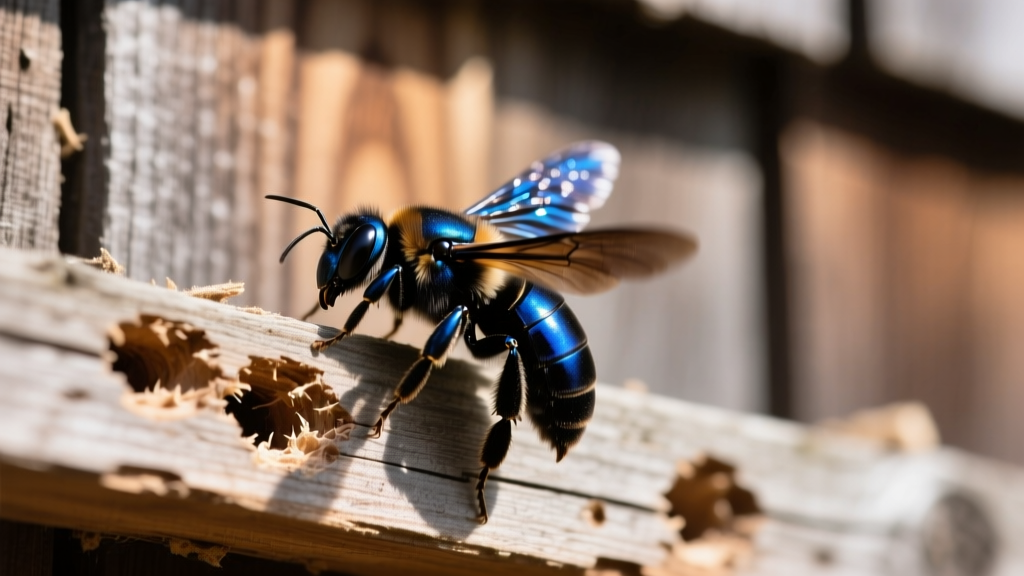
How to Kill Bore Bees and Stop Carpenter Bee Damage
The Hidden Threat to Your Yard Structures
When homeowners notice perfectly round, half-inch holes appearing in their wooden decks, pergolas, or fence posts, they are usually dealing with carpenter bees (Xylocopa virginica). Often referred to colloquially as 'bore bees' due to their aggressive wood-tunneling behavior, these large insects can cause severe structural degradation over time. If you are trying to figure out how to kill bore bees and protect your outdoor investments, you need a strategy that targets their unique nesting habits rather than just swatting at the adults.
Unlike termites, carpenter bees do not consume wood. Instead, they excavate it to create intricate galleries for their offspring. According to entomologists at the University of Kentucky, a single female can tunnel up to 10 inches into untreated timber in a single season. Over successive generations, these tunnels expand, weakening load-bearing beams and inviting secondary pests like woodpeckers, who will tear apart your fascia boards to reach the protein-rich larvae inside.
Identification: Bore Bees vs. Bumblebees
Before deploying any chemical treatments, accurate identification is critical. Bore bees are frequently mistaken for bumblebees, which are vital, non-destructive pollinators that nest in the ground. Misidentifying and killing beneficial bumblebees harms your garden's ecosystem.
Warning: Visual Identification Check
Carpenter (Bore) Bees: Feature a shiny, hairless, metallic black abdomen. They are highly territorial and often hover aggressively near rooflines and wooden eaves.
Bumblebees: Have a distinctly fuzzy, hairy abdomen with yellow and black banding. They are generally docile and are rarely seen hovering around bare wood.
Carpenter (Bore) Bees: Feature a shiny, hairless, metallic black abdomen. They are highly territorial and often hover aggressively near rooflines and wooden eaves.
Bumblebees: Have a distinctly fuzzy, hairy abdomen with yellow and black banding. They are generally docile and are rarely seen hovering around bare wood.
The Anatomy of Carpenter Bee Damage
To effectively kill bore bees, you must understand the architecture of their nests. The damage is rarely just a surface-level hole. The excavation process follows a highly specific pattern:
- The Entry Hole: The female chews a perfectly circular entry point exactly 1/2 inch in diameter, cutting against the wood grain.
- The Turn: After tunneling straight in for about 1 to 2 inches, she makes a sharp 90-degree turn to follow the wood grain.
- The Gallery: She bores a primary channel 6 to 10 inches long, carving out individual brood chambers separated by walls of chewed wood pulp.
- The Frass Pile: As she excavates, she pushes out coarse, sawdust-like material (frass), which accumulates in a distinct pile directly beneath the entry hole.
Step-by-Step Guide to Kill Bore Bees Safely
Eliminating an active infestation requires precision. Spraying generic flying insect killer on the exterior of the hole is highly ineffective because the chemical will not reach the deep, 90-degree angled gallery where the larvae and the resting female reside. Follow this professional-grade protocol to eradicate the colony.
Step 1: Time Your Application for Dusk
Carpenter bees are diurnal and highly active during daylight hours. Attempting to treat nests at noon will result in agitated bees swarming the application site. Wait until dusk or after dark when the bees have returned to their galleries and their metabolic activity is lowest. Wear a headlamp with a red-light filter, as insects are less attracted to red wavelengths.
Step 2: Apply Insecticidal Dust (Not Liquid)
Liquid sprays absorb into raw wood and lose their residual killing power within days. Insecticidal dust, however, clings to the bee's hairy body. When the bee crawls through the treated entry hole, the dust coats its legs and abdomen, which is then carried deep into the brood chambers, effectively killing the larvae and the queen.
- Tempo 1% Dust (Cyfluthrin): The industry standard for structural pest control. It provides a long residual effect and is highly lethal to hymenoptera. Expect to pay around $22 for a 10 oz shaker bottle.
- Delta Dust (Deltamethrin): A waterproof alternative that performs exceptionally well in high-humidity environments or on exterior fascia boards exposed to morning dew. Costs approximately $25 per pound.
- Application Tool: Use a bulb duster with a 6-inch metal extension tube. Insert the tube deep into the hole, past the 90-degree turn, and puff 2 to 3 short bursts of dust. Leave the hole open for 48 hours to allow foraging bees to enter and track the poison.
Step 3: Plug and Seal the Galleries
After 48 to 72 hours, the colony will be neutralized. If you leave the holes open, new scout bees will detect the vacant, pre-drilled galleries and move in within weeks. According to NC State Extension guidelines, sealing the holes is mandatory for long-term defense.
Do not use standard silicone caulk or wood filler alone; carpenter bees can easily chew through wet or semi-cured caulk. Instead, insert a 1/2-inch wooden dowel coated in exterior wood glue, or push a 1/2-inch cork stopper deep into the tunnel. Once seated, trim the dowel flush with a chisel and cover it with exterior-grade wood filler and paint.
Prevention Matrix: Defending Your Yard Structures
Once you kill bore bees, prevention is your next line of defense. Carpenter bees strongly prefer untreated, weathered, and unpainted softwoods like cedar, cypress, and pine. Below is a comparison of the most effective preventative treatments for your yard structures.
| Prevention Method | Efficacy Rating | Estimated Cost (2026) | Application Frequency |
|---|---|---|---|
| Exterior Paint (Solid acrylic/latex) | Excellent (99% deterrent) | $45 - $65 per gallon | Every 5-7 years |
| Polyurethane Varnish (Clear coat) | Very Good (85% deterrent) | $30 - $40 per quart | Every 2-3 years |
| Citrus Oil Spray (d-Limonene) | Fair (Temporary repellent) | $18 - $25 per bottle | Every 2-3 weeks in spring |
| Almond Oil Rub | Moderate (Natural deterrent) | $15 - $20 per bottle | Monthly during mating season |
When to Hire a Professional Exterminator
If your wooden pergola, multi-tiered deck, or roof soffits are heavily infested with dozens of active holes, DIY treatment becomes a safety hazard due to the need for tall ladders and the risk of multiple stings. Professional pest control companies utilize micro-encapsulated pyrethroids that bind to the wood surface and provide up to 90 days of residual protection.
In 2026, the national average cost for professional carpenter bee treatment ranges from $175 to $350 for a standard residential property. This typically includes the dusting of existing holes, a perimeter power-spray of the eaves and fascia boards, and a 30-day re-treatment guarantee.
Frequently Asked Questions
Do male bore bees sting?
No. Male carpenter bees are highly territorial and will aggressively fly directly at your face or hover near your lawn mower, but they are anatomically incapable of stinging. Only the females possess a stinger, and they are generally docile unless physically handled or trapped against the skin.
Will painting over the holes kill the bees inside?
No. Painting over an active hole will trap the bee inside, but it will simply chew a new exit hole through the fresh paint and wood, causing further structural damage. You must always apply an insecticidal dust and wait 48 hours before plugging and painting.
Can I use WD-40 to kill bore bees?
While WD-40 or carburetor cleaner will kill a bee on contact if sprayed directly into the nest, it is highly flammable, leaves an oily residue that prevents future wood staining or painting, and lacks any residual effect to protect against future scouts. Stick to EPA-registered insecticidal dusts for safe, effective yard defense.

