
Pest Control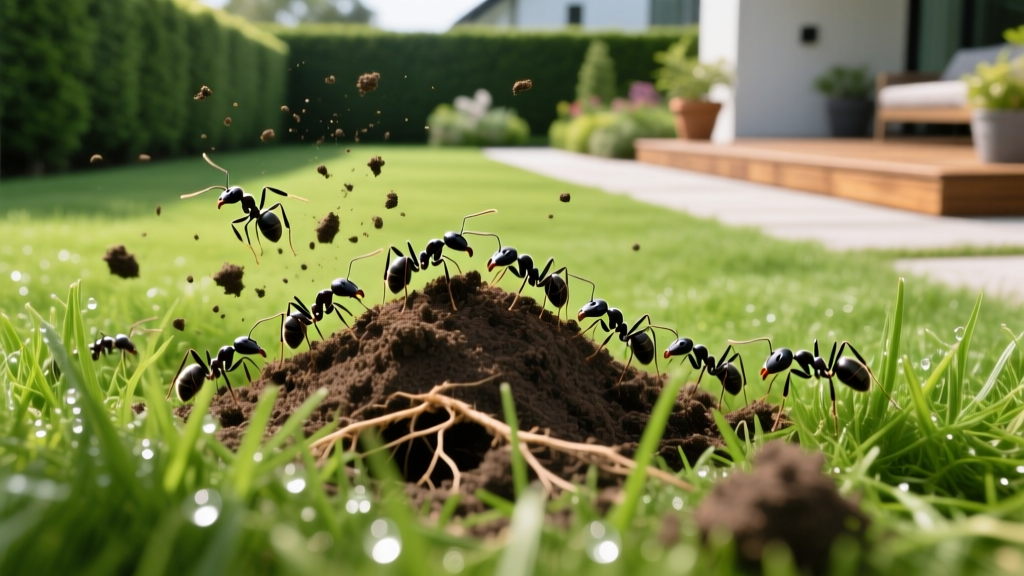
Killing Ants in Your Lawn: The Ultimate Mound Eradication Strategy
Why Ant Mounds Destroy Turfgrass
Ant mounds are not just aesthetic nuisances; they are active turf-killers. A single mature red imported fire ant (Solenopsis invicta) or field ant (Lasius neoniger) colony can house up to 500,000 workers. As these colonies excavate subterranean galleries, they deposit soil on the surface, smothering the grass beneath. This soil layer blocks sunlight, prevents moisture penetration, and causes rapid root desiccation. Furthermore, hardened mounds dull mower blades and create uneven terrain that leads to scalped turf. According to data from the Texas A&M AgriLife Extension, untreated fire ant mounds can reduce usable lawn space by up to 5% in heavily infested suburban yards, while simultaneously increasing the risk of painful stings and secondary bacterial infections.
Killing ants in your lawn requires a strategic approach that targets the colony's reproductive center—the queen, who resides 2 to 8 inches below the soil surface. Surface-level sprays only kill foraging workers, guaranteeing a rapid population rebound.
The Two-Step Method: The Gold Standard for Lawn Ant Eradication
Developed by university entomologists, the Two-Step Method remains the most scientifically validated protocol for achieving 90% to 95% long-term colony suppression. This strategy combines broadcast baiting with targeted mound treatments.
Step 1: Broadcast Bait Application
Apply a slow-acting granular bait across the entire lawn. Worker ants mistake the bait for food, carry it deep into the galleries, and feed it to the queen and larvae. The delayed action (usually 1 to 3 weeks) prevents the colony from recognizing the bait as a threat, which avoids "budding" (where the colony splits into multiple satellite mounds when stressed).
- Timing: Apply when soil temperatures are between 65°F and 80°F. Ants stop foraging when soil drops below 60°F or exceeds 90°F.
- Conditions: Apply in the late afternoon or early evening. UV light degrades many active ingredients, and ants forage most heavily at dusk.
- Calibration: Set your handheld rotary spreader to a low setting (e.g., 1.5 on a Scotts Whirl) to achieve the standard rate of 1 to 1.5 lbs per 1,000 square feet.
Step 2: Individual Mound Drenching
Seven to 10 days after broadcasting the bait, treat any remaining active mounds with a fast-acting contact insecticide. This step eliminates surviving satellite colonies that may not have consumed the bait.
The Drench Technique: Mix a liquid contact insecticide (like Bifenthrin) at the label-specified rate—typically 0.1 oz per gallon of water. Pour 1 to 2 gallons of the solution directly over the mound, extending 2 feet past the visible edges. Do not disturb the mound with a stick before drenching; breaking the surface triggers a defensive swarm and causes the queen to retreat deeper into the soil profile.
Active Ingredient Breakdown: What Actually Works
Selecting the right chemistry is critical. The Environmental Protection Agency (EPA) categorizes ant control products into baits, contact killers, and growth regulators. Below is a comparative matrix of the most effective active ingredients for turfgrass applications.
| Active Ingredient | Product Example | Kill Time | Best Use Case | Approx. Cost (5,000 sq ft) |
|---|---|---|---|---|
| Hydramethylnon | Amdro Fire Ant Bait | 1–2 Weeks | Primary broadcast bait | $18 - $22 |
| Bifenthrin | Talstar P Professional | 24 Hours | Step 2 mound drench / barrier | $25 - $30 |
| Spinosad | Fertilome Come & Get It | 2–3 Days | Organic / Pet-safe broadcast | $35 - $45 |
| Pyriproxyfen | Extinguish Plus | 4–8 Weeks | Long-term growth regulator (IGR) | $40 - $55 |
Organic and Pet-Safe Alternatives for Lawn Defense
For homeowners managing lawns where pets and children play daily, synthetic pyrethroids like Bifenthrin may be undesirable. Fortunately, organic alternatives have seen significant formulation improvements.
Spinosad Baits: Derived from the soil bacterium Saccharopolyspora spinosa, Spinosad is OMRI-listed and highly effective against fire ants. It disrupts the insect's nervous system but breaks down rapidly in sunlight, making it safe for mammals once absorbed into the soil.
Beneficial Nematodes: Applying Steinernema feltiae or Heterorhabditis bacteriophora via a hose-end sprayer introduces microscopic worms that hunt ant larvae in the soil. This biological control costs roughly $30 per 3,000 square feet and requires the soil to remain consistently moist for 14 days post-application to prevent the nematodes from desiccating.
⚠️ The "Boiling Water" Myth: Pouring boiling water on an ant mound is a widely circulated internet remedy that fails in practice. While it kills surface workers, the water cools rapidly before reaching the queen's chamber 6 inches below. Furthermore, boiling water instantly sterilizes the soil and boils the turf roots, leaving a dead, barren patch in your lawn that will take months to recover.
Common Mistakes That Guarantee Ant Survival
- Watering Immediately After Baiting: Granular baits rely on the oil-based carrier to attract foraging ants. If you run your irrigation system or if it rains within 48 hours of application, the bait becomes waterlogged, rancid, and completely unappealing to the colony.
- Using Granular Contact Killers on Mounds: Sprinkling Bifenthrin granules directly on top of a mound does not work. The ants will simply build new tunnels around the treated zone. Contact killers must be mixed with water and drenched into the soil to penetrate the galleries.
- Treating During Drought Stress: During severe summer droughts, ants conserve energy and restrict foraging to deep, moist soil layers. Broadcast baits applied during dry spells will sit on the surface and degrade. Wait for a light rainfall or irrigate the lawn lightly 24 hours before baiting to stimulate foraging activity.
- Ignoring the Perimeter: Lawn infestations often originate from neighboring mulch beds or woodpiles. Treating only the turfgrass while ignoring the perimeter guarantees rapid re-infestation within 30 days.
Frequently Asked Questions
Will killing ants in my lawn harm my grass?
No, when applied at label rates, ant baits and liquid drenches will not damage turfgrass. In fact, eradicating the mounds allows the smothered grass to recover. The only risk to your lawn comes from physical damage caused by pouring boiling water, applying undiluted vinegar, or using excessive amounts of diatomaceous earth, which can alter soil pH and block soil pores.
How often should I treat my lawn for ants?
For proactive defense, apply a broadcast bait twice a year: once in mid-spring (when soil temps consistently hit 65°F) and once in early fall. This disrupts the spring mating flights and reduces the colony size before winter dormancy. Reactive mound treatments should only be applied as needed for new, active mounds that appear between broadcast cycles.
Are lawn ants ever beneficial?
Small populations of native field ants can mildly aerate the soil and prey on turf-damaging grubs. However, aggressive mound-builders like the red imported fire ant, harvester ant, and Allegheny mound ant cause structural turf damage that far outweighs any predatory benefits. If you have native, non-mounding ants that do not sting and do not disrupt mowing, treatment is generally unnecessary.

