
Pest Control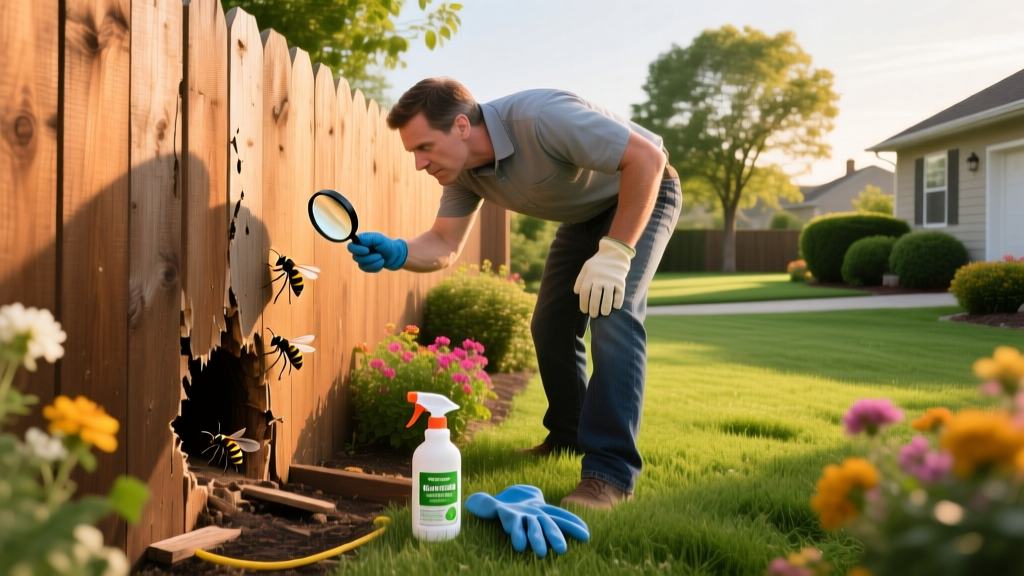
Killing Carpenter Bees: Proven Yard Defense & Treatment Guide
Carpenter bees (Xylocopa species) are formidable adversaries for any homeowner invested in yard defense. Unlike termites, these large solitary insects do not consume wood; they excavate it to create intricate nesting galleries. A single female can bore a perfectly round, half-inch (12-13mm) entry hole and tunnel up to 14 inches deep into untreated softwoods. Over successive generations, these tunnels branch out, compromising the structural integrity of pergolas, cedar fencing, deck joists, and raised garden beds. If you are dealing with an active infestation, killing carpenter bees requires a targeted approach that goes beyond surface-level sprays.
Identifying the Threat: Carpenter Bees vs. Bumblebees
Before initiating any lethal treatment, accurate identification is critical. Carpenter bees are frequently misidentified as bumblebees, leading to unnecessary harm to beneficial ground-nesting pollinators. According to entomologists at the University of Kentucky, distinguishing between the two relies on visual cues and nesting behavior.
| Feature | Carpenter Bee (Xylocopa) | Bumblebee (Bombus) |
|---|---|---|
| Abdomen | Shiny, hairless, metallic black | Fuzzy, covered in yellow/black hairs |
| Nesting Site | Dead wood, fences, deck railings | Underground burrows, abandoned rodent holes |
| Entry Sign | 1/2-inch round holes, sawdust frass below | No wood damage, small soil mounds |
| Flight Sound | Loud, aggressive buzzing | Low, steady hum |
The Anatomy of a Carpenter Bee Infestation
Effective yard defense requires understanding the pest's lifecycle. In early spring (typically March to May, depending on your hardiness zone), adult carpenter bees emerge from their overwintering galleries. The males, which lack stingers, patrol the perimeter of wooden structures aggressively but pose no physical threat. The females, equipped with powerful mandibles, do the excavating.
After boring the initial half-inch entry hole, the female turns 90 degrees and tunnels parallel to the wood grain. She creates individual brood chambers, provisioning each with a mixture of pollen and nectar before laying a single egg and sealing the chamber with chewed wood pulp. By late summer, the new adults emerge. If you attempt to kill carpenter bees using liquid surface sprays during the active boring phase, you will fail to reach the developing larvae deep inside the galleries.
Lethal Treatment Protocols: Killing Carpenter Bees Safely
To eradicate an established colony within your yard structures, you must deliver the active ingredient directly into the nesting gallery. Here is the professional-grade, step-by-step protocol for eliminating the infestation.
Phase 1: Direct Nest Injection (Dusts & Foams)
Liquid sprays absorb into porous wood and degrade rapidly under UV exposure. Insecticidal dusts, however, cling to the bees' bodies and are tracked deep into the tunnel network.
- Locate Active Holes: Inspect all unpainted softwood structures at dusk or dawn when bees are less active. Look for fresh, coarse sawdust (frass) directly beneath entry holes.
- Equip a Hand Duster: Use a specialized tool like the JT Eaton 405 Brass Hand Duster ($18-$22). Fill it only 1/3 full with a waterproof insecticidal dust, such as Delta Dust (Deltamethrin 0.06%).
- Inject the Gallery: Insert the duster nozzle directly into the half-inch hole. Puff 2 to 3 times to coat the interior walls of the tunnel. The goal is a light coating, not a solid plug.
- The 48-Hour Rule: Do not plug the hole immediately. Leave the entry open for 48 to 72 hours. This allows returning foraging bees to track the lethal dust into the deeper larval chambers, ensuring total colony collapse.
⚠️ Pollinator Protection Warning: Apply dusts only directly into known carpenter bee galleries. Avoid broadcast dusting of blooming yard plants or ground surfaces. The EPA strictly regulates pesticide application to minimize non-target exposure to essential pollinators. For full compliance guidelines, refer to the EPA Pollinator Protection framework.
Phase 2: Sealing and Surface Residuals
After the 48-hour tracking period, seal the entry holes using a wooden dowel, cork, or exterior-grade wood putty. This prevents secondary pests, such as wood-boring beetles or moisture fungi, from exploiting the abandoned tunnels. Once sealed, apply a residual microencapsulated liquid spray (e.g., Onslaught FastCap or Tempo SC Ultra) to the exterior wood surfaces to deter new scouting females from initiating fresh bore sites.
Top Chemical Active Ingredients Compared
Not all insecticides perform equally in outdoor yard environments where moisture and UV degradation are constant factors. Below is a comparison of the most effective active ingredients for killing carpenter bees in exterior wood.
| Product / Active Ingredient | Formulation | Moisture Resistance | Avg. Cost (2026) | Best Use Case |
|---|---|---|---|---|
| Delta Dust (Deltamethrin 0.06%) | Waterproof Dust | Excellent | $28 / 1 lb | High-moisture areas (deck joists, ground-level fencing) |
| Tempo Dust (Cyfluthrin 5%) | Standard Dust | Poor | $30 / 10 oz | Dry, covered areas (eaves, pergola roofs, soffits) |
| Spectracide Carpenter Bee Killer (Prallethrin) | Aerosol Foam | Moderate | $9 / 16 oz | Quick knockdown of single, visible bees on contact |
| Onslaught FastCap (Esfenvalerate + Prallethrin) | Microencapsulated Liquid | Good | $65 / 16 oz | Perimeter surface defense and residual deterrence |
Long-Term Yard Defense: Preventing Re-Infestation
Killing carpenter bees is only half the battle. According to NC State Extension specialists, carpenter bees strongly prefer bare, unpainted, or weathered softwoods like cedar, pine, cypress, and redwood. To fortify your yard against future attacks, implement these structural defenses:
- Paint Over Stain: While exterior wood stains enhance grain appearance, they offer virtually no protection against carpenter bee mandibles. A thick coat of exterior alkyd or acrylic latex paint creates a physical barrier that bees rarely attempt to breach.
- Borate Wood Treatments: For raw wood that cannot be painted (like the underside of deck boards or structural pergola beams), apply a disodium octaborate tetrahydrate solution, such as Bora-Care ($95/gallon) or Timbor. These glycol-based borates penetrate deep into the wood cellulose. While borates do not repel the bees, they are toxic when ingested, disrupting the insect's digestive enzymes and halting the tunneling process.
- Hardwood Upgrades: When replacing damaged yard structures, opt for composite materials, PVC trim boards, or dense hardwoods (like Ipe or Mahogany), which are too hard for carpenter bees to excavate.
- Aluminum Flashing: Cap exposed end-grains on fence posts and pergola beams with aluminum or copper flashing. End-grains are the most vulnerable and common entry points for initial tunneling.
Frequently Asked Questions
Will filling the holes with steel wool kill the bees?
No. Stuffing holes with steel wool or copper mesh after the bees have entered will simply trap them inside. They will either die and rot, causing foul odors, or they will chew a secondary exit hole through the wood, causing further structural damage. Always apply insecticidal dust first, allow the tracking period, and then seal.
Do carpenter bees cause as much damage as termites?
No. Termites consume wood continuously and can destroy a structural beam in a matter of months. Carpenter bees only remove small amounts of wood to create nesting space. However, over 3 to 5 years, the compounding effect of multiple generations branching out from a single entry point can severely weaken load-bearing yard structures and invite moisture rot.
Are there natural deterrents that actually work?
Citrus oil sprays and almond oil are frequently cited as natural repellents, but Penn State Extension notes their efficacy is extremely short-lived outdoors due to rapid evaporation and UV breakdown. For reliable yard defense, physical barriers (paint) and borate treatments remain the only proven long-term solutions.

