
Pest Control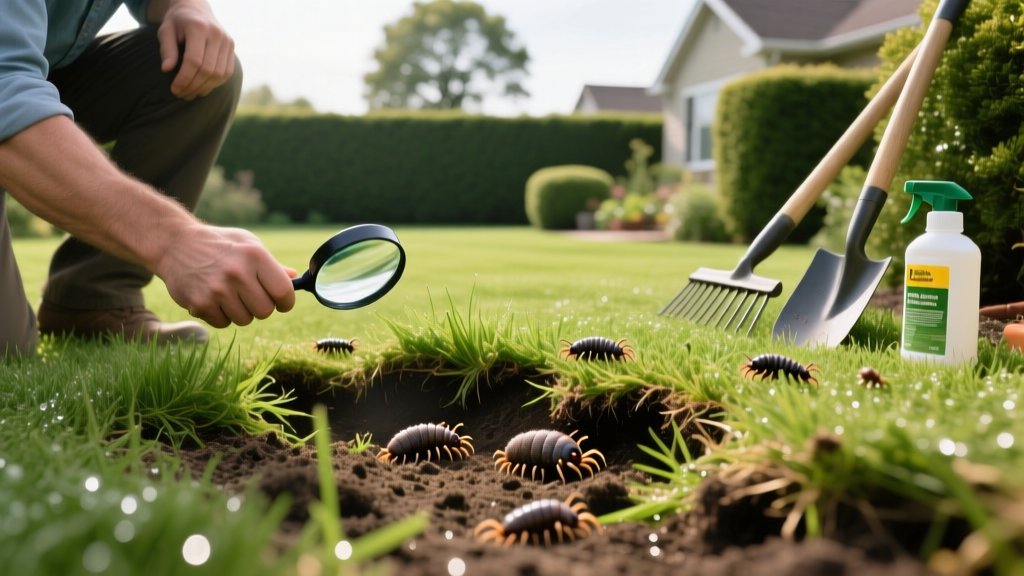
Proven Strategies for Killing Lawn Grubs and Stopping Moles
The Dual Threat: Root Feeders and Turf Trenchers
When homeowners notice irregular brown patches and torn-up sod in their yards, the immediate assumption is often a fungal disease or drought stress. However, the presence of white, C-shaped larvae beneath the soil surface signals a compounding pest problem. Focusing on killing lawn grubs is not just about saving your grass roots from being severed; it is the primary defensive strategy against secondary yard invaders like skunks, raccoons, and crows that will physically rip your turf apart to feast on them.
Expert Insight: While moles are frequently blamed for grub-related lawn damage, moles primarily tunnel deep for earthworms. The animals responsible for "peeling back" or rolling up your sod like a carpet in search of grubs are almost always skunks, raccoons, and foraging birds. Eliminating the grub food source is the most effective long-term deterrent for these surface-digging mammals.
Scouting and Thresholds: Do You Actually Need to Treat?
Before investing in curative chemicals or biological controls, you must verify the grub population density. Applying pesticides blindly wastes money and disrupts local soil ecology. According to Penn State Extension, turfgrass can generally tolerate a low population of grubs without showing stress.
The 12x12 Inch Peel Test
- Use a sharp spade or sod cutter to outline a 12-inch by 12-inch square in the transition zone between healthy green grass and damaged brown turf.
- Cut the sod to a depth of 2 to 3 inches and peel it back like a hinge.
- Count the number of C-shaped grubs in the exposed soil and on the underside of the turf.
- Repeat this test in three different areas of the lawn and calculate the average.
⚠️ Treatment Threshold Warning: If you find fewer than 5 grubs per square foot, your lawn can likely recover with proper watering and fertilization. If you count between 5 and 10 grubs per square foot, treatment is borderline. If you exceed 10 grubs per square foot, immediate intervention is required to prevent total root loss and secondary predator damage.
The Chemical vs. Biological Arsenal
Successfully killing lawn grubs requires matching the active ingredient to the grub's life cycle stage. The two primary Japanese beetle (*Popillia japonica*) and European chafer (*Rhizotrogus majalis*) generations peak in late summer, making timing your most critical variable.
| Treatment Type | Active Ingredient / Organism | Best Application Window | Target Grub Stage | Est. Cost (per 5,000 sq ft) |
|---|---|---|---|---|
| Preventative Chemical | Chlorantraniliprole (Acelepryn/GrubEx) | April – Mid-June | Early instar / Newly hatched | $22 - $28 |
| Curative Chemical | Trichlorfon (Dylox 6.2) | August – October | Large, active 2nd/3rd instar | $30 - $35 |
| Biological Control | Heterorhabditis bacteriophora (Hb Nematodes) | Late August – September | Active soil-dwelling larvae | $35 - $45 |
| Long-term Biological | Paenibacillus popilliae (Milky Spore) | Spring or Fall (One-time) | Japanese beetle specific only | $40 - $60 |
Deep Dive: Curative Chemical Application (Trichlorfon)
If you missed the spring preventative window and your lawn is actively being destroyed in September, Trichlorfon (commonly sold as Dylox 6.2) is the industry standard for rapid knockdown. It acts as a fast-acting stomach and contact poison. However, it degrades rapidly in alkaline soils (pH above 7.5). If your soil pH is high, you must apply a higher rate or switch to a different curative active ingredient like carbaryl.
Deep Dive: Biological Nematode Application
For homeowners strictly adhering to organic pest management, beneficial nematodes are highly effective, provided you respect their environmental needs. You must specifically source Heterorhabditis bacteriophora (Hb) strains, as the more common Steinernema carpocapsae (Sc) nematodes hunt closer to the surface and miss deeper grub species. Nematodes are living organisms; they must be shipped in coolers, applied in the late evening to avoid UV degradation, and the soil must remain consistently moist for 10 to 14 days post-application to allow them to penetrate the grub cuticle.
Step-by-Step Protocol for Maximum Chemical Efficacy
The most common failure mode in killing lawn grubs is improper watering after application. Granular pesticides sit harmlessly in the thatch layer unless physically washed into the root zone where the grubs are feeding.
- Step 1: Mow Low. Drop your mower deck to 2 inches to reduce thatch interference and allow the product to reach the soil surface.
- Step 2: Apply the Product. Use a calibrated broadcast spreader. For Dylox 6.2, the standard curative rate is 3 to 4 pounds per 1,000 square feet. Check the label for your specific turf type.
- Step 3: Water In Immediately. This is non-negotiable. Apply exactly 0.25 to 0.5 inches of irrigation immediately after spreading. Use empty tuna cans placed around the yard to measure the water depth. This moves the active ingredient past the thatch and into the top 2 inches of soil.
- Step 4: Restrict Access. Keep children and pets off the treated lawn until the grass blades are completely dry and the granules have dissolved into the soil profile.
💡 Pro-Tip for Heavy Thatch: If your lawn has more than 0.5 inches of thatch, aerate the lawn with a core aerator before applying curative grub treatments. Thatch acts as a sponge, absorbing the pesticide and preventing it from reaching the soil-dwelling grubs, rendering your treatment useless.
Defending Against Secondary Pests Post-Treatment
Even after successfully killing lawn grubs, the residual scent and overturned soil may continue to attract foraging wildlife for a few weeks. To protect your recovering turf while the dead grubs decompose, implement temporary physical and olfactory deterrents.
Apply a castor oil-based repellent (such as Mole-Med or similar formulations) at a rate of 2 ounces per 1,000 square feet. Castor oil coats the remaining soil organisms and earthworms with an unpalatable film, encouraging skunks and moles to relocate their foraging to neighboring properties. Additionally, laying down bird netting or lightweight erosion control blankets over the most severely torn areas at night will physically block raccoons and skunks from digging while your grass roots re-establish.
Frequently Asked Questions
Will killing lawn grubs in the fall fix my brown grass immediately?
No. Killing the grubs stops further root severing, but the already detached turf will remain brown and die. You must rake out the dead material, lay down fresh topsoil, and overseed with a region-appropriate grass blend (like tall fescue or Kentucky bluegrass) within two weeks of the grub treatment to restore the lawn canopy.
Are grub treatments safe for earthworms?
Chlorantraniliprole (the active ingredient in Acelepryn and Scotts GrubEx) is highly selective and has virtually no toxicity to earthworms, bees, or aquatic invertebrates when used as directed. Conversely, older broad-spectrum chemicals like carbaryl (Sevin) and trichlorfon (Dylox) will significantly reduce beneficial earthworm populations and should be used only as targeted curative spot-treatments rather than blanket applications.
Does Milky Spore actually work for long-term grub defense?
Milky Spore disease (*Paenibacillus popilliae*) is highly effective, but Michigan State University Extension notes it is strictly species-specific to Japanese beetle grubs. It will not control European chafers or June beetles. Furthermore, it takes 2 to 4 years to build up sufficient spore density in the soil to provide reliable control, making it a poor choice for acute, immediate lawn damage.

