
Pest Control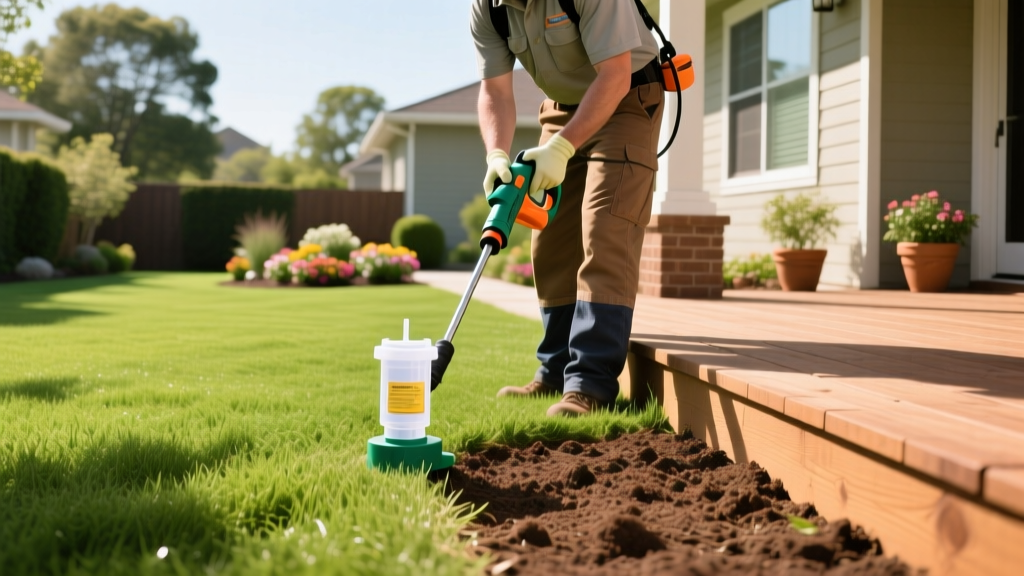
Killing Termites in Your Yard: Perimeter Defense & Bait Strategies
The Yard Termite Threat Matrix
When focusing on killing termites in your outdoor space, the first step is identifying which species is threatening your perimeter. Subterranean, dampwood, and drywood termites require vastly different yard defense strategies. Subterranean termites are the most destructive, building massive underground colonies that forage into your home's foundation and yard structures. According to the Environmental Protection Agency (EPA), subterranean termites cause billions in structural damage annually, making perimeter yard defense a critical homeowner priority.
| Termite Species | Primary Yard Habitat | Moisture Requirement | Optimal Yard Treatment |
|---|---|---|---|
| Eastern Subterranean | Soil, mulch beds, wood-to-ground contact | High (requires soil contact) | Liquid soil barriers, In-ground bait stations |
| Dampwood | Decaying stumps, leaky irrigation zones | Very High (water-damaged wood) | Moisture correction, localized borate treatments |
| Drywood | Attic eaves, outdoor furniture, dead branches | Low (extracts from wood) | Wood injections, orange oil, fumigation (severe) |
Liquid Soil Barriers: The Trench-and-Treat Protocol
For immediate and long-term subterranean termite control, a non-repellent liquid termiticide barrier remains the gold standard. Products containing Fipronil (such as Termidor SC at a 9.1% concentration) utilize a 'transfer effect.' Termites cannot detect the chemical, so they tunnel through the treated soil, pick up a lethal dose, and transfer it to the colony through grooming and trophallaxis (food sharing).
Step-by-Step Trenching Specifications
- Dig the Trench: Excavate a continuous trench 6 inches wide and 6 inches deep directly against the foundation or around the specific yard structure (like a detached shed) you are protecting.
- Mix the Solution: For Termidor SC, the standard rate is 0.8 fluid ounces of concentrate per gallon of water. This creates a 0.06% finished solution.
- Apply the Drench: Apply exactly 4 gallons of the finished solution per 10 linear feet of trench. For a standard 150-linear-foot perimeter, you will need 60 gallons of finished solution (requiring roughly four 20oz bottles of concentrate, costing about $280 to $350 total).
- Backfill: Once the liquid is absorbed, push the soil back into the trench to cap the treatment zone and prevent UV degradation or surface runoff.
⚠️ CRITICAL WARNING: Never trench or apply liquid termiticides within 5 feet of a well, cistern, or natural water body. If your yard features a French drain or gravel drainage system, do not treat the gravel directly; treat the soil beneath it to prevent the chemical from washing away into storm drains.
In-Ground Bait Stations: Strategic Colony Elimination
If trenching is impossible due to hardscaping, concrete patios, or environmental concerns, in-ground bait stations offer a highly effective alternative for killing termites. Modern stations like the Trelona ATBS (Advanced Termite Baiting System) use Novaluron, a chitin synthesis inhibitor. When foraging termites consume the bait, they are unable to molt, leading to a systematic collapse of the colony over 60 to 90 days.
Bait Station Pros and Cons
- Pros: Minimal soil disruption; highly targeted; safe for yards with pets and children; provides continuous year-round monitoring; effective where liquid barriers fail (e.g., under thick concrete slabs).
- Cons: Slower initial kill time compared to liquids; requires quarterly inspections; higher upfront hardware cost (a 15-station Trelona kit costs between $160 and $220).
Installation Geometry
According to NC State Extension guidelines, bait stations must be placed 10 to 20 linear feet apart around the perimeter of the structure. Install them 2 to 4 feet away from the foundation to avoid the drip line of the roof, which can flood the station and ruin the bait matrix. Use a 2-inch hole saw or specialized auger to sink the station housing flush with the soil surface, ensuring lawnmowers can pass over them safely.
Biological Yard Defenses: Beneficial Nematodes
For homeowners seeking organic perimeter defense, entomopathogenic nematodes—specifically Steinernema carpocapsae—provide a natural method for killing termites in the top layers of yard soil. These microscopic worms actively hunt termite larvae and workers, entering their bodies and releasing bacteria that kill the host within 48 hours.
Application Specifics: Purchase fresh nematodes (they are living organisms and expire quickly). Apply at a rate of 1 to 2 million nematodes per 1,000 square feet of yard area. They must be sprayed onto moist soil during the early morning or late evening when UV exposure is low and soil temperatures are between 60°F and 85°F. While nematodes will not eradicate a massive, deep subterranean colony, they are exceptional for suppressing shallow foraging tubes and protecting newly planted saplings or garden beds.
Decision Framework: Liquid vs. Bait for Your Yard
Choosing the right protocol depends on your specific yard topology and urgency. Use this framework to decide:
- Choose Liquid Barriers IF: You have active termite mud tubes on your foundation, you need immediate colony suppression, and your yard has exposed soil perimeter with no complex drainage systems.
- Choose Bait Stations IF: Your foundation is surrounded by concrete walkways, you have a well or koi pond on the property, or you prefer a low-toxicity, monitor-and-respond approach.
- Choose a Hybrid Approach IF: You are dealing with a severe infestation in a complex yard. Pest control professionals often apply a localized liquid spot-treatment at the active entry point while installing a full perimeter bait system for long-term colony elimination.
Frequently Asked Questions
Does spreading wood chip mulch attract termites to my yard?
Mulch does not necessarily attract termites from afar, but it provides an ideal, moisture-retaining highway for termites already in the soil. If you use mulch, maintain a strict 6-inch gap between the mulch bed and your home's siding or foundation weep holes. Consider using termite-resistant mulches like cedar or cypress heartwood, though their repellent properties degrade after a year.
How do I treat a termite-infested tree stump in my yard?
Do not simply spray the outside of the stump. Drill 1/2-inch holes into the top and sides of the stump, angling toward the root system. Pour a Fipronil-based liquid termiticide directly into the holes to saturate the root ball, which is likely acting as a secondary colony hub. Once treated, cover the stump with a tarp to prevent rain from washing the chemical into the surrounding water table before it absorbs.
Can I use termite bait stations for my detached wooden fence?
Yes. If a wooden fence line is suffering from subterranean termite damage, install bait stations every 10 feet directly adjacent to the fence posts. The University of Florida IFAS notes that fence posts often serve as primary foraging bridges between neighboring properties and your main residence, making them critical nodes for bait interception.

