
Pest Control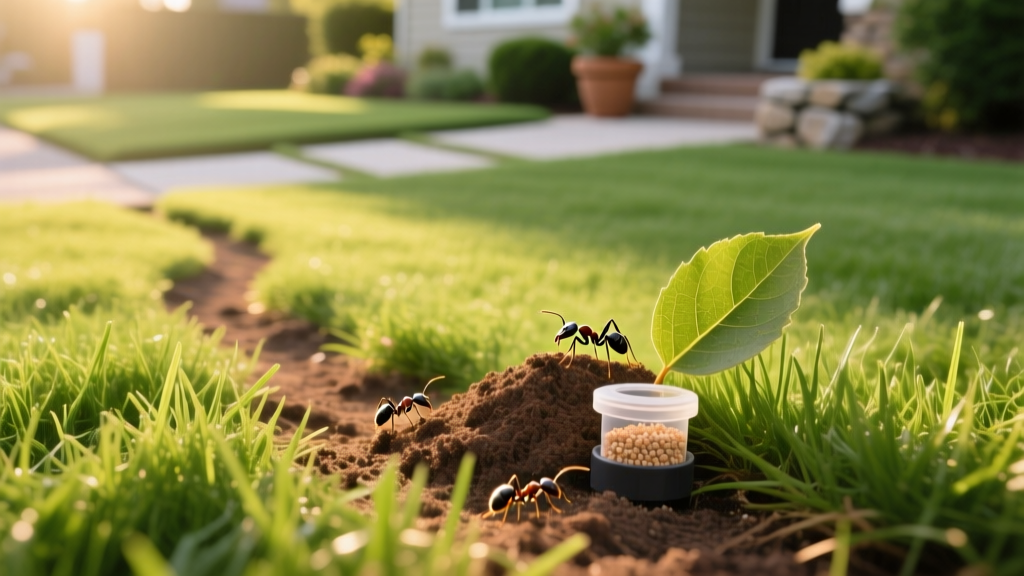
Best Ant Treatment for Lawns: Bait, Spray, and Natural Fixes
Ants are a foundational part of the soil ecosystem, but when their populations explode, they transition from beneficial aerators to turf-destroying pests. Mounds disrupt root systems, create uneven surfaces that scalp during mowing, and in the case of stinging species, pose a direct threat to homeowners and pets. Selecting the right ant treatment for lawns requires understanding colony biology, not just spraying visible insects. Surface sprays often fail because they only kill foraging workers, leaving the queen deep underground to rebuild the colony. This guide breaks down the exact chemical and organic protocols used by turf professionals to eliminate ant colonies at their source.
Identifying the Enemy: Which Ants Are Destroying Your Turf?
Before purchasing a product, you must identify the species. Different ants require different active ingredients and application timings. According to the Texas A&M Imported Fire Ant Research and Management Project, misidentifying the species is the leading cause of treatment failure.
| Ant Species | Mound Characteristics | Aggression Level | Primary Lawn Damage |
|---|---|---|---|
| Red Imported Fire Ant (RIFA) | Dome-shaped, loose soil, no central opening | High (Stings repeatedly) | Root desiccation, severe stinging hazard |
| Pavement Ant | Small craters along hardscape edges | Low (Rarely bites) | Soil displacement onto grass blades |
| Allegheny Mound Ant | Massive, hard-packed mounds up to 3 feet high | Moderate (Bites, sprays formic acid) | Kills turf via formic acid injection |
| Harvester Ant | Large cleared areas around central hole, gravel cover | High (Painful sting) | Complete vegetation removal around mound |
The Core Debate: Broadcast Bait vs. Targeted Mound Drench
The turf management industry relies on two primary chemical strategies. Choosing between them depends on your infestation level and timeline.
Pro Tip: The Two-Step Method
For heavy infestations (more than 5 mounds per 1,000 square feet), university extension programs universally recommend the 'Two-Step Method.' Step 1 is broadcasting a slow-acting bait across the entire lawn. Step 2, performed 7 to 10 days later, is treating any remaining active nuisance mounds with a fast-acting contact drench.
For heavy infestations (more than 5 mounds per 1,000 square feet), university extension programs universally recommend the 'Two-Step Method.' Step 1 is broadcasting a slow-acting bait across the entire lawn. Step 2, performed 7 to 10 days later, is treating any remaining active nuisance mounds with a fast-acting contact drench.
Broadcast Baits (The Long Game)
Baits combine a slow-acting insecticide with a palatable food source (usually soybean oil and corn grit). Worker ants carry the bait deep into the colony and feed it to the queen.
- Best Active Ingredients: Indoxacarb (e.g., Advion Fire Ant Bait) and Hydramethylnon (e.g., Amdro).
- Cost: $45–$55 for a 20lb bag of Indoxacarb; $25 for a 10lb bag of Hydramethylnon.
- Timeline: 2 to 4 weeks for total colony collapse.
- Advantage: Reaches deep subterranean queens that sprays cannot touch.
Mound Drenches and Sprays (The Quick Fix)
Liquid drenches involve mixing a contact insecticide with water and pouring 1 to 2 gallons directly onto the mound.
- Best Active Ingredients: Lambda-cyhalothrin (e.g., FenvaStar EcoCap) or Bifenthrin.
- Cost: $30–$40 per 8oz bottle of concentrate (yields 20+ gallons).
- Timeline: 15 to 30 minutes for visible knockdown.
- Disadvantage: High risk of 'colony budding.' If the chemical doesn't reach the queen quickly enough, the colony will split into multiple satellite mounds, worsening the problem.
Step-by-Step: Executing the Two-Step Ant Treatment for Lawns
Follow this precise protocol to ensure maximum efficacy and prevent chemical waste.
- Check the Forecast: Ensure no rain is expected for at least 24 hours. Moisture degrades bait palatability and washes away liquid drenches.
- Calculate Square Footage: Measure your lawn. Most broadcast baits require a highly specific rate of 1.5 lbs per acre (approximately 5.5 grams per 1,000 sq ft). Over-applying does not kill faster; it makes the pile too large for workers to carry, and they will ignore it.
- Broadcast in the Evening: Apply granular bait between 4:00 PM and 6:00 PM. Ants forage most heavily in the late afternoon and evening. Furthermore, UV light degrades active ingredients like Hydramethylnon rapidly.
- Wait 7-10 Days: Do not disturb the lawn. Allow the trophallaxis (food sharing) process to distribute the poison to the brood and queens.
- Inspect and Drench: Look for surviving mounds. Mix a liquid pyrethroid (like Bifenthrin) at the label rate (usually 0.5 oz per gallon). Pour 1.5 gallons slowly over the mound, starting from the outside edge and moving inward to prevent the queen from escaping.
Organic and Pet-Safe Alternatives That Actually Work
For homeowners with free-roaming pets or organic vegetable gardens integrated into the lawn, synthetic pyrethroids may not be viable. The Clemson University Home and Garden Information Center notes that organic controls require more frequent applications but can achieve long-term suppression.
Warning: Diatomaceous Earth (DE) Limitations
While food-grade DE is a popular internet remedy, it only works when completely dry. In a lawn environment, morning dew and irrigation render DE entirely ineffective. Rely on baits and nematodes instead.
While food-grade DE is a popular internet remedy, it only works when completely dry. In a lawn environment, morning dew and irrigation render DE entirely ineffective. Rely on baits and nematodes instead.
- Spinosad Baits: Derived from soil bacteria, Spinosad (e.g., Monterey Garden Insect Spray or organic fire ant baits) disrupts the insect nervous system. It is OMRI-listed and highly effective when used as a mound drench or broadcast bait.
- Beneficial Nematodes: Applying Steinernema feltiae or Heterorhabditis bacteriophora nematodes via a hose-end sprayer introduces microscopic worms that hunt ant larvae in the soil. Apply at a rate of 1 million nematodes per 1,000 sq ft during overcast, moist conditions to prevent UV desiccation.
- Botanical Oils: D-limonene (orange oil) extracts can be used as a contact mound drench. They destroy the waxy cuticle of the ant's exoskeleton, causing rapid dehydration. However, they possess no residual activity.
Common Application Mistakes (And How to Avoid Them)
Even with premium products, poor technique leads to treatment failure. Avoid these critical errors:
- Disturbing the Mound Before Baiting: Kicking or poking a mound triggers a defensive response. Workers will immediately move the queen and brood deeper or to a satellite site, making the bait useless.
- Using Broadcast Fertilizers Simultaneously: If you apply a high-nitrogen fertilizer on the same day as a bait, the ants may gorge on the fertilizer salts or ignore the bait entirely due to competing food sources.
- Watering Immediately After Drenching: While drenches need water to carry the chemical into the soil, turning on the sprinkler system immediately after application will dilute the active ingredient below lethal thresholds. Wait 24 hours before irrigating.
Frequently Asked Questions
Will treating my lawn for ants attract other pests?
Eliminating ants can sometimes lead to a temporary spike in other insects. Ants are aggressive predators of turf-damaging pests like chinch bugs and caterpillars. However, the long-term benefits of removing ant mounds and stinging hazards far outweigh this minor ecological shift.
How long does an ant treatment for lawns last?
Broadcast baits provide control for 3 to 6 months. To maintain a barrier, turf professionals recommend re-applying a slow-acting bait like Indoxacarb in early spring (April) and late summer (August) to intercept new queens attempting to establish colonies after nuptial flights.
Can I use household ant baits (like Terro) on my lawn?
No. Household liquid baits rely on sugar water and borax, which evaporate or wash away within hours in an outdoor environment. Furthermore, the borax concentration is often too low to kill a massive outdoor colony of hundreds of thousands of workers. Always use granular baits specifically formulated for turf and outdoor weather conditions.

