
Pest Control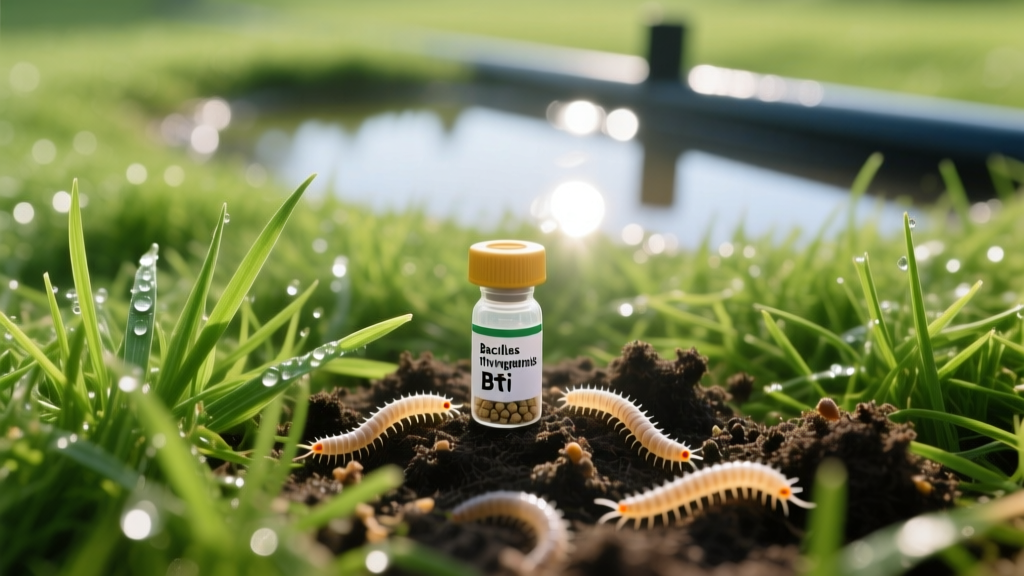
How to Eradicate Lawn Gnats: Bti, Nematodes, and Moisture Control
Swarms of tiny flying insects hovering over your turf at dusk ruin outdoor evenings and signal underlying soil health issues. Homeowners loosely refer to these pests as "lawn gnats," but effective eradication requires identifying whether you are dealing with soil-dwelling fungus gnats, biting midges (no-see-ums), or swarming non-biting midges. Blanketing your yard with generic bug sprays will fail because these insects breed in the thatch and topsoil, requiring targeted biological and cultural interventions.
Decoding the Swarm: Fungus Gnats vs. Midges
Before purchasing treatments, you must accurately identify the pest. Misidentification leads to wasted chemicals and persistent swarms. According to Penn State Extension, fungus gnats are primarily a nuisance and a symptom of overwatered soil, whereas midges are often drawn to standing water or decaying organic matter near the turf.
| Pest Type | Size & Appearance | Behavior & Swarming | Biting? | Primary Breeding Ground |
|---|---|---|---|---|
| Fungus Gnats (Bradysia spp.) | 1/8 inch, dark grey/black, long legs | Weak flyers, zig-zag run on grass blades | No | Damp topsoil, decaying thatch, fungi |
| Biting Midges (Ceratopogonidae) | 1/32 to 1/8 inch, greyish, robust | Active at dawn/dusk, aggressive hovering | Yes (painful) | Muddy margins, wet compost, damp turf |
| Non-Biting Midges (Chironomidae) | 1/4 inch, mosquito-like, feathery antennae | Massive mating swarms over lawns at dusk | No | Nearby ponds, overwatered low spots |
Moisture Mapping: Breaking the Breeding Cycle
Lawn gnats cannot complete their life cycle without consistent moisture. Fungus gnat larvae require the top 1 to 2 inches of soil to remain constantly damp. If you are watering your lawn daily or every other day for short durations, you are artificially cultivating a gnat nursery.
The 80% Dry-Out Protocol
Transition your irrigation to a deep-and-infrequent schedule. Use a 6-inch soil probe or a digital moisture meter to verify that the top 2 inches of soil are completely dry before initiating the next watering cycle.
- Clay Soils: Water 1 inch per week, split into two 0.5-inch sessions. Allow 4 days between sessions.
- Sandy Soils: Water 1.5 inches per week, split into three 0.5-inch sessions. Allow 2 days between sessions.
- Shaded Zones: Reduce irrigation volume by 30% in areas under tree canopies where evaporation is slow.
Biological Interventions: Bti and Beneficial Nematodes
When cultural controls (drying the soil) are insufficient, or when weather patterns force continuous moisture, biological larvicides offer the highest efficacy without harming pollinators, pets, or earthworms. The Environmental Protection Agency (EPA) recognizes Bti as a highly targeted, low-risk biological control agent.
Deploying Bti (Bacillus thuringiensis israelensis)
Bti produces crystal proteins that bind to alkaline receptors in the gut of gnat and midge larvae, causing fatal paralysis. It is entirely inert to mammals and beneficial insects.
Application Blueprint:
Product: Summit Mosquito Bits (approx. $22 for 30 oz).
Rate: 3 oz per 1,000 square feet.
Method: Broadcast evenly over the turf using a handheld spreader. Immediately follow with 1/4 inch of irrigation to wash the granules off the grass blades and into the thatch/soil layer where the larvae feed.
Frequency: Apply every 14 days during peak swarm season (late spring through early autumn).
Product: Summit Mosquito Bits (approx. $22 for 30 oz).
Rate: 3 oz per 1,000 square feet.
Method: Broadcast evenly over the turf using a handheld spreader. Immediately follow with 1/4 inch of irrigation to wash the granules off the grass blades and into the thatch/soil layer where the larvae feed.
Frequency: Apply every 14 days during peak swarm season (late spring through early autumn).
Introducing Steinernema feltiae Nematodes
For severe, entrenched fungus gnat populations, beneficial nematodes act as microscopic predators. Steinernema feltiae actively hunts gnat larvae in the soil, entering their bodies and releasing lethal bacteria within 48 hours.
- Cost: ~$38 for 5 million nematodes (treats ~1,500 sq ft).
- Temperature Constraint: Soil temperature must be between 55°F and 85°F. Apply only at dusk to prevent UV degradation.
- Activation: Mix with water and apply via a hose-end sprayer. Water the lawn with an additional 1/4 inch of water immediately after application to drive the nematodes below the surface.
Chemical Knockdowns for Severe Infestations
Biologicals take 7 to 14 days to collapse a gnat population. If you are dealing with aggressive biting midges (no-see-ums) and require immediate adult knockdown for an outdoor event, synthetic pyrethroids are necessary. The American Mosquito Control Association notes that adulticiding provides only temporary relief if breeding sites are not simultaneously treated.
Bifenthrin Barrier Sprays
Bifenthrin (e.g., Talstar P Professional Insecticide) provides a residual barrier that kills adult gnats and midges on contact and repels them for up to 30 days.
Warning: Pollinator Protection
Never apply bifenthrin to blooming weeds (like clover or dandelions) in your lawn. Mow the lawn immediately before application to remove flower heads. Apply at dusk when bees are inactive.
Never apply bifenthrin to blooming weeds (like clover or dandelions) in your lawn. Mow the lawn immediately before application to remove flower heads. Apply at dusk when bees are inactive.
- Mixing Rate: 0.5 to 1.0 fl oz of Talstar P per gallon of water per 1,000 sq ft.
- Re-Entry Interval (REI): Keep humans and pets off the treated lawn until the spray has completely dried (typically 2 to 4 hours).
- Cost: ~$45 for a 32 oz bottle (yields over 30,000 sq ft of coverage).
Long-Term Turf Defense Protocols
Eradicating the current generation of lawn gnats is only half the battle. To prevent future outbreaks, you must alter the physical structure of your lawn to eliminate their preferred micro-habitats.
Thatch Management
Fungus gnats thrive in thatch layers thicker than 0.5 inches. The spongy organic matter holds moisture and cultivates the fungi that gnat larvae eat. Rent a power dethatcher or use a liquid dethatching agent (like N-Ext D-Thatch) to break down excess organic matter. For compacted soils holding surface water, perform core aeration using a plug aerator that pulls 3-inch deep cores, allowing the soil to breathe and dry evenly.
Drainage Corrections
If midges are swarming specific low-lying areas of your yard, surface grading or French drain installation is mandatory. A 2% slope away from the center of the lawn ensures water runs off rather than pooling in the turf canopy.
Lawn Gnat Eradication FAQ
Do bug zappers work for lawn gnats?
No. UV light traps are highly ineffective for fungus gnats and midges. They attract and kill beneficial nocturnal insects while failing to draw in the specific pests hovering near the damp soil. Rely on soil-applied Bti instead.
Can I use apple cider vinegar traps on my lawn?
ACV traps with dish soap work for fruit flies indoors, but they are useless outdoors. Wind dilutes the scent, and the traps cannot capture the volume of insects emerging from a 5,000-square-foot lawn. Stick to biological soil treatments.
Will lawn gnats kill my grass?
Fungus gnat larvae primarily feed on fungi and decaying organic matter, but in massive numbers, they will chew on tender grassroots, causing yellowing and thinning. Biting midges do not damage the grass at all; they only bite humans and pets.

