
Pest Control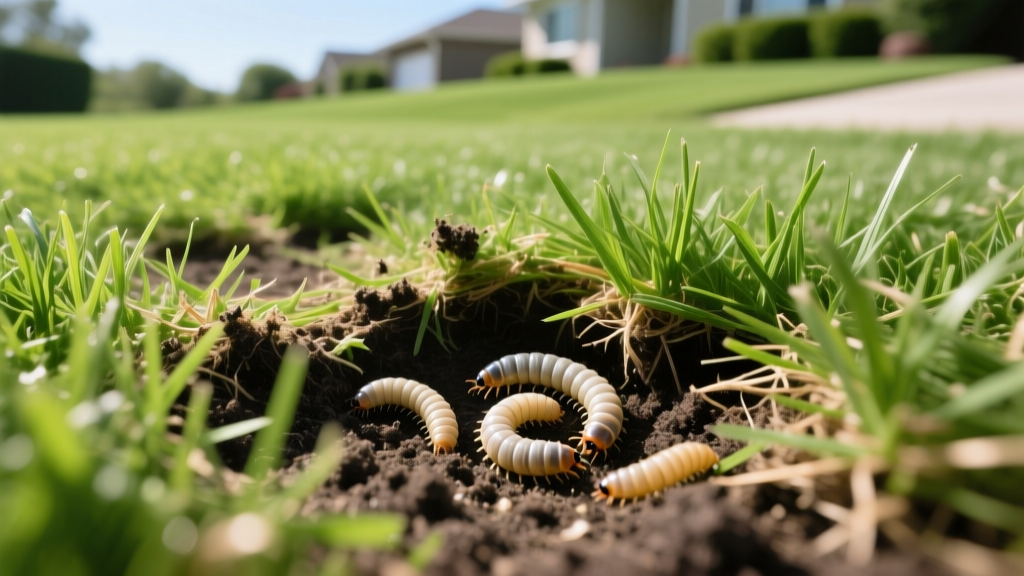
Lawn Grub Control: How to Identify, Treat, and Prevent Turf Damage
White grubs—the larval stage of scarab beetles like Japanese beetles, June bugs, and European chafers—are among the most destructive subterranean pests in North American turfgrass. By severing the root system just below the soil line, they cut off the grass's water and nutrient supply, leading to irregular brown patches that can destroy an entire lawn in weeks.
Effective grub management requires moving beyond calendar-based spraying and adopting a threshold-driven approach. According to Penn State Extension, a healthy, well-irrigated lawn can tolerate 5 to 10 grubs per square foot without showing visible damage. Treatment is only economically and ecologically justified when populations exceed this threshold or when secondary pests, such as skunks and raccoons, begin tearing up the turf to forage.
The Diagnostic Tug-Test and Soil Sampling Protocol
Before purchasing any insecticide, you must confirm an active infestation and calculate the population density. Grubs feed in the top 2 to 3 inches of soil, making them accessible through manual sampling.
Step 1: The Tug-Test
Walk the perimeter of brown or thinning turf. Grab a handful of grass at the soil line and pull firmly. If the turf peels back easily like a loose carpet, the root system has been severed. This is a primary indicator of grub feeding, though it can also signal severe fungal disease or drought stress.
Step 2: The 12x12 Soil Cut
To get an exact count, use a flat spade to cut three sides of a 12-by-12-inch square in the transition zone between healthy and dead grass. Peel back the sod flap and sift through the top 3 inches of soil. Count every C-shaped, creamy-white larva.
- 0-4 grubs: No treatment needed.
- 5-9 grubs: Monitor closely; treat only if the lawn is under heat or drought stress.
- 10+ grubs: Immediate intervention required.
Curative vs. Preventive Grub Control: A Decision Matrix
The most common failure in grub control is applying the wrong chemical class at the wrong time. Preventive insecticides target newly hatched, first-instar larvae and must be absorbed by the grass roots before the grubs arrive. Curative insecticides are fast-acting contact poisons used when mature grubs are actively destroying roots in late summer or early fall.
| Active Ingredient | Common Brand Examples | Control Type | Optimal Application Window | Target Life Stage |
|---|---|---|---|---|
| Chlorantraniliprole | Acelepryn, Scotts GrubEx | Preventive | April – June | Eggs / 1st Instar |
| Imidacloprid | Bayer Advanced Grub Killer | Preventive | June – Mid-July | 1st / 2nd Instar |
| Trichlorfon | Bayer Dylox, 24-Hour Grub Killer | Curative | August – October | 2nd / 3rd Instar (Mature) |
| Hb Nematodes | BioLogic, Arbico Organics | Curative / Biological | August – September | All active soil stages |
Critical Watering Rule: Granular preventives like Chlorantraniliprole require immediate watering (0.25 to 0.5 inches) to wash the active ingredient off the grass blades and into the thatch layer where eggs hatch. Failure to water in the product within 48 hours results in UV degradation and complete control failure.
Biological Warfare: Deploying Beneficial Nematodes
For homeowners managing organic lawns or protecting pollinator habitats from systemic neonicotinoids, entomopathogenic nematodes offer a highly lethal, non-toxic alternative. Specifically, the Heterorhabditis bacteriophora (Hb) species is the most effective against white grubs.
According to research highlighted by the University of Kentucky Department of Entomology, Hb nematodes actively hunt grubs in the soil, entering their bodies and releasing symbiotic bacteria (Photorhabdus luminescens) that kill the host within 48 hours.
Application Parameters for Nematode Success
Nematodes are living organisms and will die if mishandled. Follow these strict parameters:
- Soil Temperature: Apply only when soil temperatures at a 2-inch depth are between 60°F and 85°F.
- Moisture: Irrigate the lawn lightly before application to prevent the nematodes from drying out upon contact with the soil.
- UV Protection: Apply in the late evening or on a heavily overcast day. Direct sunlight will kill exposed nematodes in minutes.
- Post-Application Watering: Immediately water in with 0.25 inches of water to wash them off the grass blades and deep into the root zone.
Expect to pay between $35 and $50 for a concentrate covering 5,000 square feet. Store them in a refrigerator upon arrival and use within two weeks.
Defending Against Secondary Foragers: Skunks and Raccoons
Grub infestations rarely damage the lawn in isolation. The primary visual damage in late summer is often caused by skunks, raccoons, and crows digging up the turf to eat the protein-rich larvae. If your lawn looks like it has been rototilled, you have a secondary pest problem.
While treating the grubs removes the food source, it takes 7 to 14 days for curative treatments to kill the larvae and for foraging animals to realize the food is gone. To protect the turf during this window:
- Motion-Activated Sprinklers: Devices like the Orbit 62100 Yard Enforcer ($60-$75) use infrared sensors to blast nocturnal foragers with a jet of water, conditioning them to avoid your yard.
- Castor Oil Repellents: Liquid castor oil sprays coat the soil and grubs with an unpalatable taste, deterring digging mammals without harming the turf.
- Turf Pinning: For small, high-value garden beds, lay down biodegradable jute netting and pin it to the soil with landscape staples to physically block digging.
The Milky Spore Myth: Many homeowners apply Milky Spore (Paenibacillus popilliae) expecting broad-spectrum grub control. However, Milky Spore only infects Japanese beetle grubs. It is entirely ineffective against June bugs, European chafers, and Oriental beetles. Furthermore, it requires 3 to 5 years to build up sufficient spore counts in the soil to provide meaningful control. Do not rely on it for immediate or comprehensive defense.
Rehabilitating Damaged Turf Post-Treatment
Once the grub population is neutralized and secondary foragers are deterred, the damaged areas require immediate rehabilitation to prevent weed invasion.
- Roll the Turf: If the sod was peeled back by animals or the tug-test, use a water-filled lawn roller to press the remaining roots back into contact with the soil.
- Overseed Bare Patches: Slice-seed or top-dress bare areas with a matching turfgrass blend. Keep the seed consistently moist for 14 to 21 days.
- Suspend Pre-Emergents: Do not apply crabgrass pre-emergent herbicides (like Prodiamine) to areas you are overseeding, as they will inhibit grass seed germination.
By combining precise soil sampling, correctly timed chemical or biological interventions, and targeted wildlife deterrence, you can break the grub life cycle and maintain a dense, resilient turf canopy year after year.

