
Pest Control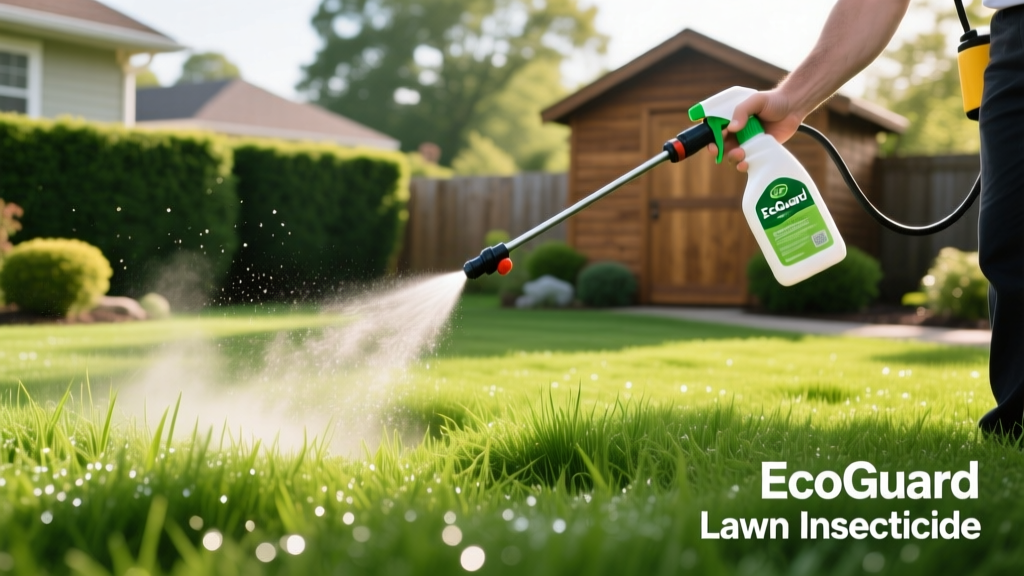
How to Choose and Apply Insecticide Spray for Lawns
Understanding Lawn Pests: Do You Actually Need a Spray?
Before purchasing any chemical treatment, confirm that insects are actually the culprit. Brown patches, wilting grass, and thinning turf are frequently caused by fungal diseases, compacted soil, or improper irrigation rather than pests. Applying an insecticide spray to a lawn suffering from drought stress or dollar spot fungus will waste money and introduce unnecessary chemicals into your soil.
The Tug Test for Grubs: If you suspect white grubs, grab a handful of grass at the edge of a brown patch and pull upward. If the turf rolls back like a loose carpet and you see C-shaped, milky-white larvae in the top two inches of soil, you have a grub infestation. Finding fewer than five grubs per square foot rarely warrants chemical intervention.
For surface-feeding insects like chinch bugs or armyworms, part the grass at the border of damaged and healthy turf. Look for small, fast-moving insects. According to the University of Minnesota Extension, accurate identification is the most critical step in integrated pest management, as different insect life stages require entirely different chemical approaches.
Active Ingredients Decoded: What to Look For
Walking into a garden center can be overwhelming. Products are marketed under hundreds of brand names, but the actual active ingredients are limited to a few dozen chemical classes. For liquid insecticide sprays, you will generally choose between synthetic pyrethroids, neonicotinoids, and organic biologicals.
| Active Ingredient | Common Product Example | Target Pests | Avg. Cost (2026) |
|---|---|---|---|
| Bifenthrin (Pyrethroid) | Talstar P Professional | Chinch bugs, armyworms, ticks, fleas | $45 per quart |
| Imidacloprid (Neonicotinoid) | Merit 2F Insecticide | White grubs, billbugs (systemic) | $65 per 32oz bottle |
| Lambda-cyhalothrin | Demand CS (Microencapsulated) | Ants, chinch bugs, surface feeders | $80 per half-pint |
| Spinosad (Biological) | Captain Jack's Lawn & Garden | Armyworms, sod webworms, caterpillars | $18 per quart |
Beginner Recommendation: For general surface pests (ticks, fleas, chinch bugs), a bifenthrin-based spray provides excellent contact kill and up to 30 days of residual control. For soil-dwelling pests like grubs, imidacloprid is superior because it is systemic—the grass roots absorb it, killing grubs when they feed.
Step-by-Step: Mixing and Applying Liquid Insecticide Spray
Proper calibration and application ensure you apply enough product to kill the pests without over-applying, which can cause phytotoxicity (chemical burn) on your grass. Always read the specific product label, as the Environmental Protection Agency (EPA) mandates that the label is the law.
1. Calibrate Your Sprayer
Most liquid concentrates are applied at a rate of 1 gallon of finished spray per 1,000 square feet. If you are using a 2-gallon handheld pump sprayer, you will cover 2,000 square feet per tank. Measure your lawn's square footage by multiplying the length by the width of your turf areas, subtracting driveways and garden beds.
2. Mix the Solution Safely
Always add water to the tank first, filling it halfway. Next, add the precise amount of insecticide concentrate. Finally, add the remaining water. This "half-water, chemical, rest-of-water" method prevents the concentrate from foaming up and spilling over the edge of the tank. For a standard bifenthrin application targeting chinch bugs, the rate is typically 0.5 to 1.0 fluid ounces of concentrate per gallon of water.
3. Apply with Overlapping Passes
Pump your sprayer to 40-60 PSI. Walk at a steady pace of about 3 feet per second, holding the nozzle 18 to 24 inches above the turf. Spray in a side-to-side sweeping motion. When you reach the end of your pass, step over 3 to 4 feet and spray the return pass, slightly overlapping your previous line to ensure zero gaps in coverage.
4. Water It In (For Soil Pests Only)
If you are treating for grubs or billbugs using a systemic spray like imidacloprid, you must water the lawn with 0.25 to 0.5 inches of irrigation immediately after spraying. This washes the chemical off the grass blades and down into the root zone where the pests are feeding. If you are treating surface pests like ticks or chinch bugs, do not water the lawn; let the spray dry on the grass blades where it will act as a residual barrier.
Critical Safety and Environmental Guardrails
WARNING: Pollinator Protection
Never apply neonicotinoid insecticide sprays (like imidacloprid) to lawns that contain flowering weeds like blooming clover or dandelions. These chemicals are highly toxic to bees. Mow your lawn immediately before application to remove all flower heads, or switch to a bee-safe alternative like chlorantraniliprole (Acelepryn) for grub control.
Never apply neonicotinoid insecticide sprays (like imidacloprid) to lawns that contain flowering weeds like blooming clover or dandelions. These chemicals are highly toxic to bees. Mow your lawn immediately before application to remove all flower heads, or switch to a bee-safe alternative like chlorantraniliprole (Acelepryn) for grub control.
Personal Protective Equipment (PPE) is non-negotiable. At a minimum, wear chemical-resistant nitrile gloves, long pants, closed-toe shoes, and safety glasses when mixing and applying concentrates. The Re-Entry Interval (REI)—the time you must wait before allowing children and pets back onto the treated grass—is typically 12 to 24 hours, or until the spray has completely dried. Check your specific product label for the exact REI.
Prevent environmental runoff by leaving a 10-foot untreated buffer zone around storm drains, creeks, and fish ponds. Pyrethroids like bifenthrin are extremely toxic to aquatic life and fish. Never wash out your sprayer in a driveway where the rinse water will flow into the street gutter.
Troubleshooting: Why Your Insecticide Spray Didn't Work
If you applied a spray and still see active pest damage two weeks later, one of the following failure modes is likely responsible:
- Wrong Life Stage: Insecticides are highly stage-specific. Applying a contact spray for grubs in May when they are deep in the soil as mature adults will fail. Grub control must be applied in late summer (August) when larvae are small and feeding near the surface.
- Thatch Barrier: If your lawn has more than 0.5 inches of thatch (the spongy layer of dead organic matter between the soil and grass blades), the spray will get trapped in the thatch and never reach the soil. Dethatch or core aerate before treating soil pests.
- UV Degradation: Some organic sprays, particularly those containing neem oil or unencapsulated pyrethrins, break down rapidly in direct sunlight. If using these, apply them in the late evening to maximize their active lifespan.
- Alkaline Hydrolysis: If you mixed your insecticide spray with water that has a high pH (alkaline water above 7.5), the active ingredient may chemically degrade in the tank before you even spray it. If your local water is highly alkaline, use a buffering agent or distilled water for mixing.
By correctly identifying the pest, selecting the appropriate active ingredient, and strictly following calibration and safety protocols, you can effectively manage lawn insects while maintaining a healthy, resilient turf ecosystem.

