Pest Control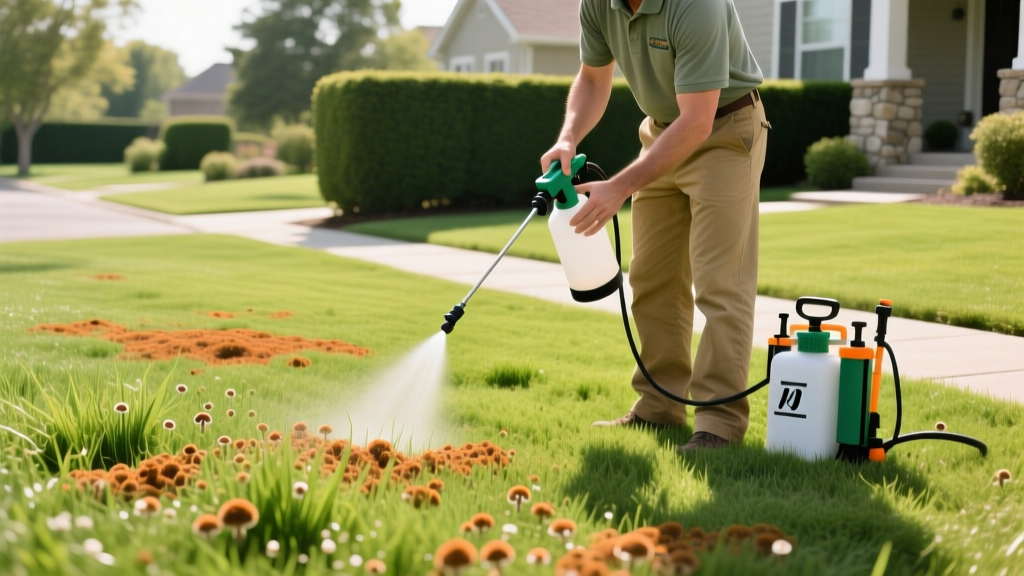
How to Get Rid of Lawn Rust: Step-by-Step Maintenance Guide
Lawn rust, caused by fungi in the Puccinia genus, is one of the most common yet misunderstood turfgrass diseases. It primarily targets cool-season grasses like Kentucky bluegrass, perennial ryegrass, and tall fescue during late summer and early fall when growth slows and humidity remains high. While rarely fatal to established lawns, severe lawn rust weakens the turf canopy, making it highly vulnerable to winterkill and secondary pests. Eradicating this pathogen requires a precise, multi-phase maintenance protocol rather than a single chemical application.
Phase 1: Accurate Diagnosis (The White Shoe Test)
Before altering your maintenance schedule or purchasing fungicides, confirm the presence of Puccinia spores. Rust presents as light yellow flecks on grass blades that mature into raised, orange-to-brown pustules. These pustules rupture easily, releasing a powdery spore mass that resembles iron oxide dust.
Diagnostic Field Test: Walk across the affected area wearing white canvas shoes or light-colored pants. If the fabric becomes heavily dusted with an orange-yellow powder, you have an active lawn rust infection. If the grass is simply yellowing without spore transfer, investigate abiotic stressors like drought, nematode damage, or nitrogen deficiency instead.
According to Penn State Extension, rust thrives when turfgrass experiences extended periods of leaf wetness (8 to 12 hours) combined with temperatures between 68°F and 85°F. Slow-growing, nitrogen-starved grass provides the perfect window for spore germination and hyphal penetration.
Phase 2: Immediate Cultural Interventions (First 48 Hours)
Once diagnosed, your immediate goal is to alter the microclimate of the turf canopy to halt spore germination. Implement these cultural shifts immediately:
- Adjust Mowing Practices: Lower your mowing height by exactly 0.25 inches to increase airflow at the soil line. Crucially, you must bag all clippings during this phase. Mulching infected clippings simply redistributes millions of viable spores back onto the turf canopy.
- Sharpen Mower Blades: Dull blades shred grass tips rather than slicing them cleanly. Shredded leaf tissue creates jagged, open wounds that serve as direct entry points for rust hyphae. Sharpen or replace blades every 25 hours of mowing time.
- Overhaul Irrigation Timing: Never water in the evening. Shift your irrigation schedule to run between 4:00 AM and 6:00 AM. This ensures the grass canopy dries completely before nightfall, breaking the 8-hour leaf wetness requirement for spore germination. Apply 1.0 to 1.5 inches of water per week, split into two deep soakings rather than daily shallow sprinklings.
Phase 3: The Nitrogen Correction Protocol
The single most effective non-chemical treatment for lawn rust is pushing the grass to outgrow the infection. Rust exploits slow-growing turf; by stimulating rapid leaf production, the plant sheds infected blades before the fungus can complete its life cycle. However, homeowners frequently miscalculate fertilizer application rates.
Calculating Actual Nitrogen Requirements
To combat rust, apply 0.75 lbs of actual nitrogen per 1,000 square feet using a fast-release source like Urea (46-0-0) or Ammonium Sulfate (21-0-0) to trigger an immediate growth flush. Do not rely on slow-release polymer-coated urea for this specific intervention, as the nutrient release is too gradual to outpace the fungal spread.
The Math Behind the Bag:
If you are using a standard 24-0-6 lawn fertilizer, the bag contains 24% nitrogen by weight.
Formula: Target N Rate / % Nitrogen = Product Required
0.75 lbs / 0.24 = 3.12 lbs of product per 1,000 sq ft.
For a 5,000 sq ft lawn, you must apply exactly 15.6 lbs of this product. Under-applying starves the grass, allowing rust to persist. Over-applying causes weak, succulent growth susceptible to Pythium blight.
If you are using a standard 24-0-6 lawn fertilizer, the bag contains 24% nitrogen by weight.
Formula: Target N Rate / % Nitrogen = Product Required
0.75 lbs / 0.24 = 3.12 lbs of product per 1,000 sq ft.
For a 5,000 sq ft lawn, you must apply exactly 15.6 lbs of this product. Under-applying starves the grass, allowing rust to persist. Over-applying causes weak, succulent growth susceptible to Pythium blight.
Water the fertilizer in immediately with 0.25 inches of irrigation to move the nitrogen into the root zone and prevent foliar burn.
Phase 4: Targeted Fungicide Applications
Cultural controls and nitrogen corrections resolve 80% of mild to moderate lawn rust cases. However, if the infection is severe, or if environmental conditions (prolonged autumn rain) prevent the grass from outgrowing the disease, chemical intervention is necessary. The NC State TurfFiles database recommends rotating fungicide modes of action (FRAC codes) to prevent pathogen resistance.
| Product / Active Ingredient | FRAC Code | Rate per 1,000 sq ft | Approx. Cost (2026) |
|---|---|---|---|
| Banner Maxx (Propiconazole 14.3%) | 3 (DMI) | 2.0 fl oz | $12 - $15 |
| Heritage SC (Azoxystrobin 23%) | 11 (QoI) | 0.4 fl oz | $18 - $22 |
| Eagle 20EW (Myclobutanil 10%) | 3 (DMI) | 1.2 fl oz | $14 - $18 |
Application Protocol: Mix the chosen fungicide with a non-ionic surfactant (such as Nitro-Plus at 0.25% v/v) to ensure the chemical penetrates the waxy cuticle of the grass blade and reaches the fungal pustules. Apply using a backpack sprayer calibrated to deliver 1.5 to 2.0 gallons of water per 1,000 square feet for optimal canopy coverage. Do not water the lawn for at least 24 hours post-application.
Phase 5: Long-Term Prevention & Overseeding
Once the active infection is suppressed, shift your focus to preventing recurrence. The UW-Madison Extension notes that genetic resistance is the most sustainable long-term defense against Puccinia species.
- Select Resistant Cultivars: When overseeding in the fall, avoid generic 'Contractor's Mix' bags. Instead, source specific, rust-resistant cultivars. For Kentucky bluegrass, look for 'Midnight', 'Kenblue', or 'NuGlade'. For tall fescue, 'Titan Ultra' and 'Falcon IV' exhibit strong resistance profiles.
- Incorporate Endophytes: If overseeding with perennial ryegrass, ensure the seed is endophyte-enhanced. Endophytes are beneficial fungi living within the grass tissue that produce alkaloids, naturally deterring both surface-feeding insects and certain foliar pathogens.
- Core Aeration: Compacted soil restricts root growth, leading to the exact slow-growing, stressed canopy that rust exploits. Perform core aeration annually in early fall, pulling 3-inch plugs on 2-inch centers to relieve compaction and improve soil oxygenation.
Troubleshooting Common Maintenance Failures
If your lawn rust persists despite following the protocol above, audit your routine for these critical errors:
Failure Mode 1: Nighttime Irrigation. Watering after 4:00 PM extends leaf wetness well past the 10-hour threshold, guaranteeing spore germination regardless of fungicide use.
Failure Mode 2: Thatch Accumulation. A thatch layer exceeding 0.5 inches acts like a sponge, holding moisture against the grass crowns and harboring overwintering spores. Dethatch mechanically if your core aeration does not sufficiently break up the layer.
Failure Mode 3: Over-reliance on DMI Fungicides. Applying Propiconazole or Myclobutanil more than twice per season without rotating to a QoI (like Azoxystrobin) will rapidly select for resistant rust strains, rendering the chemicals useless.
Failure Mode 2: Thatch Accumulation. A thatch layer exceeding 0.5 inches acts like a sponge, holding moisture against the grass crowns and harboring overwintering spores. Dethatch mechanically if your core aeration does not sufficiently break up the layer.
Failure Mode 3: Over-reliance on DMI Fungicides. Applying Propiconazole or Myclobutanil more than twice per season without rotating to a QoI (like Azoxystrobin) will rapidly select for resistant rust strains, rendering the chemicals useless.
Frequently Asked Questions
Is lawn rust harmful to dogs or children playing on the grass?
No. The Puccinia fungi that cause lawn rust are highly specialized plant pathogens. They cannot infect humans, dogs, or cats. However, the spores can trigger mild respiratory allergies or asthma in sensitive individuals if disturbed in large quantities. It is best to keep pets and children off the lawn immediately after a chemical fungicide application until the spray has completely dried.
Will lawn rust kill my grass completely?
Rust is a foliar disease, meaning it attacks the leaves, not the crown or root system. While it severely thins the canopy and makes the lawn look unsightly, it rarely kills established turf outright. The real danger is that the weakened grass becomes highly susceptible to winter desiccation, snow mold, and invasive weeds like Poa annua taking over the thinned areas.
Can I just mow the rust off?
Mowing removes the upper portion of the infected blades, which temporarily improves the lawn's appearance and removes millions of spores. However, if the underlying cause (nitrogen deficiency and slow growth) is not corrected, the fungus will simply colonize the newly emerging tissue within 7 to 10 days. Mowing must be paired with the nitrogen correction protocol outlined in Phase 3 for lasting results.