
Pest Control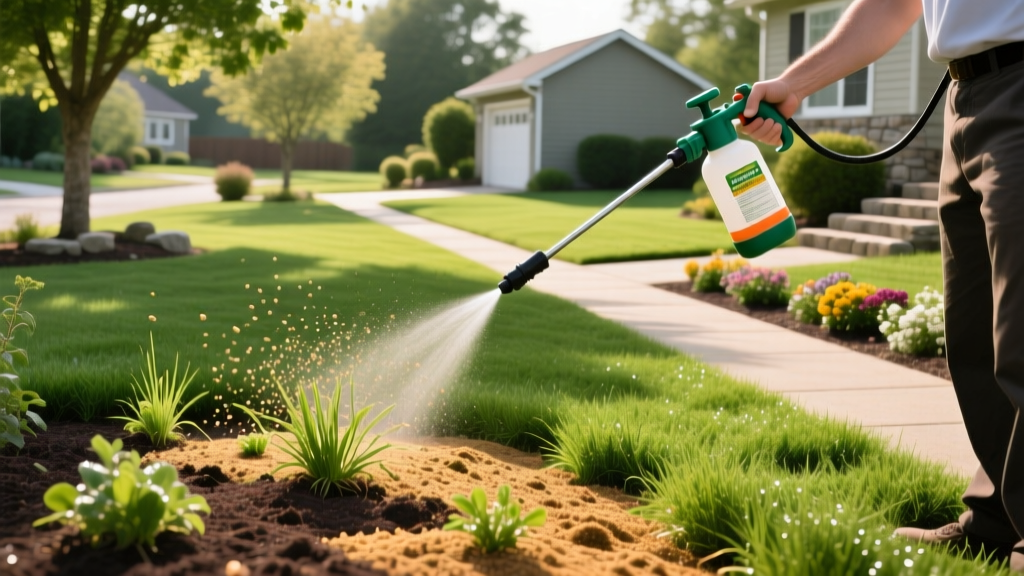
The Truth About Lawn Seed With Weed Killer and Spot Treatment
Homeowners searching for a one-step solution to patch a bare lawn often gravitate toward products labeled as 'lawn seed with weed killer.' The premise is highly appealing: drop the seed, water it, and watch the grass grow while simultaneously eradicating dandelions, crabgrass, and clover. However, the biological reality of turfgrass agronomy makes this specific product category one of the most misunderstood in lawn care. Most pre-emergent and post-emergent herbicides are inherently phytotoxic to germinating grass seed. When you buy a combined seed-and-herbicide mix, you are often compromising either the germination rate of your expensive grass seed or the actual efficacy of the weed control.
As a turf management professional, I see the fallout from these products every spring: thin, stunted grass seedlings surrounded by thriving, untreated weeds. To achieve a thick, weed-free lawn, you must abandon the 'magic bullet' seed mixes and adopt a strategic spot-treatment and seeding protocol. This guide breaks down exactly why combined products fail, which active ingredients actually work at seeding, and how to execute a flawless spot-treatment strategy in 2026.
The 'Lawn Seed With Weed Killer' Myth vs. Reality
The fundamental problem with combining seed and weed killer in a single bag lies in the timing of weed life cycles. Weeds fall into two categories: pre-emergent (seeds waiting to sprout, like crabgrass) and post-emergent (existing broadleaf weeds like plantain and thistle).
- Pre-emergent herbicides work by creating a chemical barrier in the top inch of soil that stops cell division in germinating seeds. If a chemical stops weed seeds from dividing, it will almost certainly stop your grass seeds from dividing as well.
- Post-emergent herbicides (like 2,4-D or dicamba) only kill weeds that have already sprouted and have active foliage. They do absolutely nothing to prevent weed seeds in the soil from germinating alongside your new grass.
Therefore, a bag of seed coated in a post-emergent herbicide is largely a marketing gimmick. It will not stop the crabgrass seeds already in your soil from sprouting, and applying systemic broadleaf killers to the soil surface where fragile grass radicles (first roots) are emerging can cause severe stunting.
Why Box-Store Seed-and-Weed-Killer Mixes Fail
When you analyze the active ingredients in commercial 'weed and seed' products, the flaws become immediately apparent. Below is a breakdown of the chemicals typically used in these mixes and how they impact your lawn establishment.
| Active Ingredient | Herbicide Type | Safe for Grass Seed? | Expert Verdict |
|---|---|---|---|
| Siduron (Tupersan) | Pre-emergent | Yes (Cool-season only) | Highly effective but largely discontinued and prohibitively expensive for residential use in 2026. |
| Mesotrione (Tenacity) | Pre/Post-emergent | Yes (Most cool-season) | The modern gold standard. Rarely found pre-mixed in seed bags; must be purchased separately and applied as a liquid. |
| 2,4-D / Mecoprop | Post-emergent | No (Harmful to seedlings) | Useless in seed mixes. Fails to stop weed germination and can severely damage new grass roots if applied too early. |
| Dithiopyr / Prodiamine | Pre-emergent | No (Stops seed germination) | Will kill your grass seed before it ever sprouts. Never use at seeding. |
Warning: Never apply standard pre-emergent crabgrass preventers (like Scotts Halts or Dimension) to a newly seeded lawn. These products will remain active in the soil for 8 to 12 weeks, completely inhibiting your grass seed from germinating. According to Penn State Extension, you must wait until new grass has been mowed at least three to four times before applying standard pre-emergents.
The Expert Protocol: Spot-Treating Weeds Before Seeding
The most effective way to handle weeds when establishing a new lawn or overseeding is to separate the weed-killing and seeding phases. Spot-treating existing weeds 14 to 21 days before dropping seed gives the herbicide time to translocate to the weed roots and degrade in the soil, leaving a clean slate for your grass seed.
Step 1: Identify and Map the Weeds
Walk the lawn and identify the dominant weed species. If you are dealing with isolated patches of quackgrass or nimblewill (perennial grassy weeds), you will need a non-selective herbicide. If you are dealing with broadleaf weeds like clover or dandelion in an otherwise healthy lawn, use a selective broadleaf killer.
Step 2: Apply the Correct Spot-Treatment
- For Grassy Weeds & Bare Patches: Use a glyphosate-based product (e.g., Roundup Pro Concentrate). Spot-spray only the weedy areas. Glyphosate binds tightly to soil particles and becomes inactive within 48 to 72 hours, making it safe for reseeding shortly after application.
- For Broadleaf Weeds in Existing Turf: Use a selective three-way herbicide containing 2,4-D, dicamba, and MCPP (e.g., Trimec). Crucial timing: You must wait a minimum of 14 to 21 days after applying 2,4-D before seeding. The University of Minnesota Extension notes that applying seed too soon after a 2,4-D application will result in severe root deformation and seedling death.
Step 3: Soil Preparation and Seeding
Once the weeds have browned and the chemical waiting period has passed, rake out the dead debris, loosen the top 1/2 inch of soil, and apply your high-quality, weed-free grass seed. Cover lightly with peat moss or compost to retain moisture.
Seed-Safe Herbicides: Using Mesotrione at Seeding
If you are seeding a cool-season lawn (Kentucky bluegrass, perennial ryegrass, or tall fescue) and are highly concerned about crabgrass or broadleaf weeds germinating alongside your grass, there is exactly one professional-grade solution: Mesotrione (commonly known by the brand name Tenacity).
Mesotrione is a unique HPPD-inhibitor herbicide. It prevents weeds from producing chlorophyll, causing them to turn stark white and die from light exposure, while leaving most cool-season grass seedlings completely unharmed. It is the only pre-emergent herbicide legally and safely labeled for application at the exact time of seeding.
How to Apply Mesotrione at Seeding (2026 Pricing & Rates)
Rather than buying an overpriced, pre-mixed bag of seed, purchase pure grass seed and a small bottle of liquid mesotrione. In 2026, an 8-ounce bottle of generic 40% mesotrione costs between $65 and $80, which is enough to treat up to 2 acres at the seeding rate.
- Calculate the Rate: The seeding application rate is 5 to 8 fluid ounces per acre. For a standard 5,000-square-foot residential lawn, you need exactly 0.15 fluid ounces of mesotrione.
- Mix the Solution: Add the 0.15 oz of mesotrione to a 1-gallon or 2-gallon pump sprayer filled with water. Add 0.5 teaspoons of a non-ionic surfactant to help the chemical adhere to the soil and weed foliage.
- Apply and Seed: Spray the solution evenly over the bare soil. You can drop your grass seed immediately before or immediately after spraying the mesotrione. Water it in lightly to activate the soil barrier.
Note: Mesotrione is not safe for fine fescues or bermudagrass at seeding. Always check the product label for your specific grass species.
Post-Seedling Weed Management: When to Spot-Treat New Grass
Even with perfect preparation, some weeds may emerge alongside your new grass. The instinct is to immediately grab a weed killer, but new grass seedlings are incredibly vulnerable to chemical stress. Their root systems are shallow, and their cellular structures are delicate.
The Mowing Rule of Thumb: Never apply post-emergent selective herbicides (like 2,4-D or quinclorac) to a newly seeded lawn until the new grass has been mowed at least three times. This typically takes 6 to 8 weeks after germination. Mowing forces the grass to tiller (produce side shoots) and develop a robust root system capable of metabolizing herbicide stress.
If weeds pop up during the first 4 weeks, the best spot-treatment is manual removal. Use a stand-up weeder or a hand trowel to extract the weeds, roots and all. This physical spot-treatment protects the fragile grass seedlings while removing the competition for water and nutrients.
Frequently Asked Questions
Can I use weed and feed on newly planted grass seed?
No. Standard 'weed and feed' granular products contain broadleaf herbicides and high-nitrogen synthetic fertilizers that will burn young seedlings and stunt root development. Wait until the lawn is fully established (usually one full growing season) before using granular weed and feed products.
Will vinegar kill weeds without harming my new grass seed?
Horticultural vinegar (20% to 30% acetic acid) is a non-selective contact burn-down herbicide. It will kill the top growth of weeds, but it will also kill your grass seedlings if it drifts onto them. Furthermore, it does not kill weed roots and has no residual pre-emergent activity in the soil. Stick to targeted glyphosate spot-treatments before seeding for better results.
How long after spot-treating with Roundup can I plant grass seed?
Glyphosate (Roundup) has no soil residual activity. Once it contacts the soil, it binds to soil particles and is broken down by microbes. You can safely plant grass seed 3 to 7 days after a glyphosate spot-treatment, once the target weeds have begun to yellow and die.

