
Pest Control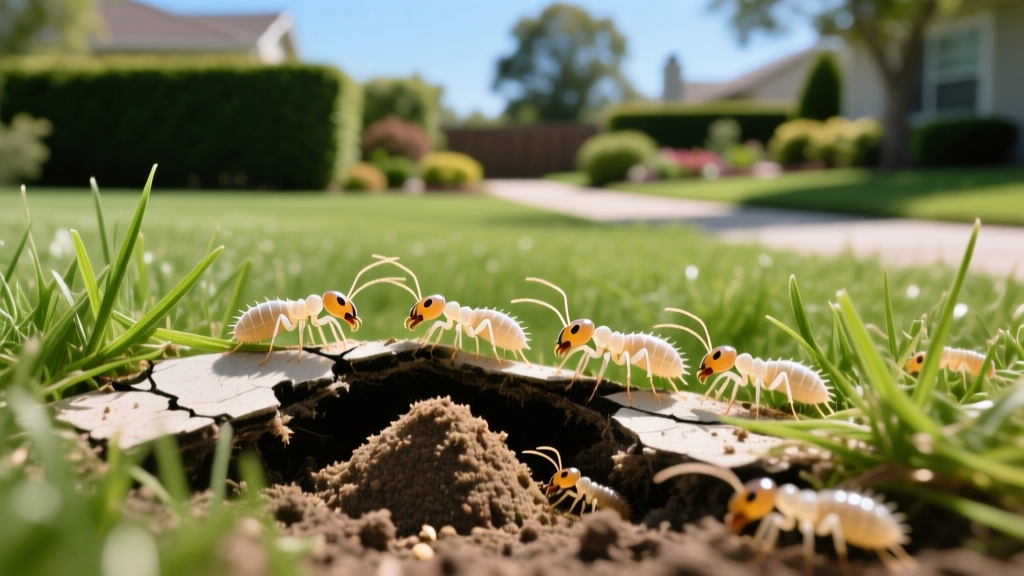
How to Identify and Treat Lawn Termites Before They Invade Your Home
The Ecology of Lawn Termites: Foragers vs. Destroyers
When homeowners spot termites in their grass or notice mud tubes crossing their turf, they often search for 'lawn termites.' However, from an entomological perspective, there is no distinct species known exclusively as the lawn termite. In 95% of residential cases, these are subterranean termites (Reticulitermes or Coptotermes species) using the moisture-rich topsoil and root zones of your lawn as a foraging highway to reach your home's structural wood. The only exception occurs in the arid Southwest, where agricultural or desert termites harvest dead grass and surface debris but pose zero threat to structural timber.
Understanding this distinction is critical for your yard defense strategy. Treating the lawn is not about saving the turf; it is about severing the subterranean supply lines that connect the soil colony to your home's foundation. According to the Environmental Protection Agency (EPA), subterranean termites cause billions in structural damage annually, and the yard is always their primary staging ground.
Species Identification Matrix
| Termite Type | Primary Yard Signs | Dietary Focus | Threat Level to Home |
|---|---|---|---|
| Eastern Subterranean | Pencil-width mud tubes on foundation edges; spring swarms near patio lights. | Cellulose in buried wood, roots, and structural framing. | Critical |
| Formosan Subterranean | Massive swarms in early summer; carton nests in hollow trees or landscape timbers. | Living plants, turf roots, and high-moisture structural wood. | Severe (Highly aggressive) |
| Agricultural/Desert | Small mud crusting over dead grass patches; no tubes on vertical structures. | Dead grass, surface debris, and dried manure. | None (Nuisance only) |
Spotting the Foraging Trails in Your Turf
Subterranean termites are photophobic and desiccate rapidly when exposed to air. Therefore, they engineer shelter tubes to travel across your lawn and up your foundation. Identifying these tubes early is the difference between a minor yard treatment and a major structural repair.
- Shelter Tubes: Look for veins of dried mud, typically 1/4 to 1 inch wide, running from the soil line across concrete footings or retaining walls. Break one open; if you see pale, translucent worker termites, the colony is actively foraging.
- Discarded Alates (Swarmers):strong> After a spring rain, reproductive termites emerge from the lawn. They shed their identical, milky-white wings. Finding piles of these 1/2-inch wings near your outdoor lighting or pool skimmer indicates a mature colony is nesting within 100 feet.
- Landscape Timber Damage: Termites will often infest railroad ties, wooden retaining walls, or buried grade stakes before moving to the house. Probe wooden landscape borders with a screwdriver; if it sinks easily into hollowed-out, soil-packed galleries, you have an active satellite colony.
Tactical Yard Defense: Chemical and Baiting Protocols
Defending your yard requires a two-pronged approach: creating a lethal chemical barrier in the soil and deploying chitin-inhibiting baits to collapse the colony. The National Pest Management Association (NPMA) recommends integrating both methods for high-pressure environments.
The 6x6 Trenching Method for Liquid Termiticides
Non-repellent liquid termiticides, specifically those containing Fipronil (9.1%) like Termidor SC or Taurus SC, are the gold standard for yard perimeters. Because they are non-repellent, termites do not detect the chemical. They tunnel through it, pick up a lethal dose, and transfer it to the colony via trophallaxis (social grooming and feeding).
Step 1: Calculate Your Dilution. For a standard 0.06% active ingredient barrier, mix 0.8 fluid ounces of Fipronil 9.1% concentrate per gallon of water. This single gallon treats 10 linear feet of trench.
Step 2: Dig the Trench. Using a trenching shovel, dig a continuous trench exactly 6 inches deep and 6 inches wide directly against the foundation, extending through any adjacent garden beds or turf edges.
Step 3: Soil Injection (Rodding). If your yard has heavy clay soil, liquid will not disperse laterally. You must use a soil rodding tool to inject the solution an additional 6 inches down into the trench bottom to ensure a continuous vertical barrier.
Step 4: Backfill and Treat. As you shovel the excavated soil back into the trench, spray the backfill with the remaining solution to ensure the soil immediately adjacent to the foundation is fully saturated.
CRITICAL SAFETY NOTE: Never apply liquid termiticides within 5 feet of a well, cistern, or French drain. Fipronil is highly toxic to aquatic invertebrates. If your yard slopes heavily toward a water feature, rely exclusively on bait stations in those zones.
Deploying Chitin-Inhibiting Bait Stations
For areas where trenching is impossible (e.g., under concrete driveways, patios, or near sensitive tree root systems), use in-ground bait stations containing Hexaflumuron (e.g., Advance Termite Bait System) or Noviflumuron (Sentricon). These active ingredients are insect growth regulators (IGRs) that prevent termites from molting. Worker termites consume the bait, share it with the colony, and when the colony attempts to molt, they die.
- Placement: Install stations 10 feet apart around the perimeter of the yard and home.
- Pre-baiting: Start with untreated wood monitors. Once termites hit the wood, replace it with the active toxicant cartridge.
- Maintenance: Inspect stations every 60 days during peak foraging seasons (spring and fall).
Preventative Landscaping to Starve the Colony
Chemical treatments will fail if your landscaping continuously provides bridge pathways and excess moisture. Implement these structural modifications to make your yard inhospitable to foraging termites:
'The most common failure point in termite defense is not the chemical, but the mulch. Homeowners pile cellulose mulch against the siding, effectively building a termite ladder over the chemical barrier.'
— Structural Pest Control Field Manual, 2025 Edition
- The 18-Inch Mulch Rule: Maintain an 18-inch gap between any cellulose-based mulch (pine bark, cedar, wood chips) and your home's foundation. Use inorganic gravel or crushed stone in this gap instead.
- Eliminate Wood-to-Ground Contact: Wooden fence posts, deck stairs, and trellis bases should be mounted on galvanized steel post anchors rather than buried directly in the soil. If burial is unavoidable, use pressure-treated lumber rated for ground contact (UC4A or UC4B).
- Moisture Diversion: Termites require high soil moisture to survive. Extend all downspouts at least 5 feet away from the foundation. Regrade the lawn to ensure a 5% slope away from the house for the first 10 feet.
- Remove Buried Debris: Excavate any buried tree stumps, leftover concrete form boards, or buried scrap lumber within 20 feet of the home. These act as primary satellite nesting sites.
Cost Analysis: DIY vs. Professional Perimeter Defense
Deciding between DIY yard treatment and hiring a licensed pest control operator depends on your property size, soil type, and comfort handling restricted-use chemicals. Below is a breakdown of average 2026 market costs for a standard 200-linear-foot home perimeter.
| Treatment Method | DIY Material Costs | Professional Service Costs | Longevity & Maintenance |
|---|---|---|---|
| Liquid Fipronil Trenching | $350 - $450 (Concentrate + Tools) | $1,600 - $2,400 ($8-$12/linear ft) | Lasts 5-10 years; no annual maintenance required. |
| In-Ground Bait Stations | $400 - $600 (Stations + Active Baits) | $1,200 - $1,800 (Installation) | Requires $250-$400 annual monitoring and bait replacement. |
| Combined Protocol (Liquid + Bait) | $700 - $950 | $2,500 - $3,500 | Maximum protection; ideal for high-pressure Formosan zones. |
While DIY liquid trenching offers massive cost savings, it requires significant physical labor and precise chemical handling. If your soil is heavy clay or your property features complex hardscaping, professional rodding and drilling equipment is necessary to ensure the barrier is unbroken. A single untreated gap in the soil barrier renders the entire yard defense system useless.

