
Pest Control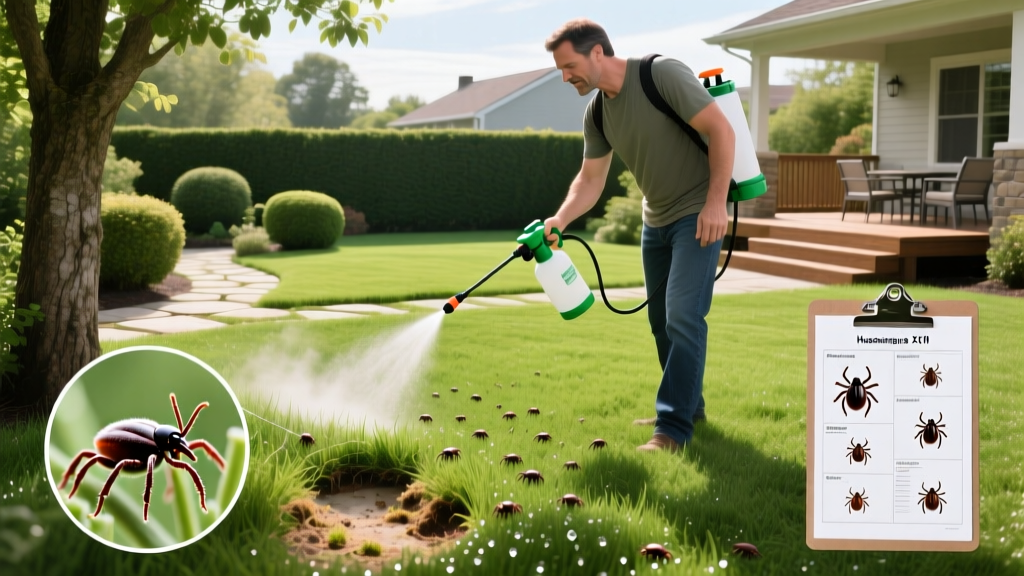
Effective Lawn Tick Treatment: A Complete Yard Defense Guide
The Biology of Yard Infestations: Where Ticks Actually Hide
Most homeowners waste time and money treating the center of their sunny lawns for ticks. The reality of tick behavior dictates a vastly different approach to lawn tick treatment. Ticks do not drop from tree branches; they 'quest' by climbing to the tips of tall grasses, shrubs, and leaf litter, waiting to latch onto passing hosts. According to the TickEncounter Resource Center, up to 80% of ticks in a residential yard are found within the first three feet of the perimeter where the manicured lawn meets wooded areas, stone walls, or dense brush—a transitional zone ecologists call the 'ecotone'.
Understanding the life cycle of the black-legged tick (Ixodes scapularis) and the Lone Star tick (Amblyomma americanum) is critical. Nymphs (the size of a poppy seed and responsible for the majority of Lyme disease transmissions) peak in late spring and early summer, while adults are most active in the fall. A successful defense strategy requires targeting these specific micro-habitats during these peak windows rather than blanketing the entire property.
⚠️ The 80/20 Rule of Tick Habitats: Focus 80% of your treatment budget and effort on the shaded perimeter, leaf litter, and ground-cover vegetation. The remaining 20% should address high-traffic transitional paths and play areas. Spraying an open, sun-baked lawn is largely ineffective because UV radiation degrades most insecticides rapidly, and ticks actively avoid desiccating in direct sunlight.
Chemical vs. Botanical Lawn Tick Treatment: A Decision Matrix
Selecting the right active ingredient depends on your yard's ecology, the severity of the infestation, and your tolerance for synthetic pesticides. Below is a comparison of the most effective professional and consumer-grade options available on the market.
| Active Ingredient / Product | Cost per 1,000 sq ft | Residual Efficacy | Best Application Scenario |
|---|---|---|---|
| Bifenthrin 7.9% (e.g., Talstar P) | $0.04 - $0.06 | 30 - 60 days | Heavy infestations; perimeter barrier creation. |
| Permethrin 10% (e.g., Martin's IGR) | $0.05 - $0.08 | 14 - 21 days | Quick knockdown; safe for use near dog kennels once dry. |
| Cedarwood Oil (e.g., Cedarcide) | $0.15 - $0.22 | 7 - 14 days | Organic yards; areas near pollinator gardens or koi ponds. |
| Metarhizium brunneum (Met52 EC) | $0.18 - $0.25 | 14 - 28 days | Biological control; targets ticks without harming beneficial insects. |
Step-by-Step Perimeter Defense Protocol
To execute a professional-grade lawn tick treatment using a synthetic pyrethroid like Bifenthrin, follow this calibrated protocol. Always adhere to EPA pesticide safety guidelines regarding personal protective equipment (PPE) and environmental runoff.
-
Step 1: Map and Clear the Ecotone
Identify the transitional zones. Rake out deep leaf litter and remove brush piles within 3 feet of the lawn edge. Ticks require high humidity to survive; removing their protective canopy exposes them to desiccation and allows the spray to reach the soil surface.
-
Step 2: Calibrate Your Pump Sprayer
For a standard 7.9% Bifenthrin suspension concentrate, the dilution rate is 1 fluid ounce per gallon of water. One gallon of mixed solution covers approximately 1,000 square feet. Use a 2-gallon or 4-gallon compression sprayer with a fan-nozzle tip to ensure a wide, even swath.
-
Step 3: Time the Application
Apply the treatment at dawn or dusk. This avoids peak UV degradation, prevents rapid evaporation of the carrier water, and ensures you are not spraying while pollinators (like bees and butterflies) are actively foraging on perimeter weeds.
-
Step 4: Execute the 10-Foot Sweep
Stand in the wooded/brush area and spray outward toward the lawn, covering the first 3 feet of woods and 7 feet of grass. Ensure you coat the lower 12 inches of any tree trunks, shrub bases, and retaining walls in this zone, as ticks frequently quest at this exact height.
The 'Tick Tube' Strategy: Targeting the Rodent Host
Spraying only addresses the environment; it does not stop the primary vector of tick-borne pathogens. The white-footed mouse is the main reservoir for the bacteria that causes Lyme disease. A single mouse can carry dozens of larval ticks, infecting them as they feed.
'By treating the mice, you treat the ticks. Tick tubes utilize the natural nesting behavior of rodents to deliver a lethal dose of permethrin directly to the nymphal stage before they ever reach your lawn.' — Integrated Pest Management Research Brief
How to deploy Tick Tubes:
Purchase commercial tick tubes (typically $30–$40 for a 24-pack) or make your own using 1-inch PVC pipe cut into 6-inch lengths, stuffed with cotton batting treated with 10% permethrin. Place the tubes every 3 to 5 feet along stone walls, woodlines, and shed foundations in mid-July (when larvae are hatching) and again in early spring. The mice will carry the treated cotton back to their nests, effectively killing the ticks in their burrows.
Common Application Failure Modes (And How to Fix Them)
Even with the right chemicals, homeowners frequently sabotage their own lawn tick treatment efforts through these common errors:
- Scalping the Lawn: Mowing grass below 2.5 inches stresses the turf and removes the shade that keeps the soil cool, but it does not eliminate ticks. In fact, it pushes ticks deeper into the thatch layer where sprays cannot penetrate. Maintain a mowing height of 3 to 3.5 inches.
- Ignoring the Under-Deck Zone: The dark, humid crawlspace beneath wooden decks is a prime tick habitat. Use a wand extension to spray the perimeter joists and the soil directly beneath the deck.
- Washing Away the Residual: Bifenthrin and Permethrin require 24 hours to bind to the soil and plant cuticles. If you irrigate your lawn or if heavy rain occurs within 12 hours of application, the treatment will wash away. Check the 48-hour forecast before spraying.
- Using 'Weed and Feed' Products: Standard lawn fertilizers with broadleaf herbicides do not contain acaricides (tick-killing agents). You must use a dedicated insecticide labeled specifically for tick control.
Post-Treatment Maintenance and Landscaping Tweaks
Chemical and biological treatments degrade over time. To extend the efficacy of your lawn tick treatment and reduce the need for frequent re-application, implement physical landscaping barriers. The most effective physical deterrent is a 3-foot-wide border of dry wood chips or gravel separating the lawn from the woods. Ticks are highly reluctant to cross dry, hot, exposed mulch because they lose moisture rapidly. Combine this physical barrier with a rigorous leaf-blowing schedule in the fall to eliminate the overwintering habitat for adult ticks, ensuring your yard remains a hostile environment for vectors year-round.

