
Pest Control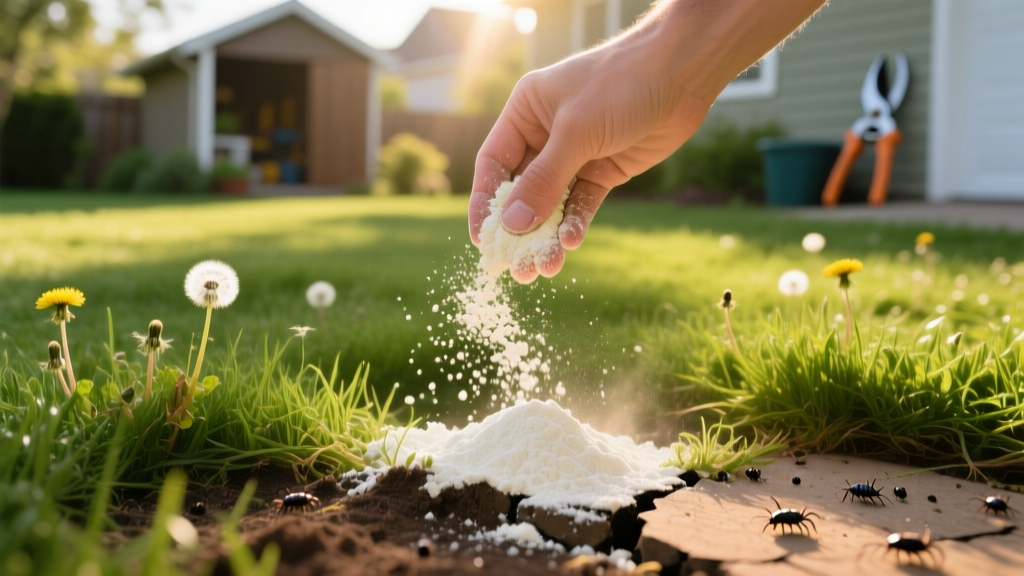
Does Lime Kill Fleas? The Science Behind Yard Treatment Myths
The Short Answer: Does Lime Kill Fleas?
No, lime does not kill fleas. The persistent belief that spreading lime across a lawn will eradicate a flea infestation is one of the most damaging myths in amateur pest control. While lime alters soil chemistry, it lacks the mechanical or chemical properties required to penetrate the protective waxy epicuticle of a flea’s exoskeleton. Worse, attempting to use certain types of lime for pest control will severely damage your turfgrass, alter your soil pH for years, and pose significant chemical burn risks to pets and children.
⚠️ CRITICAL WARNING: Never apply hydrated lime (calcium hydroxide) to your yard for pest control. It is highly caustic, causes severe chemical burns to animal paws and human skin, and will rapidly raise soil pH to toxic levels, killing your lawn's root system.
The Chemistry of Lime and Flea Biology
To understand why lime fails as an insecticide, we must examine the biological armor of the cat flea (Ctenocephalides felis) and the chemical reality of lawn lime.
Agricultural Lime (Calcium Carbonate)
Agricultural lime, or ag lime, is pulverized limestone (CaCO3). It is primarily used to neutralize acidic soils. Ag lime is relatively inert and non-toxic. When spread on a lawn, it simply sits on the soil surface or slowly dissolves to buffer pH. It possesses no desiccating (drying) properties sharp enough to abrade a flea's exoskeleton, nor does it contain chemical toxins that affect the insect's nervous system. Fleas will happily pupate in soil treated with agricultural lime.
Hydrated Lime (Calcium Hydroxide)
Hydrated lime, or slaked lime (Ca(OH)2), is created by heating limestone and adding water. It is highly alkaline, with a pH around 12.4. While the extreme alkalinity and caustic nature of hydrated lime can technically kill soft-bodied insects through severe desiccation and chemical burns, it is entirely unselective. It will burn the foliage of your turfgrass, destroy beneficial soil microbes, and cause severe tissue damage to any dog, cat, or child that walks across the treated lawn. According to the Environmental Protection Agency (EPA), using unregistered, caustic industrial materials for residential pest control violates safe application guidelines and poses severe environmental hazards.
Why Using Lime for Fleas is a Dangerous Mistake
Beyond the immediate physical danger to pets, using lime to fight fleas creates long-term agronomic problems. Turfgrass species like Kentucky Bluegrass, Bermudagrass, and Fescue thrive in a soil pH range of 6.0 to 7.0. Blindly applying lime to kill fleas pushes the pH above 7.5, causing a phenomenon called nutrient lockout.
| Lime Type | Chemical Formula | Soil pH Impact | Flea Efficacy | Turf & Pet Safety |
|---|---|---|---|---|
| Agricultural Lime | CaCO3 | Raises slowly | Zero | Safe (if soil needs it) |
| Hydrated Lime | Ca(OH)2 | Spikes rapidly to >8.0 | Low (kills via caustic burn) | Highly Dangerous |
| Diatomaceous Earth | SiO2 (Amorphous Silica) | Neutral | High (mechanical desiccation) | Safe (Food Grade only) |
When soil pH exceeds 7.5, essential micronutrients like iron, manganese, and zinc become chemically bound in the soil and unavailable to grass roots. The result is severe iron chlorosis—characterized by bright yellow grass with green veins—often mistaken for a disease. As Penn State Extension notes, correcting an artificially induced high-pH problem requires expensive, labor-intensive applications of elemental sulfur, costing homeowners far more than professional flea treatments.
Proven, Science-Backed Alternatives for Yard Flea Control
To break the flea life cycle outdoors, you must target the pupal and larval stages in the soil and shade-heavy areas. The following methods are scientifically validated and widely used by licensed pest management professionals.
1. Beneficial Nematodes (Steinernema carpocapsae)
Nematodes are microscopic, unsegmented worms that actively hunt flea larvae and pupae in the soil. The Steinernema carpocapsae strain is highly effective against fleas. Once applied to the lawn via a hose-end sprayer, they enter the flea host, release symbiotic bacteria (Xenorhabdus), and kill the insect within 48 hours.
Application Specifics: Apply at a rate of 1 million nematodes per 1,000 square feet. Cost is approximately $25 to $35 per million. They require moist soil and UV protection, so apply at dusk and water the lawn lightly immediately afterward.
2. Insect Growth Regulators (IGRs)
IGRs do not kill adult fleas; instead, they mimic the insect's juvenile hormone, preventing larvae from molting into adults and stopping eggs from hatching. Pyriproxyfen (found in products like Archer IGR) is the industry standard for outdoor use because it is photostable (does not break down rapidly in sunlight) and has a long soil half-life.
Application Specifics: A 16 oz bottle of Archer IGR costs around $45 and treats up to 15,000 square feet. Mix 1 oz per gallon of water and apply to shaded areas, under decks, and along fence lines where pets rest.
3. Food-Grade Diatomaceous Earth (DE)
Unlike the smooth granules of lime, diatomaceous earth consists of fossilized diatoms with microscopic, razor-sharp silica edges. When fleas crawl through DE, the silica abrades their waxy epicuticle, causing them to die of dehydration within hours.
Application Specifics: Use only Food Grade DE (amorphous silica), never pool-grade DE (crystalline silica, which is a severe inhalation hazard). Apply a light dusting to dry, shaded soil. Note that DE loses efficacy when wet and must be reapplied after rainfall.
Step-by-Step Yard Flea Eradication Protocol
According to entomologists at the University of Kentucky, outdoor flea control requires a multi-pronged approach targeting the habitat. Follow this exact sequence for maximum efficacy:
- Habitat Modification: Mow the lawn to a height of 2.5 inches. Fleas require high humidity (70-85%) and shade to survive. Removing excess thatch and trimming back tree canopies allows UV light to penetrate the soil, naturally killing exposed larvae.
- The 'White Sock' Test: Pull on a pair of knee-high white cotton socks and walk through shaded areas of your yard. Adult fleas will jump onto the white fabric, allowing you to map the exact hotspots of infestation.
- Targeted IGR Application: Mix and apply Pyriproxyfen (Archer IGR) specifically to the hotspots identified in step 2. Do not waste product treating the entire sunny lawn, as fleas cannot survive in direct, unshaded sunlight.
- Nematode Deployment: 48 hours after the IGR application, apply Steinernema carpocapsae nematodes to the same shaded zones to hunt down the remaining pupae protected in their cocoons.
- Pet Treatment Synchronization: Yard treatment will fail if your pets continue to re-introduce adult fleas. Simultaneously treat all household dogs and cats with a veterinary-approved oral isoxazoline (e.g., Bravecto, NexGard) to break the indoor-to-outdoor transit cycle.
Frequently Asked Questions
Will lime kill flea eggs?
No. Flea eggs are protected by a resilient chorion (shell). Neither agricultural lime nor hydrated lime possesses the chemical mechanism to penetrate or desiccate this shell. Only specialized desiccants like silica aerogels or diatomaceous earth can effectively dry out the eggs.
Can I mix lime and fertilizer to kill fleas and feed my lawn?
Mixing lime and fertilizer is a standard agronomic practice if your soil test indicates low pH, but it will have absolutely zero impact on your flea population. You will simply end up with a well-fertilized, flea-infested lawn.
How long does it take for nematodes to clear a yard of fleas?
When applied correctly to moist, shaded soil, Steinernema carpocapsae nematodes will reduce the flea population by 80% to 90% within 7 to 14 days. A second application 21 days later is often required to catch the final generation of emerging pupae.

