
Pest Control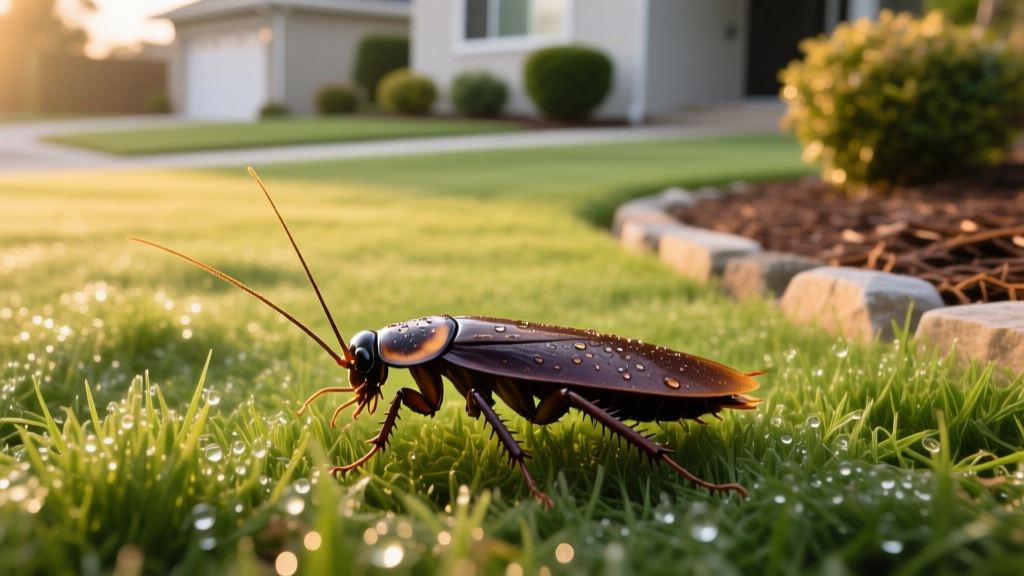
Look Outside: Roaches in the Yard and Perimeter Defense Guide
Many homeowners experience a jolt of panic when they look outside; roaches scurrying across the patio or darting under the deck are an unwelcome sight. However, not all cockroaches are created equal. While indoor species like the German cockroach (Blattella germanica) indicate severe sanitation and structural issues, outdoor roaches are primarily nuisance pests that play a role in breaking down decaying organic matter. The problem arises when their populations explode and they migrate indoors seeking moisture or overwintering shelter.
Effective yard defense requires moving beyond generic bug sprays. You must understand the specific biology of outdoor species, identify their micro-habitats, and deploy targeted chemical and physical barriers. This guide breaks down the exact protocols for identifying, excluding, and eliminating outdoor roach populations using professional-grade strategies.
The Outdoor Roach Roster: Species Identification
Before purchasing any treatment, you must correctly identify the intruder. Misidentifying a wood roach as a German roach leads to unnecessary indoor fumigation. Below is a comparison of the three most common outdoor species encountered in North American yards.
| Species | Size & Coloration | Primary Yard Habitat | Flight Capability |
|---|---|---|---|
| American Cockroach (Periplaneta americana) |
1.5 to 2 inches. Reddish-brown with a pale yellow margin on the pronotum. | Leaf litter, thick mulch beds, sewer access points, and damp crawlspaces. | Strong fliers in warm weather (above 80°F). |
| Smoky Brown Cockroach (Periplaneta fuliginosa) |
1.25 to 1.5 inches. Uniform mahogany to black coloration. Long wings extending past the abdomen. | Tree holes, clogged gutters, woodpiles, and dense ivy groundcover. | Highly agile fliers; strongly attracted to exterior light fixtures. |
| Wood Cockroach (Parcoblatta pennsylvanica) |
0.75 to 1 inch. Dark brown with pale translucent margins on the wings and thorax. | Under bark, firewood stacks, cedar shake siding, and dense woodland edges. | Males are strong fliers (often hit window screens); females are flightless. |
According to entomologists at the University of Florida IFAS, the Smoky Brown cockroach is particularly dependent on high-moisture environments and is frequently found in tree canopies before migrating down to structures. Unlike the American cockroach, which is often linked to subterranean infrastructure like storm drains, the Smoky Brown is a canopy and structural-edge dweller.
Where to Look Outside: Roaches' Favorite Yard Hiding Spots
If you want to intercept these pests, you must inspect their preferred micro-climates. Outdoor roaches require three things: moisture, shelter from UV light, and decaying organic food sources. Focus your flashlight inspections on these specific areas:
- Corrugated Downspout Extensions: The ridges inside flexible black drain hoses trap moisture and leaf debris, creating an ideal roach highway directly from your gutters to your foundation.
- Behind Vinyl Siding and Weep Holes:Smoky brown roaches easily slip behind loose siding panels. Weep holes in brick veneer provide direct access to the damp wall cavity.
- Thick Mulch and Groundcover: Ivy, pachysandra, and mulch layers deeper than 3 inches retain ground moisture and harbor American roaches.
- Firewood Stacks and Lumber Piles:Wood roaches live literally inside the bark of decaying wood. Stacking firewood directly against the house is the most common cause of indoor wood roach invasions.
- AC Condensate Lines and Spigots:Constant dripping creates localized mud and moss, providing the exact hydration levels Periplaneta species require to survive dry summer spells.
Perimeter Defense: Creating a 10-Foot Roach-Free Barrier
Generic hardware store sprays (typically 0.02% cypermethrin) degrade within days when exposed to UV light and rain. To establish a lasting perimeter, you need professional-grade microencapsulated suspensions and granular baits. Here is a proven, multi-step protocol for establishing a defensive perimeter.
Step 1: Apply a Microencapsulated Liquid Residual
Use a microencapsulated lambda-cyhalothrin product, such as Syngenta Demand CS (typically priced around $60 to $70 for an 8 oz bottle in 2026). The microcapsules protect the active ingredient from UV degradation and allow it to adhere to the waxy exoskeleton of the roach as it walks over treated surfaces.
- Mix 0.8 fluid ounces of Demand CS per gallon of water in a 1- or 2-gallon pump sprayer.
- Spray a continuous band 3 feet up the foundation wall and 3 feet out onto the soil/mulch.
- Pay special attention to window frames, door thresholds, and utility penetrations (where pipes enter the home).
- Allow the treatment to dry completely (usually 1-2 hours) before allowing pets or children back into the yard.
Step 2: Deploy Granular Insect Bait in Mulch Beds
Liquid sprays kill on contact and provide a barrier, but they do not eliminate roaches hiding deep inside thick mulch or tree holes. For this, use a hydramethylnon-based granular bait like Maxforce Complete Granular Bait (approx. $45 to $55 for a 4 lb pail).
- Apply the bait at a rate of 1.5 to 3 lbs per 1,000 square feet.
- Scatter the granules evenly across mulch beds, leaf litter zones, and around the base of large trees.
- The dual-action attractants (sugars and proteins) draw the roaches out of hiding to consume the lethal dose, which disrupts their cellular energy production.
Warning: Mulch Depth Limit
Never apply liquid residuals over mulch that is deeper than 2 inches. The chemical will bind to the top layer of wood chips and never reach the soil where the roaches actually harbor. If your mulch is 4 inches deep, rake it back before spraying, or rely entirely on granular baits in those specific zones.
Never apply liquid residuals over mulch that is deeper than 2 inches. The chemical will bind to the top layer of wood chips and never reach the soil where the roaches actually harbor. If your mulch is 4 inches deep, rake it back before spraying, or rely entirely on granular baits in those specific zones.
Landscaping Mistakes That Invite Outdoor Roaches
Chemical treatments will fail if your landscaping continuously generates the conditions roaches need to thrive. Review this matrix to correct common yard defense errors.
| Landscaping Feature | The Mistake (Avoid This) | The Defense Strategy (Do This) |
|---|---|---|
| Mulching | Piling pine bark mulch directly against the siding ('volcano mulching'). | Maintain a 6-inch bare soil or gravel gap between the mulch edge and the foundation. |
| Vegetation | Allowing shrubs, ivy, or tree branches to touch the exterior walls. | Prune all vegetation back at least 18 inches from the house to remove physical bridges. |
| Lighting | Using mercury vapor or bright white LED bulbs on exterior fixtures. | Switch to sodium vapor bulbs or yellow-tinted 'bug lights' (under 3000K) which are less visible to insects. |
| Gutter Maintenance | Leaving damp, rotting leaves in gutters and downspouts. | Install stainless steel micro-mesh gutter guards and clean out downspout elbows bi-annually. |
Exclusion Tactics: Sealing the Structure
According to guidelines from the Environmental Protection Agency (EPA), sealing entry points is a critical component of integrated pest management (IPM) that reduces reliance on chemical pesticides. Outdoor roaches typically enter through weep holes, torn window screens, and gaps under garage doors.
Do not use steel wool to pack weep holes or gaps around plumbing. Steel wool rusts rapidly when exposed to outdoor moisture, leaving unsightly orange streaks on your brick and eventually degrading into useless dust. Instead, use Stuf-Fit Copper Mesh. Copper does not rust, and roaches (as well as rodents) will not chew through it. Pack the copper mesh tightly into weep holes, leaving a slight gap at the back to ensure the wall cavity can still breathe and vent moisture. For gaps around PVC plumbing penetrations, use a high-quality polyurethane expanding foam sealant, capped with a bead of exterior-grade silicone.
Frequently Asked Questions
Are outside roaches dangerous to my family?
Outdoor species like the American and Smoky Brown roaches are not known to transmit diseases directly to humans in the same way indoor German roaches do. However, they frequently crawl through decaying matter, animal feces, and storm drains. If they migrate into your kitchen, they can mechanically transfer pathogens like Salmonella and E. coli to food preparation surfaces.
Why do I see so many wood roaches on my porch at night?
Male Pennsylvania wood roaches are strongly attracted to light. If your porch lights are illuminated, they will fly directly at the screens and attempt to crawl under the door sweeps. This is an accidental invasion driven by phototaxis, not an infestation inside your home. Turning off exterior lights or switching to warm-toned LEDs will drastically reduce this behavior.
How often should I reapply the perimeter spray?
Microencapsulated products like Demand CS provide a residual kill for up to 90 days on porous surfaces like brick, stucco, and wood. However, heavy rainfall and intense UV exposure can degrade the barrier faster. For optimal defense, reapply the liquid perimeter treatment every 60 to 90 days during the active spring and summer seasons, as recommended by the National Pest Management Association.

