
Pest Control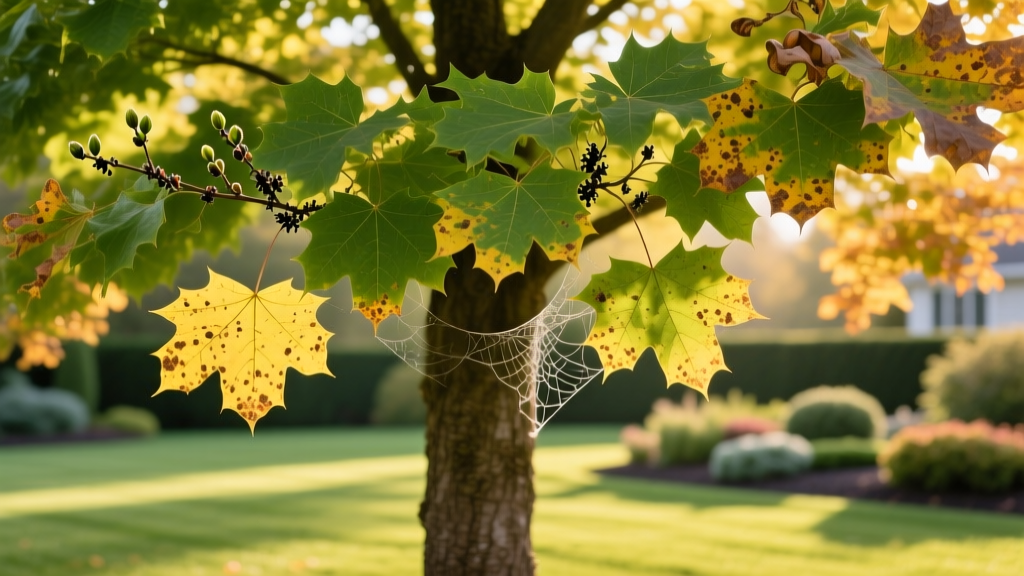
Maple Tree Disease Guide: Spot Symptoms & Rescue Fixes
Losing a mature maple tree to an undiagnosed pathogen is a devastating blow to both your landscape aesthetics and your property value. Professional removal of a 60-foot sugar or Norway maple typically costs between $1,500 and $3,000, making early symptom diagnosis and targeted rescue fixes critical. Maple tree disease rarely presents as a single, uniform issue; it manifests across foliar, vascular, and root zones, each requiring a distinctly different chemical or cultural intervention.
This diagnostic guide bypasses generic advice to provide exact pathogen identification, specific fungicide active ingredients, and precise application protocols to save your maples from irreversible decline.
The 60-Second Maple Triage Matrix
Before purchasing any treatments, match your maple’s primary symptoms to this diagnostic matrix to identify the underlying threat category.
| Disease Category | Primary Visual Symptoms | Pathogen / Cause | Lethality | Immediate Action Required |
|---|---|---|---|---|
| Tar Spot | Raised, black, tar-like pustules on upper leaf surfaces in late summer. | Rhytisma acerinum | Low (Cosmetic) | Fall leaf cleanup; dormant fungicide spray. |
| Anthracnose | Brown, necrotic blotches along leaf veins; premature leaf drop in cool, wet springs. | Discula campestris | Moderate | Prune dead twigs; apply Chlorothalonil at bud break. |
| Verticillium Wilt | One-sided canopy dieback; olive-green or black streaking in the sapwood. | Verticillium dahliae | High (Fatal) | Trunk-injected phosphites; deep root watering. |
| Phytophthora Root Rot | Pale, undersized leaves; bleeding cankers at the soil line; sudden branch collapse. | Phytophthora spp. | High (Fatal) | Improve soil drainage; apply Mefenoxam soil drench. |
Foliar Pathogens: Tar Spot and Anthracnose
Fungal leaf diseases are the most common maple tree disease complaints, but they are rarely fatal to established trees. The danger lies in repeated, consecutive years of defoliation, which depletes the tree’s carbohydrate reserves and invites secondary borers.
Tar Spot (Rhytisma acerinum)
Tar spot is highly host-specific, primarily targeting Norway and silver maples. The pathogen overwinters in fallen leaf litter. In spring, ascospores are released and infect emerging foliage. By mid-to-late summer, the characteristic 0.5-inch black stromata (the "tar spots") form.
Rescue Fix Protocol:
- Cultural: Rake and destroy 100% of fallen leaves in autumn. Do not compost them; the pathogen survives standard composting temperatures.
- Chemical: If the tree is small enough to spray (under 25 feet), apply a fungicide containing Chlorothalonil (e.g., Bonide Fung-onil) or Copper octanoate. Spray precisely at bud break, followed by two additional applications at 14-day intervals. Cost: Approximately $18 to $25 per 16 oz bottle of concentrate, which yields up to 30 gallons of spray solution.
Anthracnose
Unlike tar spot, anthracnose attacks the twigs and shoots, not just the leaves. You will notice "witches' brooms" (dense clusters of dead twigs) and severe leaf blighting that follows the leaf veins. According to plant pathology experts at UMass Extension, cool, wet weather during bud break is the primary catalyst for severe anthracnose outbreaks.
Rescue Fix: Prune out all dead or cankered twigs during dry winter weather. Make cuts at least 6 inches below the visible canker margin. Apply a preventive spray of Propiconazole 14.3 (approx. $45 for 32 oz) just before spring rains begin.
Vascular System Failure: Verticillium Wilt
Verticillium wilt is a soil-borne fungal disease that plugs the xylem (water-conducting tissues) of the maple. The hallmark symptom is "flagging"—where one single branch or one entire side of the canopy suddenly wilts and dies in mid-summer, while the rest of the tree appears healthy.
To confirm Verticillium, peel back the bark on a recently wilted branch. If you see dark green, black, or brown streaking in the sapwood, the vascular system is compromised. The Morton Arboretum notes that once the fungus is systemic, surface sprays are entirely useless.
Warning: Do Not Over-Fertilize
Homeowners often mistake Verticillium wilt for nutrient deficiency and apply high-nitrogen fertilizers. This forces the tree to push rapid, succulent top growth, which demands more water than the plugged xylem can deliver, accelerating the tree's death. Avoid high-nitrogen synthetic fertilizers on wilting maples.
Advanced Rescue Fixes for Vascular Wilt
While there is no cure that eradicates Verticillium from the soil, you can suppress the pathogen and help the tree compartmentalize the infection using professional-grade chemistry:
- Trunk Injections: Hire an ISA-certified arborist to inject Potassium phosphite (Arborjet PHOS-jet) directly into the xylem. This acts as a systemic fungicide and a plant defense elicitor. Expect to pay $15 to $25 per trunk diameter inch (e.g., $300-$500 for a 20-inch maple).
- Bio-Fungistats: Apply a soil drench of Trichoderma harzianum (RootShield PLUS) around the drip line to outcompete the Verticillium microsclerotia in the rhizosphere.
- Hydration Support: Install a deep-root watering probe and deliver 50 gallons of water weekly during drought stress to compensate for xylem blockages.
Root Zone Asphyxiation: Phytophthora Root Rot
If your maple is planted in heavy clay soil, in a low-lying drainage swale, or if the root flare is buried under mulch ("volcano mulching"), it is highly susceptible to Phytophthora root rot. Symptoms include a general thinning of the canopy, chlorotic (yellow) leaves with green veins, and dark, oozing cankers at the base of the trunk near the soil line.
The Root Flare Excavation Protocol
No fungicide will save a maple if the root flare is suffocating. You must physically expose the root flare before applying chemical treatments.
- Step 1: Use an air-spade (or carefully use a hand trowel) to remove all soil and mulch within a 3-foot radius of the trunk until the lateral roots flare out visibly.
- Step 2: Allow the root collar to dry for 48 hours.
- Step 3: Apply a soil drench of Mefenoxam (Subdue Maxx). The professional application rate is typically 0.5 to 1.0 fluid ounces per 1,000 square feet, watered in with 0.5 inches of irrigation immediately after application to move the active ingredient into the root zone.
Strict Sanitation: The 12-Inch Rule and Tool Sterilization
When pruning diseased maple branches, the angle and sterilization of your cuts dictate whether you save the tree or spread the pathogen. Fungal spores and bacterial cankers easily transfer via microscopic sap residue on bypass pruners and chainsaws.
Expert Pruning Standard: Always make pruning cuts at least 12 inches below the lowest visible point of canker or vascular streaking. Between every single cut, wipe your pruning shears with a rag soaked in 70% isopropyl alcohol. Avoid using bleach solutions (10% bleach), as sodium hypochlorite rapidly corrodes the high-carbon steel blades of professional arborist tools, creating micro-pits where pathogens hide.
When to Concede Defeat: Removal Criteria
Not every maple tree disease can be rescued. You must transition from treatment to removal if your tree exhibits any of the following failure modes:
- More than 40% of the canopy is dead or devoid of foliage during the peak growing season (July/August).
- Presence of Armillaria (honey mushroom) fruiting bodies at the base of the trunk, indicating advanced internal decay.
- Deep, structural bark inclusion cracks combined with active sapwood rot.
- The tree is located within the "target zone" (fall distance) of a home, driveway, or high-traffic pedestrian area.
Accurate diagnosis is the prerequisite for effective treatment. By matching the specific symptom profile to the correct active ingredient—whether it is Chlorothalonil for foliar blights, Phosphites for vascular wilts, or Mefenoxam for root rots—you can halt the progression of maple tree disease and preserve your landscape's structural canopy for decades.

