
Pest Control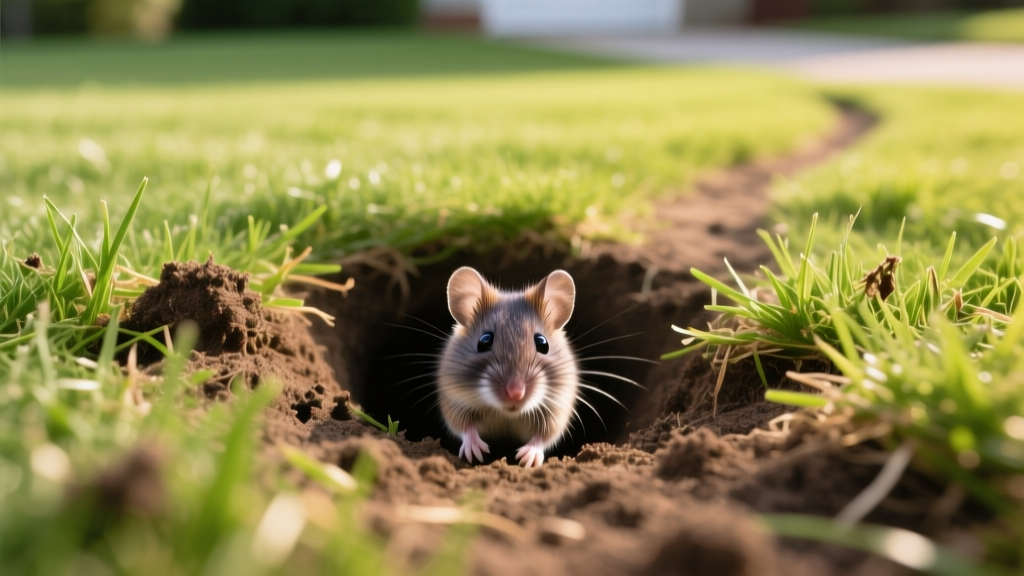
Vole Control: How to Identify and Eliminate Lawn Voles
The Vole vs. Mole Dilemma: Identifying the Culprit
Before deploying any control measures, you must confirm that voles (Microtus pennsylvanicus) are the actual perpetrators of your lawn damage. Homeowners frequently confuse voles with moles, leading to wasted money on ineffective grub-control treatments. Voles are herbivorous rodents that feed on grass roots, plant bulbs, and tree bark. Moles are insectivores that tunnel deep underground hunting for earthworms and grubs.
According to Penn State Extension, misidentification is the number one reason homeowners fail to eradicate lawn rodents. Use the comparison matrix below to accurately diagnose your pest problem.
| Feature | Meadow Voles | Eastern Moles |
|---|---|---|
| Primary Diet | Grass roots, seeds, tree bark, bulbs | Earthworms, grubs, soil insects |
| Surface Damage | 1.5 to 2-inch wide surface runways, clipped grass | Raised, volcano-shaped soil mounds and ridges |
| Burrow Openings | 1.5-inch diameter holes, no soil mounding | Completely sealed tunnels, no open surface holes |
| Winter Activity | Active under snow cover, gnawing tree bark at snowline | Deep underground, largely inactive in freezing soil |
The 3-Step Vole Eradication Protocol
Voles do not hibernate. A single breeding pair can produce over 50 offspring in a single year, with population peaks occurring in spring and fall. If you spot surface runways, immediate intervention is required. The University of Nebraska-Lincoln recommends an integrated approach combining habitat modification with targeted lethal control.
Step 1: Habitat Modification (Deny the Cover)
Voles are agoraphobic; they rarely cross open, exposed spaces due to predation risk from hawks and owls. Your first step is to remove their protective canopy.
- Mowing: Lower your mowing height to 2.5 inches for the final fall cut. Tall winter grass provides thermal cover and hides runways.
- Mulch Clearance: Pull mulch back at least 12 inches from the base of all trees and shrubs. Voles use mulch beds as hidden highways to access tender bark.
- Debris Removal: Clear leaf piles, brush, and dense groundcovers like ivy where vole colonies nest.
Step 2: Strategic Trapping (The Lethal Solution)
Trapping is the most effective and environmentally safe method for reducing vole populations. Standard wooden snap traps (such as the Victor M040, costing roughly $3.50 for a 4-pack) are highly effective when deployed correctly.
Expert Tip: The Shoebox Method
Voles are thigmotactic, meaning they feel secure when their whiskers touch the walls of a tunnel. If you place a snap trap in the open, they will often bypass it. To exploit this biology, use the shoebox method:
- Take a standard cardboard shoebox and cut a 2-inch diameter hole in one narrow end.
- Bait a Victor M040 snap trap with a mixture of peanut butter and a small slice of apple (the moisture and sugar attract them faster than peanut butter alone).
- Place the baited trap directly inside a primary vole runway.
- Invert the shoebox over the trap, aligning the cut hole with the runway.
- Place a brick on top of the box to secure it against wind and prevent pets or birds from accessing the trap.
Check traps daily. In a moderate infestation, 10 to 15 traps placed along active runways will decimate a local colony within 7 to 10 days.
Step 3: Chemical Toxicants (For Severe Infestations)
When dealing with massive colonies spanning multiple acres, trapping may be too labor-intensive. In these cases, rodenticides containing zinc phosphide (such as Kaput-D ZP bait, priced around $25 per pound) are the industry standard. Zinc phosphide is an acute toxicant that kills after a single feeding, reducing the chance of bait shyness.
Warning: Secondary Poisoning Risks
Never use anticoagulant baits (like bromadiolone) for outdoor vole control. Anticoagulants remain in the vole's tissue and can cause fatal secondary poisoning in owls, hawks, and domestic cats that consume the dead rodents. Zinc phosphide breaks down rapidly in the digestive tract and poses a significantly lower risk of secondary poisoning. Always place toxicants inside bait stations or deep within active burrows to protect non-target wildlife.
Repellents and Exclusion: Do They Work?
The pest control market is flooded with vole repellents, but their efficacy varies wildly. According to the Internet Center for Wildlife Damage Management, most sonic spikes and ultrasonic devices are entirely ineffective against voles.
Castor Oil Repellents: Products like Tomcat Mole & Gopher Repellent (approx. $20 for 32oz) can temporarily irritate a vole's digestive tract and sense of smell, encouraging them to relocate. However, castor oil degrades rapidly under UV light and washes away after heavy rain. It is a short-term deterrent, not a permanent solution.
Physical Exclusion: For high-value ornamental trees and young orchards, physical barriers are the only 100% guaranteed protection against winter bark-gnawing. Construct cylindrical guards using 1/4-inch galvanized hardware cloth.
- Dimensions: The cylinder must stand at least 18 inches above the anticipated snow line and be buried 3 to 4 inches into the soil to prevent voles from digging underneath.
- Spacing: Leave a 2-inch gap between the wire and the tree trunk to allow for trunk expansion and prevent the wire from girdling the bark as the tree grows.
Frequently Asked Questions
Will killing grubs in my lawn get rid of voles?
No. Applying grub control products like imidacloprid or beneficial nematodes will only eliminate moles, which eat insects. Voles are strictly herbivores and will continue to eat your grass roots and plant bulbs regardless of the grub population in your soil.
How do I repair lawn damage caused by vole runways?
Once the vole population is eliminated, rake the dead grass and soil out of the runways to expose the bare dirt. Overseed the damaged tracks with a fast-germinating perennial ryegrass or a turf-type tall fescue blend. Keep the area consistently moist for 14 days to ensure seed establishment.
Do mothballs work as a vole deterrent?
Mothballs containing naphthalene or paradichlorobenzene are illegal to use outdoors in most jurisdictions. They contaminate the soil, leach toxic chemicals into groundwater, and are highly ineffective at repelling voles in open-air environments where the fumes rapidly dissipate.

