
Pest Control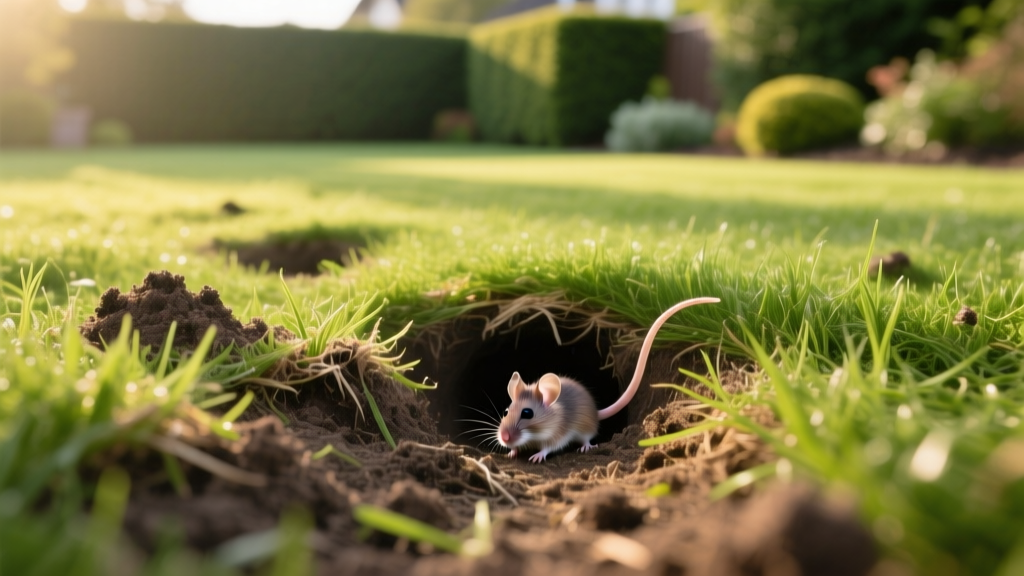
Mice or Voles: How to Identify and Stop Lawn Damage
Waking up to dead patches, stripped bark, and mysterious tunnels in your lawn is a frustrating experience for any homeowner. While many immediately blame grubs or moles, the actual culprits are often much smaller. Determining whether you are dealing with mice or voles is the critical first step in reclaiming your landscape. Though they share a similar size and shape, their behaviors, diets, and the specific types of damage they inflict require entirely different management strategies.
This guide provides a definitive framework for identifying the exact rodent invading your yard and outlines the precise exclusion, trapping, and habitat modification techniques required to eliminate them.
The Visual and Behavioral Divide: Mice vs. Voles
Before deploying traps or baits, you must accurately identify the species. Meadow voles (Microtus pennsylvanicus) and pine voles (Microtus pinetorum) are herbivores that live in colonies and cause widespread structural damage to turf and roots. Deer mice (Peromyscus maniculatus) and house mice (Mus musculus) are primarily omnivorous foragers that nest in ground debris and target seeds, bulbs, and pet food left outdoors.
| Characteristic | Meadow / Pine Voles | Deer / House Mice |
|---|---|---|
| Physical Profile | Stocky body, blunt snout, short furry tail (less than half body length), small ears partially hidden by fur. | Sleek body, pointed snout, long semi-naked tail (equal to body length), large prominent ears. |
| Primary Diet | Grass blades, roots, tubers, flower bulbs, and tree bark (especially in winter). | Seeds, grains, insects, fallen fruit, and stored flower bulbs. |
| Lawn Signatures | Surface runways (1-2 inches wide), clipped grass stems, shallow subsurface tunnels, girdled tree bark. | No defined runways. Scattered droppings, stolen seed from bird feeders, nests built in thick mulch or woodpiles. |
| Activity Cycle | Active day and night, year-round. Peak surface activity during dawn and dusk. | Strictly nocturnal. Rarely seen during daylight hours unless the population is severely overcrowded. |
Diagnosing the Damage: Turf and Root Symptoms
The physical evidence left behind in your lawn is the most reliable indicator of which pest you are facing. Voles are engineers; they modify the landscape to create safe transit routes. Mice are opportunists; they utilize existing cover and leave chaotic foraging signs.
⚠️ Warning: The Snow Cover Multiplier
Vole damage often goes unnoticed until the spring snowmelt. Snow acts as an insulating blanket and a physical shield from predators like hawks and owls. If you notice 'runways'—distinct, 1.5-inch-wide paths of dead, matted grass crisscrossing your lawn immediately after the thaw—you have a severe meadow vole infestation. Mice do not create these extensive runway networks under the snow.
Vole damage often goes unnoticed until the spring snowmelt. Snow acts as an insulating blanket and a physical shield from predators like hawks and owls. If you notice 'runways'—distinct, 1.5-inch-wide paths of dead, matted grass crisscrossing your lawn immediately after the thaw—you have a severe meadow vole infestation. Mice do not create these extensive runway networks under the snow.
Vole Damage Signatures
- The Runway Network: Look for shallow, surface-level trenches woven through the grass. The grass inside the trench will be clipped close to the soil line.
- Root and Bulb Destruction: Pine voles specifically burrow just below the surface (1-3 inches deep) to consume the root systems of hostas, tulips, and lilies. If a plant suddenly wilts and pulls out of the ground with no roots attached, pine voles are the cause.
- Bark Girdling: Voles will chew the bark off young trees and shrubs up to the snow line. The teeth marks will appear as paired, parallel scrapes roughly 1/16 inch apart.
Mouse Damage Signatures
- Seed Theft: Mice are notorious for raiding bird feeders and stealing freshly sown grass seed before it can germinate.
- Debris Nesting: You will find mouse nests constructed of shredded grass, leaves, and insulation tucked under sheds, inside thick mulch rings, or within abandoned groundhog burrows.
- Droppings: Mouse droppings are dark, spindle-shaped, and roughly 1/8 to 1/4 inch long, usually scattered randomly near food sources rather than concentrated in latrine sites.
The 2026 Deterrence and Eradication Framework
Effective rodent control requires a tiered approach. Relying solely on lethal traps without modifying the habitat guarantees a rapid reinfestation. Follow this phased protocol to secure your property.
Phase 1: Habitat Modification (The $0 - $50 Tier)
Rodents require cover to evade aerial and terrestrial predators. Removing this cover is the most cost-effective long-term deterrent.
- Turf Management: Maintain your lawn at a height of 2.5 to 3 inches. Overgrown turf provides the exact canopy voles need to build runways undetected.
- Mulch Discipline: Pull mulch back at least 12 inches from the base of all trees and shrubs. Create a bare soil or gravel buffer zone. Mulch piled against tree trunks (volcano mulching) invites both voles to girdle the bark and mice to nest against the foundation.
- Debris Clearance: Remove leaf piles, stacked lumber, and dense groundcovers like English ivy near the home's perimeter.
Phase 2: Exclusion and Trapping (The $50 - $150 Tier)
When habitat modification is insufficient, physical barriers and targeted trapping become necessary.
Tree and Shrub Exclusion
To protect valuable landscape assets from vole girdling, install physical barriers. Purchase 19-gauge, 1/4-inch galvanized hardware cloth (do not use chicken wire; voles can easily squeeze through its larger gaps). Cut a strip wide enough to wrap around the tree trunk with a 2-inch overlap. Bury the bottom edge 4 to 6 inches deep to stop subterranean tunneling, and ensure it extends 18 to 24 inches above the soil line to account for winter snow accumulation. A 2x10 foot roll typically costs between $30 and $45 at major hardware retailers.
Strategic Trap Placement
For voles, use standard wooden snap traps (like the Victor Easy Set) or specialized vole traps (Victor M040). Bait them with a mixture of peanut butter and oatmeal, or a small slice of apple. Place the trap directly inside the vole runway, perpendicular to the path, so the vole trips the trigger while navigating its established route. Cover the trap with an inverted milk crate or a shoebox with a 2-inch hole cut in the side. This protects the bait from birds and prevents pets from triggering the mechanism.
For mice, place baited snap traps along the foundation walls of your home, inside sheds, and near known nesting debris. Mice possess thigmotactic behavior—they prefer to travel with their whiskers touching a vertical surface. Traps placed in the middle of an open lawn will be ignored.
Phase 3: Chemical Interventions and the Ultrasonic Myth
The market is flooded with solar-powered ultrasonic spikes claiming to repel burrowing rodents by emitting high-frequency sound waves. According to extensive testing by university extension programs, these devices are largely ineffective. High-frequency sound waves do not penetrate dense soil, clay, or thick root masses; they dissipate within a few feet of the emitter. Save your money and invest in physical exclusion.
💡 Expert Insight on Rodenticides
If trapping fails to control a massive vole colony, EPA-registered rodenticides containing Diphacinone or Zinc Phosphide (e.g., Tomcat Bait Chunx or Kaput-DZ) can be used. However, these must be placed inside tamper-resistant bait stations to prevent accidental ingestion by dogs, cats, and non-target wildlife. Always adhere strictly to local and federal EPA guidelines on rodenticide application to avoid secondary poisoning of local raptor populations.
If trapping fails to control a massive vole colony, EPA-registered rodenticides containing Diphacinone or Zinc Phosphide (e.g., Tomcat Bait Chunx or Kaput-DZ) can be used. However, these must be placed inside tamper-resistant bait stations to prevent accidental ingestion by dogs, cats, and non-target wildlife. Always adhere strictly to local and federal EPA guidelines on rodenticide application to avoid secondary poisoning of local raptor populations.
Protecting Specific Landscape Assets
Different plants require different defensive strategies. Use this quick-reference guide to secure your most vulnerable garden features:
- Flower Bulbs (Tulips, Lilies): Plant bulbs inside wire mesh cages made of 1/2-inch hardware cloth before burying them. Alternatively, coat bulbs in a liquid repellent containing capsaicin or thiram prior to planting.
- Hostas and Daylilies: Pine voles target the fleshy roots of these perennials. Apply a granular castor oil-based repellent over the root zone every 3 weeks during peak spring and fall foraging seasons.
- Vegetable Gardens: Line the bottom and sides of raised beds with 1/4-inch hardware cloth before adding soil. This stops both voles and mice from tunneling upward into the root zone of your crops.
Frequently Asked Questions
Do moles eat my plants and grass roots?
No. Moles are insectivores that feed almost exclusively on earthworms, grubs, and soil-dwelling insects. While their tunneling can disrupt root systems and cause turf to dry out, they are not eating your plants. However, moles and voles often share a symbiotic relationship: voles will frequently hijack abandoned mole tunnels to access plant roots safely underground.
Can I use mothballs to deter mice and voles from my lawn?
Using mothballs outdoors is illegal in most jurisdictions and highly dangerous. Mothballs contain naphthalene or paradichlorobenzene, which are toxic pesticides. When exposed to rain and soil moisture, they leach heavy toxins into your groundwater and soil, posing severe risks to children, pets, and local wildlife. Stick to EPA-approved exclusion and trapping methods.
How fast do vole populations rebound after treatment?
Voles are prolific breeders. A single female meadow vole can produce 5 to 10 litters per year, with 3 to 6 young per litter. If you eliminate a colony but fail to remove the surface runways, tall grass, and thick mulch that made the habitat attractive in the first place, neighboring voles will migrate into the vacant territory within 2 to 3 weeks. Habitat modification is non-negotiable for long-term success.

