Pest Control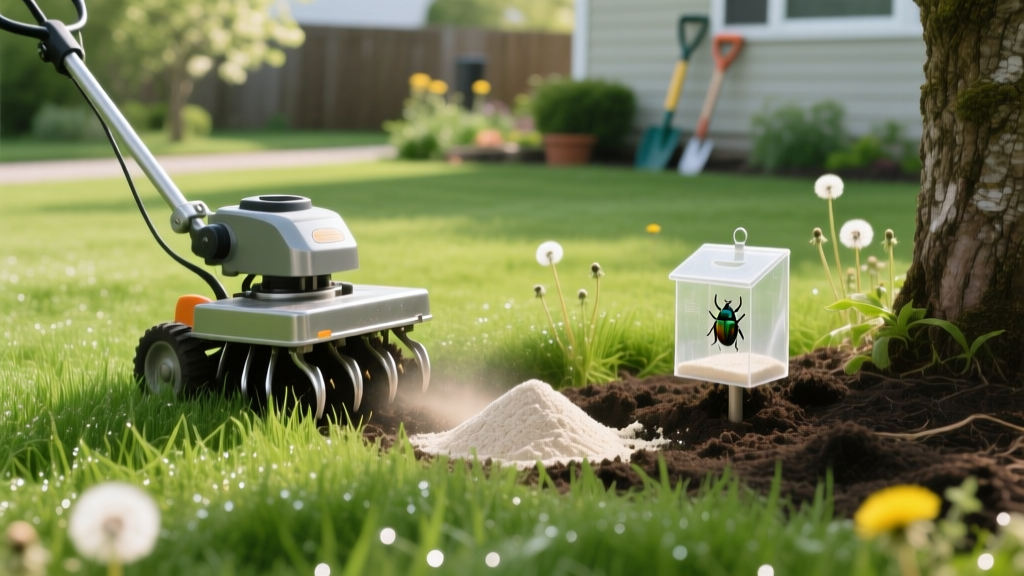

2026 Japanese Beetle Control: Milky Spore, Traps & Aeration
Key Takeaways
- Optimal Timing: Apply Milky Spore in late summer to early fall when soil temperatures exceed 60°F.
- Aeration Synergy: Core aerate before application to drive spores directly into the root zone.
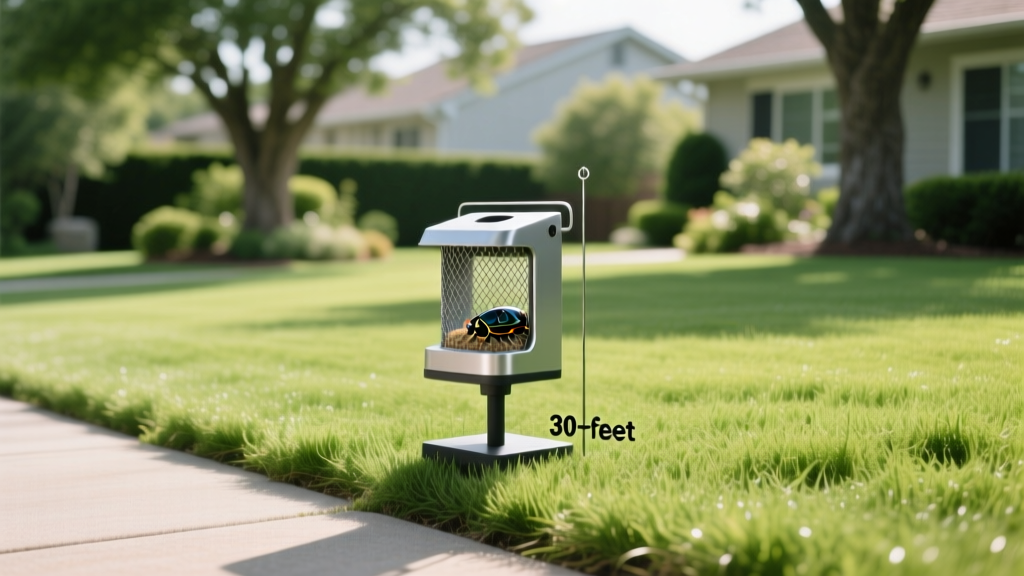
- Trap Placement: Position Japanese beetle traps at least 30 feet away from your lawn to avoid attracting adults to your turf.
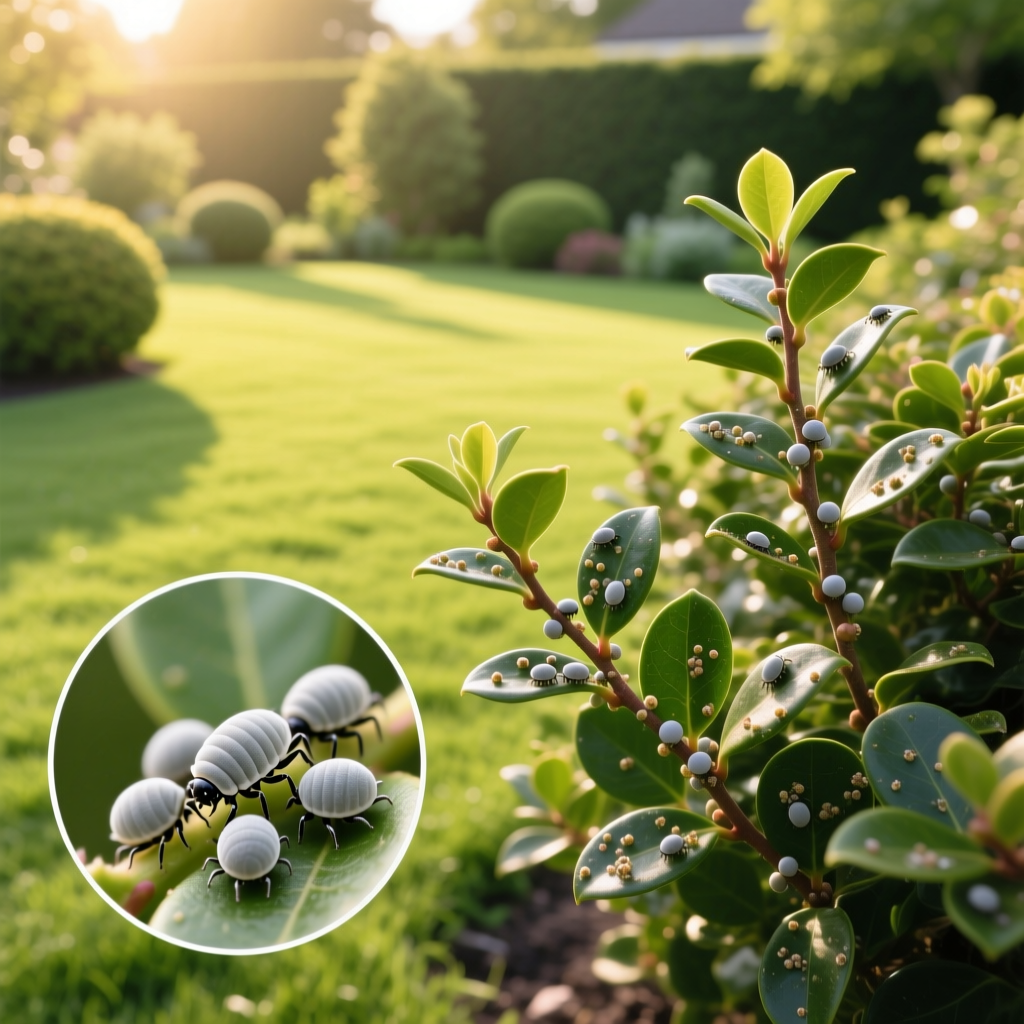
This guide is designed for homeowners and lawn care managers seeking biological grub control without synthetic pesticides. You should apply Milky Spore (Paenibacillus popilliae) in late summer to early fall, specifically between August and October. During this window, Japanese beetle (Popillia japonica) grubs are actively feeding near the soil surface. For successful infection, soil temperatures must remain consistently above 60°F.
The Optimal Time to Apply Milky Spore
Milky Spore is a biological control agent containing the bacterium Paenibacillus popilliae, which specifically targets and kills Japanese beetle grubs. When grubs ingest the spores while feeding on grass roots, the bacteria multiply inside them, eventually killing the host and releasing billions of new spores into the soil.
The bacteria require actively feeding grubs to establish a sustainable population in your turf. Late summer and early fall provide the ideal biological window because grubs are large enough to ingest a lethal dose. Applying the spores during winter or early spring is ineffective, as grubs are dormant and buried deep below the frost line.
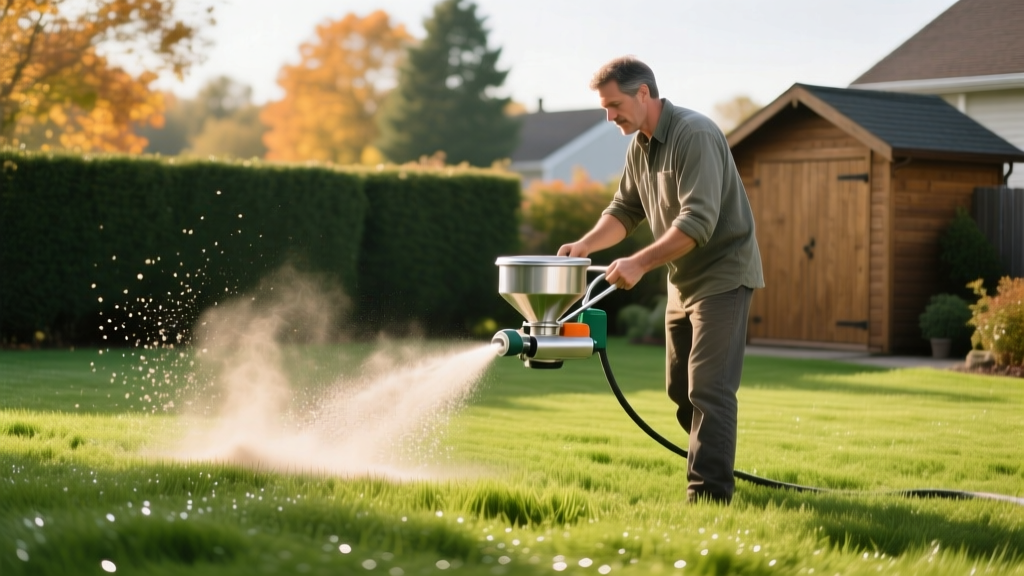
According to Penn State Extension, the spores must be applied in a grid pattern to ensure uniform coverage across the turf. The standard dosage requires 1 teaspoon of powder per 16 square feet of lawn area. Watering the lawn immediately after application washes the spores off the grass blades and into the soil profile.
Integrating Milky Spore with Lawn Aeration
Core aeration is the mechanical process of removing small plugs of thatch and soil from a lawn to improve air, water, and nutrient penetration. This practice reduces soil compaction and creates direct channels to the root zone, making it an ideal preparatory step for introducing biological soil amendments.
Schedule your core aeration for late August, exactly one week before your planned Milky Spore application. The aeration process should extract soil cores to a depth of at least 2 inches. These open holes act as direct conduits, allowing the spores to bypass the thatch layer and reach the grubs feeding in the root zone.
Liquid aeration products do not provide the same physical channels for spore delivery. If you rely on liquid surfactants for soil loosening, you must water the biological spores heavily to ensure they penetrate the soil surface. Mechanical core aeration remains the superior method for maximizing the immediate efficacy of biological grub treatments.
Timing Aeration with Trap Deployment
Aeration stresses the turf temporarily, making it slightly more vulnerable to adult beetle feeding if traps are placed incorrectly. You must coordinate your aeration schedule with strategic trap placement to protect the recovering grass. Managing the adult population prevents them from laying new eggs in your freshly aerated soil.
Strategic Japanese Beetle Trap Placement
Japanese beetle traps use floral lures and sex pheromones to attract adult Popillia japonica beetles into a collection bag. However, these traps attract far more beetles from neighboring areas than they can physically capture. Misplacing these devices will actively concentrate the destructive adult population directly onto your turf and ornamental plants.
Research from the University of Kentucky Entomology department demonstrates that traps placed near susceptible plants increase localized defoliation. To prevent this, you must position all Japanese beetle traps at least 30 feet away from your lawn perimeter. Place them near non-susceptible areas, such as a distant driveway or a neighbor's property line (with permission).
The Perimeter Defense Strategy
Deploying traps downwind from your property maximizes their interception rate before beetles reach your turf. Check and empty the collection bags every 48 hours during peak July and August flights. Combining distant trapping with fall Milky Spore applications creates a comprehensive, multi-year defense system against the entire beetle life cycle.
Application Checklist and Decision Matrix
Use this decision framework to verify your lawn is ready for biological grub treatment.
| Condition | Requirement | Action if Unmet |
|---|---|---|
| Soil Temperature | Above 60°F | Delay application until late summer |
| Grub Activity | Active feeding near roots | Wait for August/September window |
| Soil Compaction | Low (recently aerated) | Perform core aeration first |
| Moisture Level | Damp, not saturated | Water lightly after application |
| Trap Distance | Minimum 30 feet away | Relocate traps to property edge |
Frequently Asked Questions
Does Milky Spore work immediately?
Milky Spore does not provide instant eradication of existing grubs. It takes approximately two to four weeks for an infected grub to die and release new spores into the surrounding soil. Full establishment of the spore population across your entire lawn typically requires one to three years.
Should I apply Milky Spore before or after rain?
Apply the powder to dry grass blades just before a light, steady rain is forecasted. The rainfall will naturally wash the spores off the grass and carry them down into the soil profile. Avoid applying the product before heavy thunderstorms, which can cause surface runoff and wash your investment into the storm drains.
How long does Milky Spore last in the soil?
Once the bacterium is fully established in the soil ecosystem, it provides continuous grub control for up to 10 years. The spores remain viable and dormant during periods when grub populations are low, multiplying rapidly whenever new Japanese beetle larvae are introduced to the turf.
Conclusion and Next Steps
Applying Milky Spore in late summer when soil temperatures exceed 60°F ensures the bacteria successfully infect actively feeding Japanese beetle grubs. Pairing this biological treatment with prior core aeration and distant trap placement creates a highly effective, long-term turf management strategy. Your immediate next step is to purchase a soil thermometer, measure your turf's current temperature, and order your spore powder for the upcoming fall application window.