
Pest Control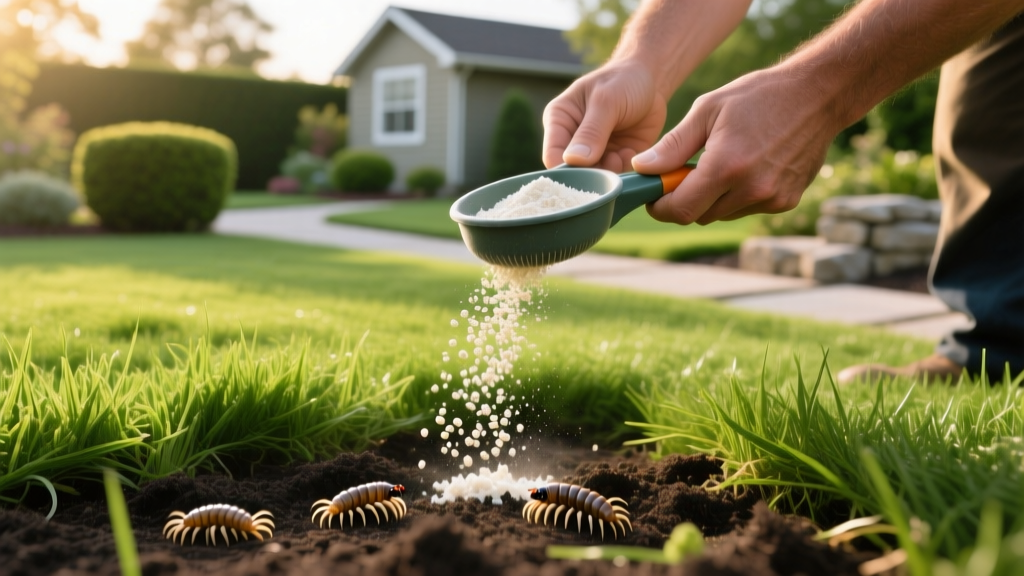
Milky Spores for Grubs: Application Rates, Timing, and Cost Breakdown
The Biological Mechanism of Milky Spore Disease
Milky spore disease is caused by Paenibacillus popilliae, a naturally occurring, host-specific bacterium that targets the larval stage of the Japanese beetle. When grubs ingest the spores while feeding on grassroots, the bacteria multiply rapidly inside the insect's hemolymph (blood). Within 7 to 21 days, the grub dies and decomposes, releasing 1 billion to 2 billion new spores back into the soil matrix. This creates a compounding biological defense network that can protect a lawn for 15 to 20 years without reapplication.
Unlike synthetic chemical controls such as imidacloprid or trichlorfon, milky spores for grubs do not cause immediate knockdown. The biological cycle requires the grub to survive long enough to ingest the spores and die naturally, ensuring the maximum release of progeny spores into the surrounding earth.
Species Susceptibility: Does It Work on All Grubs?
A common failure mode in yard defense is applying Paenibacillus popilliae to a lawn infested with non-target grub species. According to the University of Kentucky Entomology Department, milky spore is highly specific. Review the matrix below before purchasing.
| Grub Species | Susceptibility | Recommended Action |
|---|---|---|
| Japanese Beetle (Popillia japonica) | High (Primary Host) | Apply milky spore immediately. |
| Oriental Beetle (Anomala orientalis) | Moderate | Use milky spore, but supplement with beneficial nematodes (Heterorhabditis bacteriophora). |
| Asiatic Garden Beetle (Maladera castanea) | Low | Rely on chemical controls or entomopathogenic nematodes. |
| June Bugs / Masked Chafers | None (Immune) | Do not use milky spore. Apply chlorantraniliprole or trichlorfon. |
Step-by-Step Application Protocol
Proper application dictates whether the spores establish a permanent colony in your soil or degrade under UV exposure. Follow this exact protocol for the standard powdered formulation.
Pro Tip: Soil Temperature Verification
Do not apply based on the calendar. Use a digital soil probe thermometer to verify the temperature at a 2-inch depth is between 65°F and 70°F. This ensures grubs are actively feeding near the surface. Applying in soil below 60°F results in spore dormancy and UV degradation before ingestion occurs.
1. Map the Grid System
For the traditional powder application, you must establish a grid across the entire treatment area, not just the visibly damaged patches. Grubs migrate, and localized treatment allows populations to rebound from untreated borders. Mark out intersections every 4 feet in both directions using landscaping flags or a measuring wheel.
2. Dispense the Spore Powder
At every 4-foot intersection, apply exactly 1 teaspoon (approximately 1 gram) of milky spore powder. A standard 20-ounce box treats 7,000 square feet, which equates to roughly 435 intersections. Use a specialized milky spore dispenser tube or a standard kitchen measuring spoon. Avoid broadcasting the powder randomly, as this dilutes the concentration below the threshold required for initial infection.
3. Incorporate and Water
Paenibacillus popilliae spores are highly susceptible to UV radiation. Within 24 hours of application, you must water the lawn with at least 0.25 inches of irrigation to wash the spores off the grass blades and into the thatch and soil layer. If natural rainfall is not imminent, run your sprinkler system immediately after dispensing.
2026 Cost Breakdown and Long-Term ROI
While the upfront cost of biological controls is higher than synthetic alternatives, the multi-year efficacy drastically alters the return on investment. Based on 2026 retail pricing for leading brands like St. Gabriel Organics, here is the financial breakdown.
- Powdered Formulation (20 oz): $55 to $65. Covers 7,000 sq. ft. Cost per 1,000 sq. ft. is roughly $8.50.
- Powdered Formulation (40 lbs): $140 to $160. Covers 1 acre (43,560 sq. ft.). Cost per 1,000 sq. ft. drops to $3.40.
- Granular Formulation (40 lbs): $130 to $150. Designed for broadcast spreaders. Requires 6 applications over 2 years to build soil saturation, making the total cost of establishment higher than the powder method.
'When calculating ROI, factor in the 15-year lifespan of a successful milky spore establishment. A $65 investment protecting 7,000 square feet equates to just $4.33 per year, easily outperforming annual $40 synthetic grub preventer applications.' — LawnsGuide Pest Control Economic Analysis, 2026
Critical Failure Modes and Troubleshooting
When homeowners report that milky spores for grubs 'didn't work,' the failure almost always traces back to one of the following biological or chemical conflicts:
Simultaneous Chemical Insecticide Use
If you apply a fast-acting synthetic grub killer (like Dylox/trichlorfon) at the same time as milky spore, you will sabotage the biological cycle. The chemical kills the grubs before they can ingest a lethal dose of spores and decompose. Without the decomposing grub cadavers, no new spores are released into the soil, and the colony fails to establish. You must choose either a purely biological route or a purely chemical route for the first season.
Severe Drought Conditions
Spores require soil moisture to remain viable and to facilitate grub movement. During severe summer droughts, grubs burrow deep into the soil profile (below 6 inches) to find moisture, moving them out of the spore-dense root zone. If your region is experiencing a drought, delay application until soil moisture is restored.
High Soil pH and Salinity
Research published by Penn State Extension indicates that Paenibacillus popilliae thrives in slightly acidic to neutral soils (pH 6.0 to 7.0). If your soil pH is above 7.5, or if you heavily apply sodium-based fertilizers, bacterial viability drops significantly. Conduct a soil test prior to application and amend with elemental sulfur if the pH exceeds 7.2.
Frequently Asked Questions
Is milky spore safe for pets and children?
Yes. Paenibacillus popilliae is entirely host-specific to Japanese beetle larvae. It poses zero toxicity risk to mammals, birds, earthworms, or beneficial pollinators. The EPA classifies it as a minimum-risk biological pesticide, meaning there are no re-entry intervals (REI) required after application.
Can I use a broadcast spreader for the powder?
No. The concentrated powder formulation is too fine and too potent for standard rotary or drop spreaders. It will clump, clog the hopper, and result in uneven distribution. Only the specifically formulated 'granular' milky spore products, which are bulked up with inert carriers like corncob grit, should be used in broadcast spreaders.
How long until I see a reduction in grub damage?
Expect a gradual decline. Year 1 will see a 20% to 30% reduction in the grub population. Year 2 and 3 will see exponential declines as the secondary and tertiary spore releases occur. By Year 4, the lawn is typically considered fully inoculated and economically immune to Japanese beetle grub damage.

