
Pest Control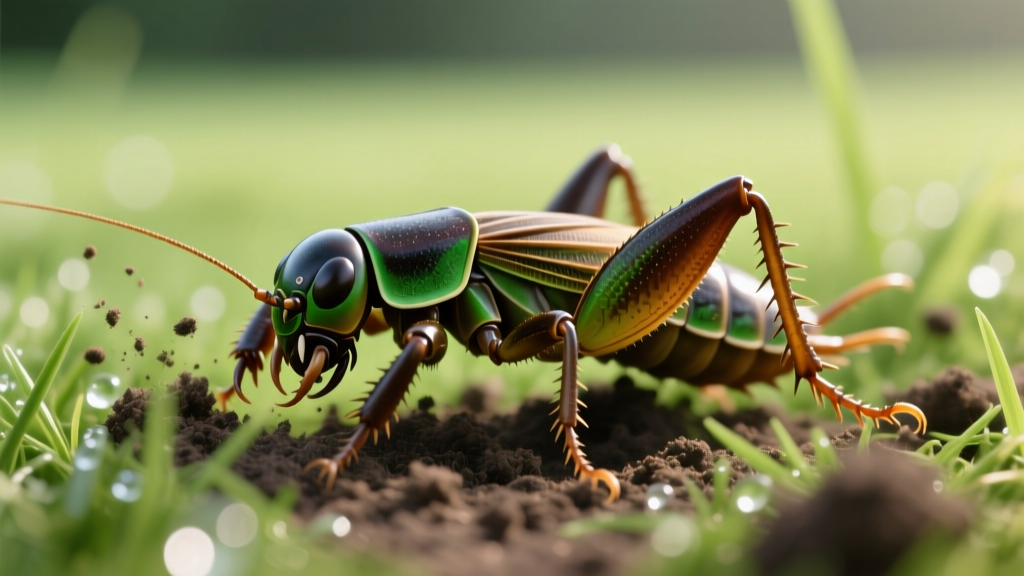
Control of Mole Crickets to Stop Lawn-Digging Mammals
Homeowners facing torn-up turf, shallow tunnels, and uprooted sod often assume they have a rodent or mammal infestation. They rush to buy snap traps, ultrasonic repellents, and poison baits, only to find the damage returns week after week. The hard truth about lawn ecology is that digging mammals are rarely the root cause of the problem; they are simply following their food source. If your lawn is being destroyed by foraging animals, the control of mole crickets and other subterranean insects is your most effective mammal deterrence strategy.
By eliminating the primary food source, you force insectivorous mammals to relocate. This guide bridges the gap between insect management and mammal deterrence, providing a comprehensive framework to diagnose, treat, and protect your lawn from the bottom of the soil profile up.
The Trophic Cascade: Why Mammals Target Your Turf
Before applying any treatments, it is critical to understand the ecological link between lawn pests and the mammals that hunt them. According to entomology experts at the University of Florida IFAS, mole crickets are highly destructive turf pests that tunnel through the top 1 to 2 inches of soil, severing grass roots and feeding on organic matter.
This tunneling behavior creates a secondary problem: it acts as a beacon for digging mammals. Skunks, raccoons, nine-banded armadillos, and moles possess acute olfactory senses that detect the pheromones and soil disturbances caused by mole crickets. When these mammals tear up your St. Augustine, Bermuda, or Zoysia grass, they are not doing it out of malice; they are efficiently harvesting a high-protein food source. If you trap the mammals without addressing the insect population, new foragers will simply replace them within days.
CRITICAL DIAGNOSTIC WARNING: Voles vs. Moles
Do not confuse vole damage with mole or skunk damage. Voles are herbivores that eat grass roots and bark; they do not eat mole crickets. If your lawn has 2-inch-wide surface runways with clipped grass and no soil mounding, you have a vole problem, and mole cricket control will not help. Mole cricket-driven mammal damage is characterized by deep, conical soil mounds (moles), scattered shallow divots (skunks/raccoons), or large, overturned patches of sod (armadillos).
Step 1: Confirming the Food Source via Soap Flush
Do not spend money on insecticides or mammal traps until you have quantified the mole cricket population. The industry-standard diagnostic tool is the soap flush test, which forces subterranean insects to the surface without killing them.
- Mix the Solution: Combine 2 tablespoons of liquid lemon-scented dish soap with 2 gallons of water in a standard watering can.
- Define the Test Area: Mark off a 2-foot by 2-foot square (4 square feet) of damaged turf. Test the edges of the damage, not the dead center, as crickets migrate outward from dead zones.
- Apply and Wait: Saturate the 4-square-foot area evenly. Wait 3 to 5 minutes.
- Count and Assess: If 2 to 4 or more mole crickets surface in that single 4-square-foot area, your population is high enough to attract foraging mammals, and immediate intervention is required.
Step 2: Strategic Control of Mole Crickets
Effective deterrence of digging mammals relies on breaking the reproductive cycle of the mole cricket. Treating adult crickets in late summer is largely ineffective for mammal deterrence, as the damage is already done and mammals will have already established foraging routes. The optimal window for the control of mole crickets is late May through June, when nymphs are small, near the surface, and highly susceptible to treatment.
Treatment Comparison Matrix
| Treatment Method | Active Agent | Est. Cost (per 1,000 sq ft) | Target Stage | Mammal Safety Profile |
|---|---|---|---|---|
| Biological Nematodes | Steinernema scapterisci | $12.00 - $18.00 | Nymphs & Adults | 100% Safe (No toxicity to mammals) |
| Systemic Insecticide | Imidacloprid (e.g., Merit 0.5G) | $4.00 - $7.00 | Early Nymphs | Safe after watering in; keep pets off during application |
| Contact Pyrethroid | Bifenthrin (e.g., Talstar P) | $3.00 - $5.00 | Adults & Late Nymphs | Highly toxic to aquatic life; safe for mammals once dry |
For homeowners prioritizing ecological safety and long-term soil health, applying Steinernema scapterisci nematodes is the premier choice. As noted by NC State Extension turfgrass specialists, these specialized nematodes actively seek out mole crickets, enter their bodies, and release bacteria that kill the host within 48 hours. Because nematodes are living organisms, they must be applied in the late afternoon or early evening and watered in immediately to prevent UV degradation.
Step 3: Secondary Mammal Deterrence Post-Treatment
Once you have initiated the control of mole crickets, the food source will begin to collapse. However, mammals have spatial memory and will continue to dig in your lawn out of habit for 10 to 14 days before realizing the buffet is gone. During this transition window, deploy secondary sensory deterrents to break their foraging habits.
- Castor Oil Repellents: Apply a commercial castor oil-based liquid repellent (like Bonide Mole & Vole Stopper) at a rate of 2 oz per 1,000 sq ft. The oil coats the soil and the remaining insects, giving the turf an unpalatable taste and irritating the sensitive olfactory glands of skunks and armadillos.
- Beneficial Nematode Overlap: If you suspect a secondary grub infestation alongside mole crickets, apply a broad-spectrum Heterorhabditis bacteriophora (Hb) nematode treatment. This ensures that no alternative food sources remain to anchor the mammals to your property.
- Physical Barrier Fencing: For persistent armadillo issues in the Southeast, install a temporary 2-foot high chicken wire fence buried 6 inches deep and angled outward at 45 degrees. Armadillos are poor climbers but excellent diggers; the outward angle prevents them from burrowing under the perimeter.
Economic Analysis: Eradication vs. Endless Trapping
Many homeowners fall into the trap of reactive mammal control. Purchasing a high-quality scissor trap for moles or a live-catch trap for skunks costs between $35 and $80 per unit. Factor in the cost of bait, the time spent checking traps daily, and the ethical or logistical costs of relocating captured animals, and a single season of reactive trapping can easily exceed $300.
Conversely, a proactive, area-wide application of Imidacloprid granules for a standard 5,000-square-foot lawn costs roughly $35 to $50 for the entire season. By addressing the root cause—the mole cricket population—you permanently alter the ecological appeal of your lawn. The return on investment for proactive insect management vastly outweighs the endless, frustrating cycle of trapping mammals that are simply trying to eat dinner.
Frequently Asked Questions
Will milorganite fertilizer deter digging mammals?
Milorganite, a biosolid fertilizer, is frequently cited in gardening forums as a deer and mammal repellent due to its strong odor. While it may temporarily mask the scent of mole crickets and deter deer, its efficacy against highly motivated, scent-driven foragers like armadillos and skunks is anecdotal and unreliable. Rely on targeted insect eradication first, and use Milorganite strictly as a supplemental turf-building fertilizer.
How deep do mole crickets tunnel, and can aerating the lawn kill them?
Mole crickets typically inhabit the top 1 to 3 inches of the soil profile, though they can burrow up to 12 inches deep during extreme drought or winter dormancy. Core aeration is excellent for soil health and reducing compaction, but the tines of a standard aerator will not physically crush enough crickets to impact the population. Aeration should be used to improve the penetration of your liquid nematode or chemical treatments, not as a standalone control method.

