
Pest Control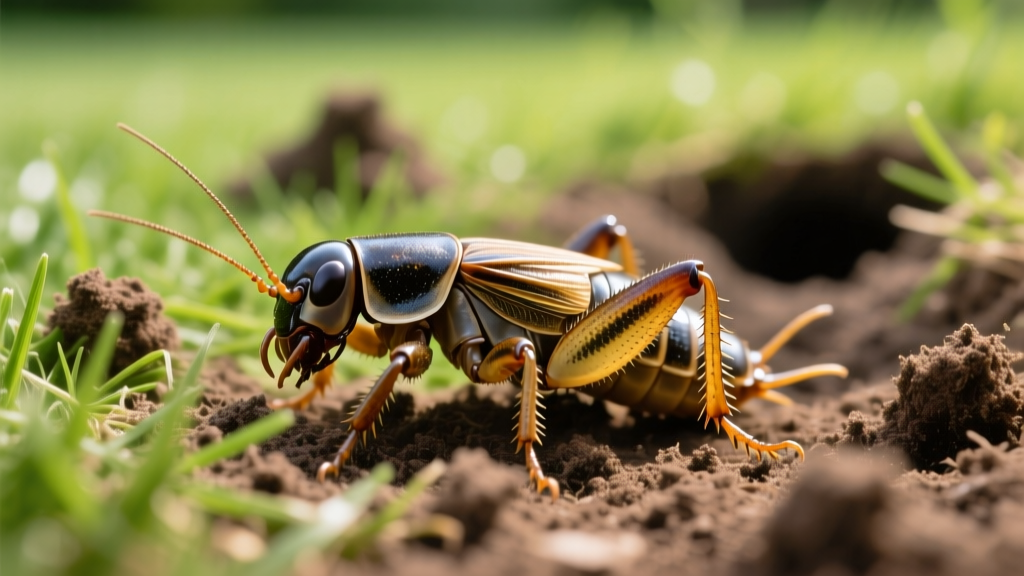
Mole Cricket Treatment: Don't Mistake Insect Damage for Mammal Pests
The Costly Misdiagnosis: Mammal Traps vs. Insect Pests
Every spring, homeowners spend hundreds of dollars on harpoon traps, sonic spikes, and castor oil repellents to fight a phantom enemy. They see raised, spongy tunnels weaving through their bermudagrass or centipedegrass and immediately assume they have a mole (mammal) infestation. However, in the Southeastern United States and parts of the Gulf Coast, the actual culprit is often the tawny or southern mole cricket—an insect that requires an entirely different eradication strategy.
Executing effective mole cricket treatment requires abandoning rodent and mammal deterrence frameworks. Mammal deterrents target the foraging habits and sensory organs of subterranean mammals. Mole crickets, conversely, are aggressive root-feeding insects that live in the thatch-soil interface. Applying mammal repellents to a mole cricket infestation yields a 0% success rate while the insects silently sever your turf's root system, leading to massive die-offs by late summer. According to the University of Florida IFAS, mole crickets cause tens of millions of dollars in turf damage annually, largely because early-stage damage is misidentified as mammal tunneling.
Diagnostic Framework: Mole vs. Mole Cricket
Before purchasing any chemical or biological control, you must definitively identify the pest. The physical signs of mammal moles and insect mole crickets overlap to the untrained eye, but a structured diagnostic matrix reveals clear differences.
| Diagnostic Feature | Mammal Mole (Rodent/Mammal) | Mole Cricket (Insect) |
|---|---|---|
| Tunnel Depth & Structure | 6 to 24 inches deep; distinct surface ridges | 1 to 4 inches deep; shallow, spongy surface feel |
| Soil Mounds | Volcano-shaped mounds at tunnel entrances | No mounds; occasional small soil disruption |
| Root Damage Mechanism | Uprooted or suspended by tunneling; roots intact | Roots physically chewed and severed |
| Soap Flush Test Result | No reaction | 2 to 4 nymphs/adults surface within 3 minutes |
The Soap Flush Test (Mandatory Verification)
Do not skip this step. Mix 2 ounces of lemon-scented liquid dish soap into 2 gallons of water. Pour the solution evenly over a 2-foot by 2-foot area of damaged turf at the edge of a tunnel. Wait exactly 3 minutes. If mole crickets are present, the soap irritates their exoskeletons and forces them to the surface. If nothing surfaces, you may actually be dealing with a mammal pest or a fungal disease like take-all root rot.
Targeted Mole Cricket Treatment Protocols
Once the soap flush confirms an insect infestation, you must deploy treatments specifically calibrated to the mole cricket's life cycle and anatomical defenses. Generic broad-spectrum insecticides often fail because they do not penetrate the thatch layer where the crickets reside.
Biological Control: Entomopathogenic Nematodes
For homeowners prioritizing organic or pet-safe lawn care, the Steinernema scapterisci nematode is the gold standard. Unlike generic S. carpocapsae nematodes sold at big-box stores, S. scapterisci was specifically isolated and developed to hunt mole crickets. These microscopic worms enter the cricket through natural body openings and release bacteria that kill the host within 48 hours.
- Application Rate: 1 billion nematodes per acre (approx. 23,000 per square foot).
- Cost: $45 to $65 per 50 million nematodes (treats roughly 2,000 sq ft).
- Critical Edge Case: Nematodes are highly UV-sensitive and desiccate rapidly. They must be applied in the late afternoon or immediately before a rain event, and the soil temperature must be above 60°F. You must irrigate the lawn with 0.25 inches of water immediately after application to wash them into the thatch.
Chemical Interventions: Bifenthrin and Imidacloprid
When biological controls are insufficient, targeted synthetic chemistries are required. However, 2026 regulatory shifts regarding neonicotinoids mean you must carefully select your active ingredient based on the target life stage.
Spring (Adult Eradication): Use Bifenthrin (e.g., Bifen XTS). Adults are actively mating and flying in early spring. Apply at a rate of 0.15 to 0.20 fl oz per 1,000 sq ft. Bifenthrin provides rapid knockdown but has high soil-binding properties, meaning it will not effectively reach nymphs deep in the soil profile later in the year.
Summer (Nymph Control): Use Imidacloprid (e.g., Arena .5 G granular). Nymphs hatch in early summer and begin feeding aggressively on roots. Granular imidacloprid is superior here because it moves systemically through the soil profile and into the root tissue. Apply at 1.4 to 1.8 lbs per 1,000 sq ft. Warning: Check local state regulations, as several states have enacted strict 2025/2026 restrictions on neonicotinoid applications near aquatic buffers or pollinator-heavy zones.
The Thatch Interference Factor
The most common reason mole cricket treatment fails is excessive thatch. Mole crickets thrive in the thatch-soil interface. If your lawn has a thatch layer thicker than 0.5 inches, liquid bifenthrin will bind to the dead organic matter and never reach the insects below. Furthermore, thick thatch repels water, preventing granular imidacloprid from washing into the root zone. You must core aerate or power rake the lawn to reduce thatch below 0.5 inches before applying any chemical treatment. According to NC State Extension, managing thatch is as critical to mole cricket control as the insecticide itself.
Application Timing and Cost Matrix
| Season | Target Life Stage | Recommended Product | Est. Cost (per 5,000 sq ft) | Water-In Requirement |
|---|---|---|---|---|
| March - April | Adults (Mating) | Bifen XTS (Bifenthrin) | $35 - $45 | 0.25 inches |
| June - July | Early Nymphs | Arena .5 G (Imidacloprid) | $60 - $85 | 0.5 inches |
| August - Sept | Late Nymphs | Steinernema scapterisci | $110 - $150 | 0.25 inches (immediate) |
Why Rodent & Mammal Deterrents Fail Against Crickets
To fully close the loop on the mammal vs. insect confusion, it is vital to understand why the products lining the "Mole & Vole" aisles at hardware stores are biologically useless against mole crickets:
- Castor Oil Repellents: These work by coating earthworms and grubs (the mammal mole's food source) with an unpalatable laxative film. Mole crickets are omnivorous scavengers and root-feeders; they do not consume earthworms, rendering castor oil entirely irrelevant to their diet.
- Sonic Spikes: Mammals have highly sensitive auditory and tactile receptors that interpret low-frequency vibrations as the approach of a predator. Insects lack these specific tympanal organs in the soil environment; they simply ignore the vibrations.
- Harpoon Traps: Designed to pierce the spinal column of a mammal pushing through a tunnel. A mole cricket is roughly 1.5 inches long and navigates the micro-pores of the thatch layer; a mechanical trap designed for a 6-inch mammal will never trigger.
Frequently Asked Questions
Can I use grub control products to treat mole crickets?
Not effectively. While some active ingredients overlap (like imidacloprid), the application timing and rates differ. Grub control targets white grubs deep in the soil in late summer. Mole cricket treatment requires targeting the thatch-soil interface much earlier when nymphs are small and highly susceptible. Using a generic "grub killer" at the wrong time of year will result in poor control.
Are mole crickets attracted to landscape lighting?
Yes. Adult tawny and southern mole crickets are strongly phototactic and will swarm toward bright outdoor lighting during their spring mating flights. Switching exterior bulbs from cool-white LEDs to warm, yellow-tinted "bug lights" (2700K or lower) can reduce the number of adults landing on your turf to lay eggs.
How long does it take to see results after a soap flush and treatment?
Chemical treatments like bifenthrin will show dead adults within 24 to 48 hours. However, because the damage to the root system has already occurred, the turf will not visually recover until the roots regenerate. With proper irrigation and a light application of starter fertilizer (e.g., 18-24-12), you should see the spongy turf knit back into the soil within 14 to 21 days post-treatment.

