
Pest Control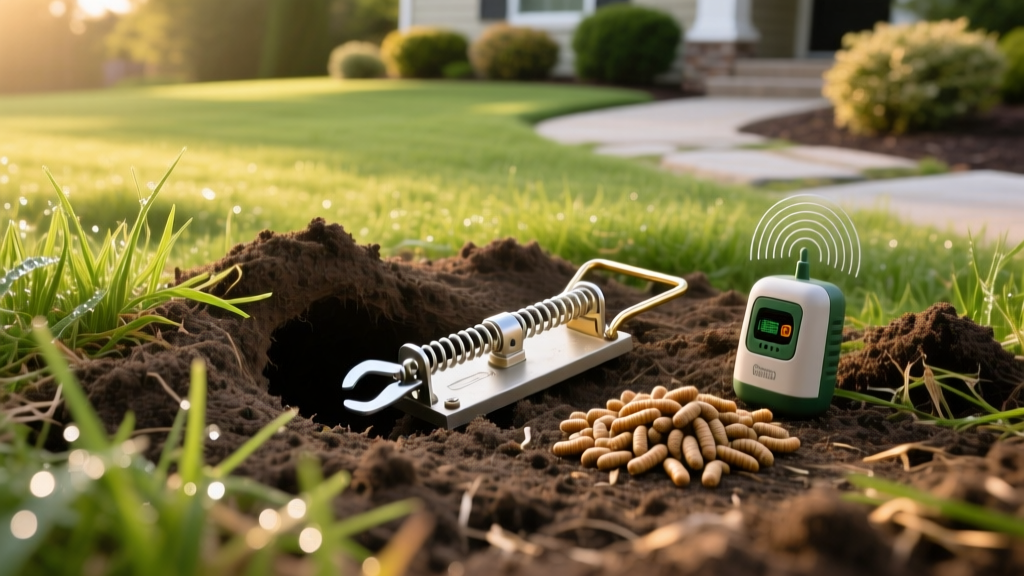
Proven Moles in Yard Removal: Best Traps, Baits, and Deterrents
The Reality of Moles in Yard Removal: Insectivores, Not Rodents
Effective moles in yard removal begins with understanding the animal's biology. Unlike voles or mice, moles (primarily the Eastern mole, Scalopus aquaticus) are not rodents; they are insectivores. They do not eat plant roots, grass blades, or garden vegetables. Instead, they are subterranean foraging machines that consume 70% to 100% of their body weight in earthworms, grubs, and soil-dwelling insects every single day. When you see a damaged lawn, the mole is merely following its food source. Eradicating the food source or intercepting the mole in its primary runway is the only scientifically backed method for permanent removal.
Identify the Culprit: Moles vs. Voles vs. Gophers
Before deploying traps or baits, confirm you are dealing with a mole. Misidentification leads to wasted money and ineffective treatments. Use this comparison matrix to verify the intruder based on surface damage and tunnel architecture.
| Feature | Moles | Voles | Pocket Gophers |
|---|---|---|---|
| Surface Mound | Conical, symmetrical volcano shape | No mounds; small entry holes | Crescent or horseshoe-shaped mound |
| Tunnel Depth | 2 to 12 inches below surface | Surface runways through grass | 6 to 18 inches deep |
| Diet | Earthworms, grubs, insects | Grass roots, bark, bulbs | Plant roots, tubers, crops |
| Tunnel Pattern | Raised ridges, straight main runways | Visible surface trails in turf | Fan-shaped radiating tunnels |
Critical Diet Misconception: Many homeowners apply expensive grub control chemicals (like Dylox or Imidacloprid) expecting moles to leave. According to the Internet Center for Wildlife Damage Management, earthworms make up up to 80% of a mole's diet, while white grubs account for only 10% to 20%. Eliminating grubs will not starve a mole if the soil remains rich in earthworms. Grub control is a turf-saving measure, not a reliable mole removal strategy.
Step-by-Step Strategy for Active Runway Detection
The single most common reason for trap failure is placement in an abandoned "feeder" tunnel rather than an active "main" runway. Moles dig shallow, meandering feeder tunnels to hunt, then abandon them within days. Main runways are the subterranean highways they use daily. Follow this protocol to locate the main runway:
- Map the Ridge System: Look for raised ridges that run in relatively straight lines, often following fences, driveways, or the perimeter of garden beds.
- The Tromp Test: Wear flat-soled boots and firmly press down 2-foot sections of the raised tunnels every 10 feet along the suspected main runway.
- Wait 24 to 48 Hours: Leave the lawn undisturbed. Moles are highly territorial and will immediately repair breaches in their primary ventilation and transit tunnels.
- Inspect the Rebounds: Return to the lawn. Any pushed-down sections that have been pushed back up indicate heavy, daily traffic. These are your target zones for trap or bait placement.
Trap Selection and Placement Guide
Trapping remains the most effective and immediate method for moles in yard removal. Success depends heavily on matching the trap mechanism to your soil type. Sandy soils collapse easily, making choker loops difficult to set, while heavy clay soils can jam scissor jaws. Below is a breakdown of the top professional-grade traps available in 2026.
1. Wire Tek 1001 Scissor-Jaw Trap
Price Range: $45 - $55
Best For: Sandy or loamy soils.
Mechanism: Two interlocking scissor jaws that snap shut when the trigger pan is lifted.
Expert Insight: The Wire Tek 1001 requires you to cut a cross-section of the tunnel and clear out the dirt so the trigger pan rests flush with the tunnel floor. According to Penn State Extension, scissor traps have the highest success rate when placed in straight main runways, but they require careful handling to avoid accidental finger injuries during the arming process.
2. Victor Out O'Sight Choker Loop
Price Range: $18 - $22
Best For: Heavy clay soils.
Mechanism: A spring-loaded wire noose that tightens rapidly around the mole's body.
Expert Insight: Because it does not rely on a complex jaw mechanism that can get clogged with wet clay, the Victor Out O'Sight excels in dense soils. Ensure the loop is perfectly round and centered in the tunnel. Use a trowel to carve a small notch in the tunnel floor for the trigger.
3. Nash Choker Loop Trap
Price Range: $25 - $30
Best For: Deep, established runways.
Mechanism: Heavy-duty steel wire loop with a robust spring base.
Expert Insight: The Nash trap requires more physical force to set but delivers a higher kinetic strike, ensuring a lethal catch on larger Eastern or Star-Nosed moles. Always use the safety catch until the trap is fully seated in the trench.
Chemical Baits: Bromethalin and Zinc Phosphide
When trapping is impractical due to rocky soil or extensive tunnel networks, toxic baits offer a secondary removal vector. Modern mole baits rely on two primary active ingredients:
Active Ingredient Breakdown
- Bromethalin (e.g., Talpirid, Tomcat Mole Killer): A neurotoxin that uncouples oxidative phosphorylation in the central nervous system, leading to fatal cerebral edema. Talpirid ($30-$40 for 10 worms) is molded into rubberized earthworm shapes, exploiting the mole's primary food preference. It is highly palatable and typically lethal within 24 to 48 hours after a single feeding.
- Zinc Phosphide: An acute toxicant that reacts with stomach acids to release phosphine gas. It is less commonly used for moles today due to lower palatability compared to bromethalin worm simulants, and it poses a higher secondary poisoning risk to scavengers if the mole dies near the surface.
Placement Rule: Never simply drop bait into a hole. Use a long screwdriver or specialized bait probe to pierce the main runway, drop one bromethalin worm into the tunnel, and then seal the hole with a clod of dirt to prevent light from entering. Moles will plug light leaks with dirt, potentially burying the bait before they consume it.
Deterrents and Repellents: Busting the Myths
The pest control market is saturated with mole deterrents that lack empirical backing. Here is the reality of popular repellents:
- Sonic and Vibrating Spikes: While initially disruptive, university field trials consistently show that moles habituate to sonic vibrations within 10 to 14 days. They quickly learn the spikes pose no physical threat and will dig directly adjacent to them.
- Chewing Gum and Mothballs: These are internet myths. Moles do not eat bubble gum, and mothballs (naphthalene) are illegal to use off-label in outdoor soil environments due to groundwater contamination risks.
- Castor Oil Repellents: Products like Sweeney's Mole & Gopher Repellent ($15-$20) use castor oil to coat soil insects and earthworms, making them taste foul and causing mild digestive distress in moles. Verdict: Castor oil is the only EPA-approved repellent with moderate efficacy. It does not kill moles but can temporarily push them toward property lines. It requires monthly reapplication and heavy watering to penetrate the root zone.
Frequently Asked Questions
Will flattening the molehills make the moles leave?
No. Flattening mounds only addresses the surface symptom. The mole will simply push the excavated soil back up the next time it clears its tunnel system. You must target the animal directly via traps or baits.
How many moles are typically in a single yard?
Moles are highly solitary and territorial. Except during the brief spring mating season, an average suburban yard (under 10,000 square feet) typically supports only one or two adult moles. The extensive tunnel damage is usually the work of a single, hyper-active forager.
Do ultrasonic solar mole repellers work in 2026?
No. Advances in solar battery life have improved the longevity of these spikes, but the biological response of the mole remains unchanged. They quickly habituate to the noise and vibration, rendering the devices useless after two weeks.

