
Pest Control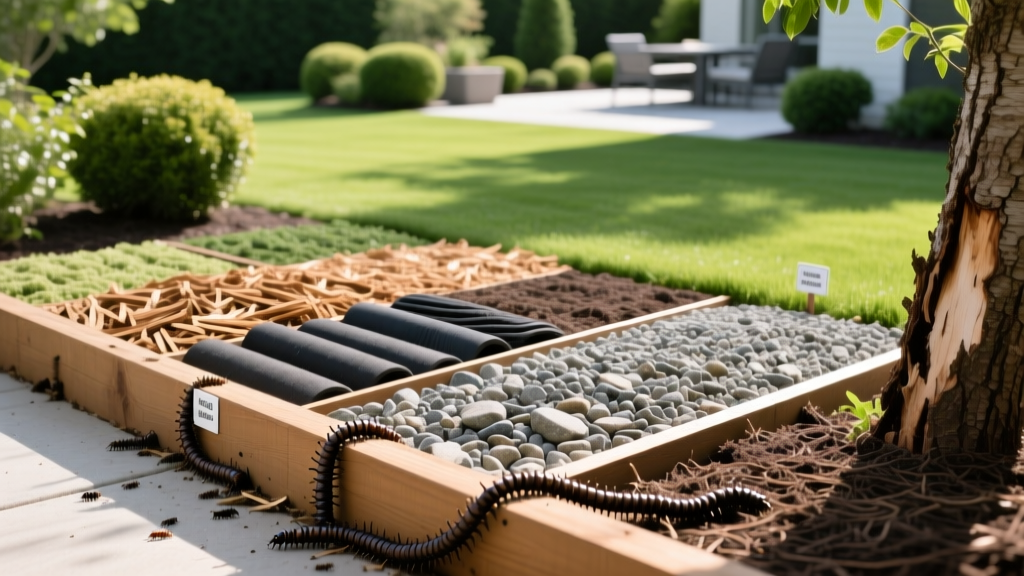
Mulch and Termites: Best Termite-Resistant Types & Defense Tips
The Biology of Mulch and Termite Colonies
The relationship between mulch and termites is fundamentally driven by moisture and cellulose. Subterranean termites (Reticulitermes spp.) require a highly humid microclimate to survive because they are highly susceptible to desiccation. While many homeowners assume termites eat the mulch itself, the primary danger is that mulch retains soil moisture and provides a protected, temperature-stable bridge over the soil surface. This allows worker termites to construct mud tubes undetected directly against your home's foundation.
Furthermore, not all mulches are created equal. Hardwood bark and pine straw are rich in the exact cellulose and hemicellulose compounds that form the primary diet of termite colonies. However, specific wood species contain natural defensive resins and allelochemicals that actively repel or are toxic to termites. Selecting the right material and applying it with precise spatial awareness is the cornerstone of effective yard defense.
Termite-Resistant Mulch Materials: Cost & Efficacy Matrix
When evaluating mulch and termites, you must balance aesthetic preferences with biological resistance. The table below breaks down the most common landscaping materials, their natural resistance levels, and current bulk pricing.
| Material | Termite Resistance | Avg Cost (per cu. yd) | Moisture Retention | Estimated Lifespan |
|---|---|---|---|---|
| Cedar Mulch | High (contains repellent resins) | $45 - $60 | Moderate | 2-3 years |
| Cypress Heartwood | High (must be 100% heartwood) | $50 - $70 | High | 3-4 years |
| Melaleuca Mulch | Very High (unpalatable to termites) | $30 - $45 | Moderate | 3-5 years |
| Pine Straw | Very Low (highly attractive food) | $25 - $35 | Low | 1 year |
| Hardwood/Bark | Low (ideal food & moisture source) | $30 - $40 | High | 1-2 years |
| Pea Gravel | Absolute (zero cellulose) | $40 - $55 | None | Permanent |
Expert Note: Cypress mulch is only effective if it is strictly heartwood. Most commercial cypress mulch sold at big-box stores contains high percentages of sapwood, which termites will readily consume. Always verify the source and composition before purchasing.
Foundation Defense: The 6-Inch Gap and Depth Limits
Even the most termite-resistant organic mulch will compromise your home's structural defenses if applied incorrectly. The physical placement of mulch is just as critical as the material itself.
The 6-Inch Foundation Rule
Maintain a strict 6-inch horizontal gap between any mulch bed and your home's siding, brick veneer, or concrete foundation. This gap serves two purposes:
- Visual Inspection Zone: It allows you to easily spot termite mud tubes attempting to cross the foundation.
- Moisture Reduction: It prevents the mulch from trapping moisture directly against the structural wood or weep holes of brick facades.
Maximum Depth Restrictions
Limit mulch depth to a maximum of 2 to 3 inches. Applying mulch thicker than 4 inches creates a deep, perpetually damp environment that encourages fungal growth and provides an ideal nesting secondary site for subterranean termites. If your soil grade slopes toward the foundation, reduce the mulch depth near the house to 1 inch to prevent water pooling.
Retrofitting Existing Hardwood Mulch Beds
If your yard currently features deep hardwood mulch abutting the foundation, take these immediate corrective steps:
- Rake the mulch back exactly 6 inches from the foundation wall.
- Remove excess mulch to achieve a uniform 2-inch depth across the remaining bed.
- Inspect the exposed foundation soil for active mud tubes. If found, do not disturb them; contact a licensed pest control professional immediately.
Chemical and Biological Soil Treatments Under Mulch
For homes in high-risk termite zones (such as the Southeastern United States), relying solely on mulch selection is insufficient. The soil beneath and adjacent to the mulch bed must be treated with a non-repellent termiticide.
Non-repellent termiticides are undetectable to termites. Instead of dying immediately upon contact, workers carry the active ingredient back to the colony, triggering a delayed transfer effect that eliminates the entire population.
Industry Standard Products:
- Termidor SC (Fipronil 9.1%): The gold standard for subterranean termite control. For foundation trenching, apply 4 gallons of diluted solution (0.8 oz per gallon of water) per 10 linear feet. The trench must be 6 inches wide and 6 inches deep, placed directly against the foundation before mulch is laid.
- Altriset (Chlorantraniliprole 18.4%): A reduced-risk alternative that paralyzes termite muscles. It is highly effective and carries a lower toxicity profile for mammals, making it preferable for yards with pets and children.
According to the Environmental Protection Agency (EPA), soil-applied liquid termiticides must be applied by licensed professionals to ensure proper trenching depth and environmental safety, particularly near water sources.
Inorganic Alternatives for Extreme Risk Zones
If your property has a history of severe termite pressure or structural wood rot, eliminating organic mulch near the foundation entirely is the safest protocol. Consider these inorganic ground covers for the 3-foot perimeter immediately surrounding your home:
- Pea Gravel or Crushed Stone: Provides excellent drainage, zero food value for termites, and reflects heat away from the foundation. Use a permeable landscape fabric underneath to prevent weed growth without trapping moisture.
- Rubber Mulch: Made from recycled tires, it provides the aesthetic of wood chips without the cellulose. However, it can retain heat and leach minor amounts of zinc into the soil, making it better suited for foundation borders rather than active garden beds.
- Pour-in-Place Rubber or Permeable Pavers: Ideal for high-traffic walkways adjacent to the house, completely eliminating soil exposure and termite harborage areas.
For broader yard defense and understanding the behavioral patterns of wood-destroying insects, the National Pest Management Association (NPMA) provides comprehensive identification guides to help homeowners distinguish between subterranean termite swarmers and harmless flying ants during the spring mating season.
Expert Yard Defense Checklist
Maintain your landscape's defensive integrity with this annual checklist:
- Spring: Rake mulch beds to break up compacted, moisture-trapping layers. Re-establish the 6-inch foundation gap.
- Summer: Ensure irrigation sprinkler heads are not spraying directly onto mulch beds or the foundation wall.
- Autumn: Remove fallen tree branches and leaf litter immediately; decaying wood in direct contact with soil acts as a primary termite attractant.
- Winter: Inspect termite bait stations (e.g., Sentricon or Advance Termite Bait System) to ensure they have not been buried under shifting mulch or soil.

