
Pest Control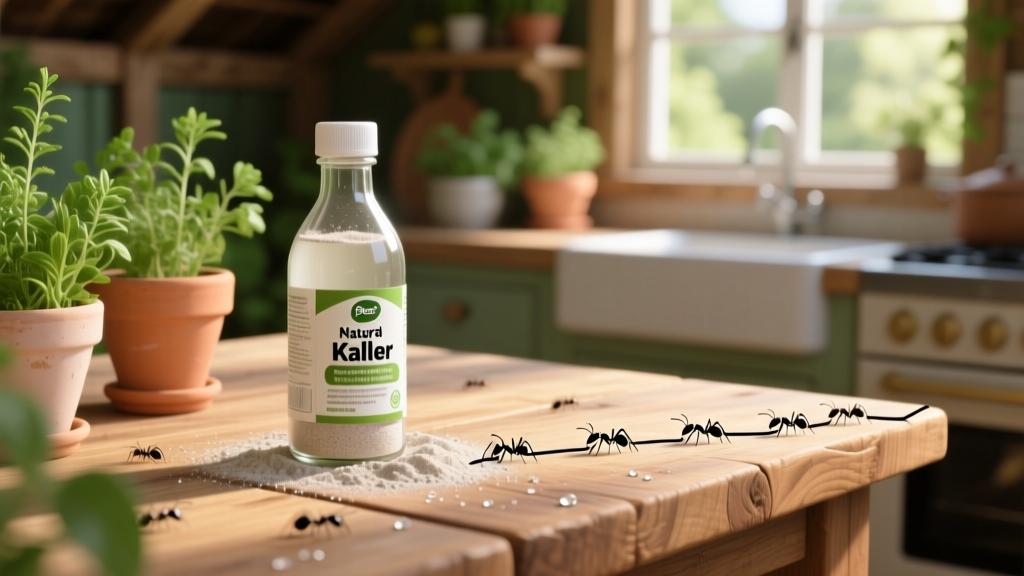
The Most Effective Natural Ant Killer Inside Your Home: Safe DIY & Commercial Solutions
Why Conventional Indoor Ant Sprays Fail (and Pose Risks)
When a trail of ants invades your kitchen pantry or bathroom vanity, the immediate instinct is to reach for a conventional aerosol pyrethroid spray. However, using synthetic contact killers indoors is fundamentally flawed for two reasons. First, contact sprays only kill the 5% to 10% of the colony currently foraging, leaving the queen and thousands of workers untouched. Second, aerosolized permethrin and cypermethrin leave toxic residues on indoor surfaces where children and pets crawl, posing documented respiratory and neurological risks.
⚠️ The Pharaoh Ant Warning: If you are dealing with Pharaoh ants (Monomorium pharaonis)—tiny, translucent yellow-red ants common in apartments—never use fast-acting natural or chemical repellents. Stressing a Pharaoh ant colony triggers 'budding,' where the colony splits into multiple new satellite nests, turning a single trail into a whole-house infestation. Slow-acting natural baits are the only viable eradication method.
Finding the right natural ant killer inside your home requires shifting from a 'contact-kill' mindset to a 'colony-elimination' strategy. Below is the definitive framework for eradicating indoor ants using organic, non-toxic, and chemical-free methods.
The 3-Step Framework for Indoor Natural Ant Eradication
- Trail Disruption (Non-Toxic): Wipe existing pheromone trails with a 50/50 solution of white vinegar and water. This blinds the foragers and forces them to seek new routes, ideally toward your bait.
- Strategic Baiting: Deploy slow-acting natural baits (borax or spinosad) directly in the path of the foragers. The goal is to allow the ants to consume the toxin and carry it back to the brood chamber.
- Perimeter Sealing: Once the colony collapses (usually 7-14 days), seal entry points with silicone caulk and apply desiccant dusts to prevent re-entry.
Top Natural Ant Killers for Indoor Use: Comparison Matrix
Not all natural remedies are created equal. Essential oils like peppermint and citrus act as repellents, not killers. To actually eliminate the colony, you must use ingestible or desiccating agents. Here is how the top organic options compare for indoor use.
| Active Ingredient | Mechanism of Action | Speed of Kill | Indoor Safety Profile | Est. Cost (2026) |
|---|---|---|---|---|
| Borax (Sodium Tetraborate) | Stomach poison; disrupts ant metabolism and exoskeleton. | Slow (24-48 hrs) | Low toxicity to mammals; keep away from pets. | $4 - $8 |
| Food-Grade DE (Amorphous Silica) | Desiccant; absorbs cuticular lipids, causing dehydration. | Moderate (12-24 hrs) | Safe if not inhaled; avoid airborne application. | $10 - $15 |
| Spinosad (e.g., Maggie's Farm) | Neurotoxin derived from soil bacteria (Saccharopolyspora spinosa). | Moderate (12-36 hrs) | OMRI listed; very safe for indoor use once dried. | $12 - $18 |
| D-Limonene (Orange Oil) | Contact killer; dissolves exoskeleton waxes. | Instant (Contact only) | Safe, but can stain unfinished wood and fabrics. | $9 - $14 |
Deep Dive: Formulating the Ultimate 1% Borax-Sugar Bait
The most common reason DIY natural ant killers fail is improper concentration. According to entomologists at the UC Davis Statewide IPM Program, if a borax bait is too strong, it kills the foraging worker before she can return to the nest and share the food via trophallaxis (regurgitation). For indoor sweet-eating ants (like Argentine or Odorous House ants), a 1% to 2% borax concentration is optimal.
The Exact 1% Liquid Borax Recipe
- 1/2 teaspoon (approx. 2.5 grams) of pure Borax powder (e.g., 20 Mule Team).
- 1 cup (240 ml) of warm distilled water.
- 2 tablespoons (25 grams) of white granulated sugar or honey.
Preparation: Dissolve the borax completely in the warm water first. If the water cools and the borax crystallizes, the ants will avoid it. Stir in the sugar. Soak cotton balls in the solution and place them on small pieces of wax paper along the ant trail. Replace every 48 hours to prevent mold and drying.
💡 Pro Tip: The Diet Shift Phenomenon
Ant colonies cycle their nutritional needs based on the queen's egg-laying cycle. If your sweet borax bait is completely ignored, the colony is currently in a 'protein/fat' phase. Switch your bait carrier to 1 tablespoon of peanut butter or bacon grease mixed with the same 1/2 teaspoon of borax.
Ant colonies cycle their nutritional needs based on the queen's egg-laying cycle. If your sweet borax bait is completely ignored, the colony is currently in a 'protein/fat' phase. Switch your bait carrier to 1 tablespoon of peanut butter or bacon grease mixed with the same 1/2 teaspoon of borax.
Using Food-Grade Diatomaceous Earth (DE) Safely Indoors
Diatomaceous earth is a highly effective, chemical-free desiccant, but it is frequently misused. The Environmental Protection Agency (EPA) notes that borate salts and silica dusts are low-toxicity alternatives to synthetic pesticides, provided they are applied correctly.
Critical DE Failure Modes to Avoid
- Using the Wrong Grade: You must use Food-Grade DE (amorphous silica). Never use pool-grade DE, which is calcined into crystalline silica and poses a severe silicosis risk when inhaled indoors.
- Over-Application: Ants will simply walk around piles of white powder. Use a bellows hand duster to apply a microscopic, barely visible film of DE into cracks, crevices, and behind baseboards. If you can easily see it, you've used too much.
- Moisture Exposure: DE works by absorbing the lipids on the ant's exoskeleton. If it gets wet (e.g., near a leaky kitchen sink or bathroom vanity), it becomes completely inert until it dries out.
Commercial Non-Toxic Gels: When DIY Isn't Enough
If formulating your own bait is impractical, several commercial natural ant killers offer lab-tested consistency. Look for products utilizing Spinosad or low-dose Borax.
- Terro T300B Liquid Ant Killer: While a commercial product, its active ingredient is 5.4% Borax. It remains one of the most reliable sweet baits on the market, though its concentration is slightly higher than the DIY 1% ideal, meaning it works faster but may require multiple placements to ensure the queen is reached.
- Maggie's Farm Ant & Roach Killer: Utilizes plant-derived oils and Spinosad. It is an excellent choice for protein-loving ants and is OMRI-listed for organic use, making it exceptionally safe for indoor environments with toddlers and pets.
Expert FAQ: Indoor Natural Ant Control
Q: Will cinnamon or cayenne pepper kill the ants?
A: No. Cinnamon and cayenne act as mild, temporary repellents. They disrupt the pheromone trail but do not kill the ants or affect the colony. Relying on spices will only force the ants to find a new entry point into your home.
Q: How long does it take for natural borax bait to eliminate an indoor colony?
A: Expect to see increased ant activity for the first 24-48 hours as foragers swarm the bait. Complete colony collapse typically takes 7 to 14 days. Do not kill the ants you see eating the bait; they are your delivery system.
Transitioning to a natural ant killer inside your home requires patience and precision. By leveraging the biological behaviors of the colony—specifically their reliance on trophallaxis and their shifting dietary needs—you can achieve total eradication without exposing your living space to hazardous synthetic chemicals.

