
Pest Control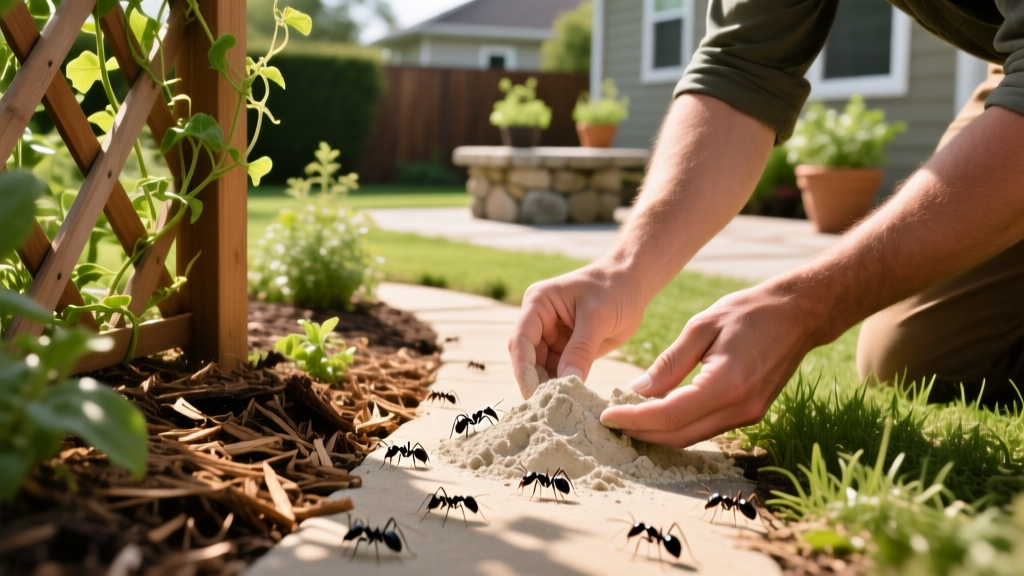
Proven Natural Ant Killers for Outdoors: Organic Yard Defense
Managing outdoor ant colonies without synthetic pyrethroids or neonicotinoids requires a strategic understanding of insect biology and environmental mechanics. While chemical sprays offer immediate knockdown, they often fail to eliminate the queen and introduce toxic runoff into your soil and groundwater. By leveraging desiccants, slow-acting stomach toxins, and biological predators, you can achieve long-term colony collapse. This guide details the exact specifications, application rates, and failure points of the most effective natural ant killers for outdoors.
Matching the Treatment to the Ant Species
Not all natural treatments work universally. The efficacy of an organic control method depends heavily on the nesting habits and dietary preferences of the target species. Use this decision framework to select your primary treatment:
- Fire Ants (Solenopsis invicta): Aggressive, deep-mounding. Require biological controls (nematodes) or fast-acting thermal/d-limonene drenches.
- Carpenter Ants (Camponotus spp.): Nest in moist, decaying wood. Require slow-acting borate baits carried back to satellite colonies.
- Pavement Ants (Tetramorium caespitum): Nest in soil under hardscapes. Respond best to diatomaceous earth (DE) barriers and liquid sugar-borate baits.
- Odorous House Ants (Tapinoma sessile): Highly adaptable, multiple queens. Require persistent DE dusting and essential oil repellents to disrupt pheromone trails.
The 4 Most Effective Natural Ant Killers for Outdoors
1. Food-Grade Diatomaceous Earth (DE)
Diatomaceous earth is a sedimentary rock composed of fossilized diatoms. Under a microscope, these particles resemble shards of glass. When ants crawl over DE, the silica cuts their exoskeleton and absorbs their lipid layer, causing fatal desiccation within 24 to 48 hours.
Critical Specification: You must use Food-Grade DE (typically 85% silicon dioxide, less than 1% crystalline silica). Never use pool-grade DE, which is chemically treated and poses a severe inhalation hazard to humans and pets. In 2026, a 4-pound bag of food-grade DE costs between $15 and $22.
Application Protocol: Apply a 1/8-inch visible dusting around the base of the mound, along foundation lines, and across ant trails using a bulb duster. DE is entirely inert but loses its mechanical killing power when wet. You must reapply after any rainfall exceeding 0.25 inches or after heavy morning dew.
2. Boric Acid and Sugar Bait Stations
Boric acid acts as a slow-acting stomach poison that disrupts the ant's metabolic processes. The key to outdoor success is the concentration ratio. If the boric acid concentration is too high, the foraging worker will die before returning to the nest, leaving the queen and brood unharmed.
The 1:10 Golden Ratio: Mix 1 part boric acid powder (e.g., 1 tablespoon) with 10 parts sugar and 2 cups of warm water. The high sugar content masks the borate and encourages the ants to gorge and regurgitate the liquid to the colony's brood. Place this solution in outdoor-rated, weatherproof bait stations (costing roughly $2 to $4 each) near active trails. According to the Environmental Protection Agency (EPA), boric acid has a very low toxicity profile for mammals, making it a cornerstone of organic pest management.
3. Beneficial Nematodes (Steinernema spp.)
Beneficial nematodes are microscopic, unsegmented roundworms that actively hunt soil-dwelling insects. They enter the ant's body through natural openings and release symbiotic bacteria (Xenorhabdus or Photorhabdus) that kill the host within 48 hours.
Species Selection & Application: For fire ants and aggressive lawn species, use Steinernema carpocapsae. For general lawn pests, Steinernema feltiae is ideal. The standard application rate is 1 million nematodes per 2,000 square feet. Current 2026 pricing averages $35 to $45 per million nematodes. The University of Florida IFAS emphasizes that nematodes are highly sensitive to UV light and desiccation. You must apply them at dusk and immediately water the lawn with 1/4 inch of irrigation to wash them into the soil profile. Soil temperatures must be strictly between 55°F and 85°F for survival.
4. Boiling Water and d-Limonene Drench
Pouring boiling water on an ant mound is a classic organic method, but it only achieves a 60% kill rate because the thermal energy dissipates before reaching the deep queen chambers. You can increase the efficacy to over 85% by adding d-limonene (cold-pressed citrus oil).
Execution: Boil 3 gallons of water and stir in 2 ounces of pure d-limonene extract. The citrus oil acts as a surfactant, breaking the surface tension of the water and stripping the waxy coating off the ants' exoskeletons, allowing the thermal heat to penetrate deeper into the soil. Pour the mixture directly onto the apex of the mound in a continuous 10-second stream. Wear heavy leather gloves and closed-toe boots to prevent splash burns.
Organic Treatment Comparison Matrix
| Treatment Method | Target Species | Speed of Kill | Cost per Application | Weather Sensitivity |
|---|---|---|---|---|
| Food-Grade DE | Pavement, Odorous, Carpenter | 24 - 48 hours | $0.10 / sq ft | High (Washes away in rain) |
| Boric Acid Bait | Carpenter, Sugar Ants | 7 - 14 days (Colony) | $0.50 / station | Low (If in covered station) |
| Beneficial Nematodes | Fire Ants, Lawn Mounds | 48 - 72 hours | $0.02 / sq ft | High (UV & Temp sensitive) |
| Boiling d-Limonene | Fire Ants, Large Mounds | Immediate (Contact) | $1.50 / mound | Low (Except heavy rain) |
Step-by-Step Protocol for Treating a Standard 12-Inch Lawn Mound
- Identify the Mound Apex: Locate the exact center of the soil crater. Do not disturb the outer edges with a shovel, as this will trigger the colony to evacuate and form satellite mounds.
- Initial Thermal Shock: Slowly pour 2 gallons of boiling water mixed with 1 oz of d-limonene directly down the central chimney.
- Perimeter Dusting: Once the soil has dried (usually 2-3 hours later), use a bulb duster to apply a 2-inch wide ring of food-grade DE around the base of the mound to catch surviving foragers.
- Biological Follow-Up: Three days later, at dusk, apply a liquid drench of Steinernema carpocapsae nematodes over the entire 3-foot radius surrounding the dead mound to eliminate any surviving subterranean satellite chambers.
Medical Warning: If you or a family member has a documented anaphylactic allergy to insect stings, do not rely solely on slow-acting organic methods for aggressive Red Imported Fire Ants near high-traffic play areas. Consult a licensed pest control professional for targeted, fast-acting mound injections to mitigate immediate medical risks.
Long-Term Organic Deterrence and Lawn Care
Eradicating existing mounds is only half the battle. Ants forage in yards that provide optimal shelter and food sources. Implement these cultural controls to make your lawn inhospitable:
- Manage Aphid Populations: Ants 'farm' aphids on ornamental shrubs to harvest their honeydew. Treat shrubs with insecticidal soap or introduce ladybugs to cut off the ants' primary sugar source.
- Adjust Soil pH and Aeration: Ants prefer compacted, poorly drained soil. Core aerate your lawn annually and maintain a soil pH between 6.0 and 7.0 to promote dense turfgrass root systems that physically crowd out subterranean nesting space.
- Essential Oil Barrier Sprays: Mix 15 drops of peppermint oil and 15 drops of tea tree oil per 16 ounces of water with a teaspoon of castile soap. Spray this along your home's foundation and patio perimeters weekly. The strong terpenes disrupt the ants' pheromone navigation trails.
Frequently Asked Questions
Will vinegar kill an outdoor ant colony?
No. While a 50/50 white vinegar and water solution will kill individual ants on contact and temporarily erase their pheromone trails, it does not possess the residual action or transferability required to reach and kill the queen deep within an outdoor soil mound.
Is diatomaceous earth safe for earthworms and pollinators?
Yes. Earthworms lack the rigid exoskeleton that DE targets, and they process the silica safely through their digestive tracts. However, DE is non-selective and will harm beneficial crawling insects like ground beetles if applied heavily. Avoid dusting it directly onto blooming flowers to protect foraging bees.
How long does it take for boric acid baits to eliminate a colony?
Expect a 7 to 14-day timeline. You will initially see a spike in ant activity around the bait stations as foragers recruit others to the food source. Do not disturb them or spray them with contact killers during this phase; they must be allowed to transport the borate back to the brood.

